


.svg)
.svg)
















.svg)

.svg)


-2-1.webp?width=200&name=image5%20(6)-2-1.webp)
%20(1)-1.webp?width=200&name=Eat%20(57)%20(1)-1.webp)
-1.png?width=1812&height=1072&name=TripAdvisor%20%26%20More%20Bookings%20(1)-1.png)
-2.png?width=1812&height=1072&name=Google%20Bookings%20(1)-2.png)
%20(1)-1.webp?width=200&name=Eat%20(62)%20(1)-1.webp)

-1.png?width=200&name=TripAdvisor%20%26%20More%20Bookings%20(1)-1.png)
-2.png?width=200&name=Google%20Bookings%20(1)-2.png)
-1.png?width=200&name=Instagram%20Bookings%20(1)-1.png)
-1-png.webp?width=200&name=Facebook%20Integration%20Rectangle%20(1)-1-png.webp)



.webp?width=200&name=download%20(1).webp)
%20(1)-2.webp?width=200&name=Eat%20(34)%20(1)-2.webp)
%20(1)-2.webp?width=200&name=Eat%20(18)%20(1)-2.webp)







The best OpenTable alternatives in 2026 are Eat App, Resy, Tock, Yelp Guest Manager and SevenRooms. Restaurants are switching because of per cover fees ($1–$1.50 on network reservations), a guest CRM locked behind the top tier, and the 2% service fee OpenTable added in early 2026 on deposits and prepaid experiences.
After comparing eight alternatives on pricing, features, integrations and total cost of ownership, Eat App comes out as the strongest overall replacement: flat rate pricing from $0/month, zero cover fees, and a diner database you actually own. Below is the full comparison, with real numbers.
Why more operators are leaving OpenTable in 2026
Let's be fair to OpenTable. It's still the biggest name around, with roughly 60,000 restaurants and a diner marketplace nobody else has matched. Connecting diners to open tables at 8pm on a Saturday is what it was built for. OpenTable offers real reach.
But the invoice is where the relationship sours.
OpenTable's published plans run $149 to $499 a month, which sounds manageable until the variable layer lands. Every diner who finds you through the OpenTable network costs you again on top of the subscription. Then in early 2026 came the 2% service fee on deposits, no-show charges and prepaid experiences — a charge applied to the exact tool restaurants use to protect revenue.
Here's the part that stings. You're paying a per-head fee for reservations you needn't buy. Bookings from Google My Business, Instagram and your own website keep growing, and paying marketplace rates for guests who'd have found you anyway is hard to defend at a management meeting.
The National Restaurant Association's 2026 State of the Restaurant Industry report found 42% of operators said their restaurants weren't profitable in 2025, with 60% reporting softer customer traffic. When margins are that thin, a variable fee that scales with your best nights looks less like marketing spend and more like a tax on success.
So the hunt for OpenTable alternatives isn't really about features. For most restaurant owners it's cost control and who owns the relationship at the end of the meal — which is why the restaurant industry has drifted toward commission-free booking.
What OpenTable costs in 2026: per cover fees and hidden costs
OpenTable pricing is two things bolted together — the monthly fee on the marketing page, and the per cover fees that show up later on the invoice.
The current structure, per OpenTable's own plans page:
- Basic — $149/month, plus $1.50 per network cover, plus $0.25 per website cover (or $49/month flat)
- Core — $299/month, plus $1.00 per network cover; website reservations included
- Pro — $499/month, plus $1.00 per network cover, with the guest CRM and marketing automation finally unlocked
That last point deserves more attention than it gets. The features most restaurants want — guest profiles, segmentation, automated messaging built on visit history — sit in the $499 tier. On Basic you're paying per cover fees and still doing your marketing out of a spreadsheet.
Running the numbers on a 100-cover restaurant
Say you seat 100 covers a night across 25 services. That's 2,500 covers a month. Assume a 60/40 split between the OpenTable network and your own direct booking channels — normal for an independent restaurant.
- Basic: $149 + (1,500 × $1.50) + (1,000 × $0.25) = $2,649/month
- Core: $299 + (1,500 × $1.00) = $1,799/month
- Pro: $499 + (1,500 × $1.00) = $1,999/month
Call it $21,000 to $31,000 a year for a mid-sized restaurant. On a flat rate platform the same operation runs closer to $2,400–$4,700, and the number doesn't move when a quiet February turns into a booked-out December.
And that's before the hidden costs nobody quotes you: the 2% on deposits, the discovery fees on affiliate reservations, and the cost of rebuilding your contact list from scratch if you ever leave. We break the full picture down in our OpenTable pricing analysis.
Worth saying plainly: OpenTable only bills for seated diners, not no-shows. That's fairer than some competitors manage. The problem isn't the fee. It's that it's uncapped.
Guest data ownership is the real dividing line
Pricing is what gets operators looking at OpenTable alternatives. Guest data is what makes them switch.
When someone books through the OpenTable network, they're OpenTable's customer first and yours second. The profile lives in their system. The confirmation email carries their branding. And the same platform can surface the restaurant two blocks over to that diner next week.
You did the cooking. Somebody else owns the list.
Put it another way: the customers who filled your room last night sit in a database you can't export.
Full data ownership flips that. Visit history, allergy notes, spend patterns and preferences sit in a system you control, exportable whenever you want. That's the foundation for direct guest relationships — the ones you own rather than rent. That's what makes direct marketing possible — email, SMS, WhatsApp messaging for restaurants — instead of renting access to your own customers.
The practical difference shows up in ordinary decisions. Which regulars haven't been in for 90 days? What are they spending on a Tuesday versus a Friday? Which booking channels bring guests coming back a second and third time? A proper restaurant CRM answers those in a click and lets you make smarter decisions about where the marketing budget goes. A marketplace profile doesn't. Many restaurants discover this the hard way, usually about three months after they start taking direct bookings seriously.
Guest relationships built this way compound. Every visit sharpens the record, and guest management stops being a memory exercise for whoever's on the door.
There's a second-order effect too. Once guest data lives in your own analytics, the rest of your tech stack gets more useful. POS integration means spend history attaches to the guest record automatically. Payment processing ties deposits to the reservation. Your reservation system stops being a diary and starts being the spine of the restaurant.
The 8 best OpenTable alternatives compared
These are the OpenTable alternatives worth a shortlist. Quick reference before the detail:
|
Platform |
Monthly price |
Per cover fee |
Table mgmt |
CRM |
Free plan |
Best for |
|
OpenTable |
$149–$499 |
$1–$1.50 + 2% service fee |
Yes |
Pro only ($499) |
No |
Marketplace discovery |
|
Eat App ★ |
$0–$389 |
None |
Yes |
From $99/mo |
Yes (100 covers) |
Flat pricing and data ownership |
|
Tock |
Custom (flat) |
None (3% ticketed) |
Yes |
All plans |
No |
Fine dining and ticketed events |
|
Resy |
$249–$899 |
None (3% ticketed) |
Yes |
All plans |
No |
Upscale and fine dining |
|
Yelp Guest Manager |
$129–$299 |
None |
Yes |
Plus only ($299) |
No |
US and Yelp-heavy markets |
|
Tablein |
$57–$139 |
None |
Yes |
No |
14-day trial |
Small restaurants in Europe |
|
Eveve |
~$150–$300 |
None |
Advanced |
Auto-populated |
No |
High-volume dining rooms |
|
Table Agent |
$0 (add-ons) |
$1/booking or $29/mo |
List only |
No |
Yes |
Tight budgets, basic needs |
|
TheFork |
~$178/mo |
Yes, in some markets |
Yes |
Basic |
No |
European markets |
Eat App
Eat App is restaurant reservation software and table management rolled into a guest data platform. Operations, marketing, reporting and customer feedback run in one place rather than four.
Cost: $0 for 100 covers/month; $99 for 300 covers; $199 unlimited; $389 for the full guest experience suite. Enterprise pricing on request.
Ease of use: 5/5 · Functionality: 5/5
Support: In-app live chat, onboarding specialists, knowledge base, account managers on higher tiers
Platforms: Native iPad, iPhone and Android apps, plus full web
Free trial: 14 days, with a free tier
Diners get confirmations, reminders and a thank-you that reads like it came from your restaurant, because it did.
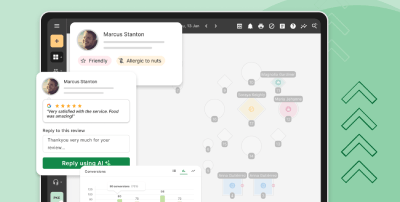
The CRM is what separates it from most alternatives at this price. Marketing automation runs off visit history, so a lapsed-regular campaign takes minutes instead of an export-and-pray routine. It's fully integrated with POS, phone systems, booking channels and payment processing, with PMS connections for hotel groups.
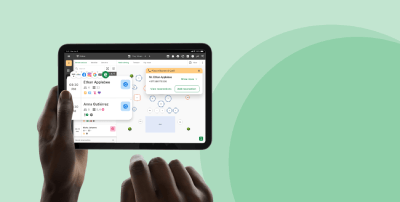
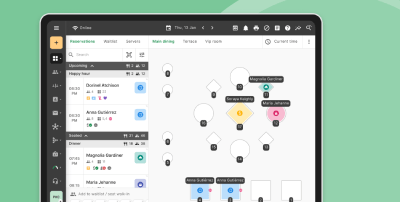
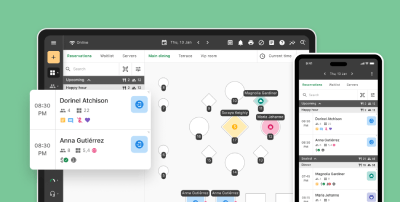
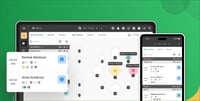
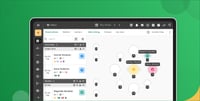
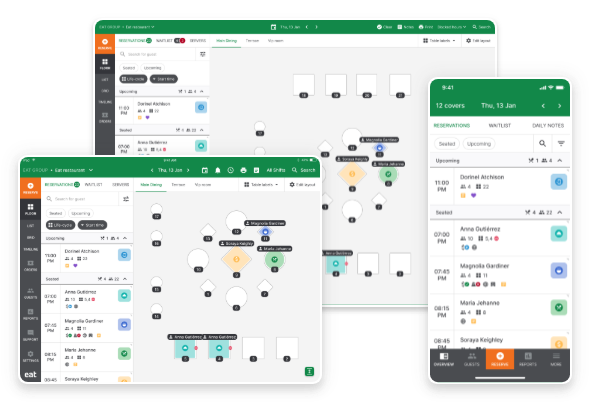
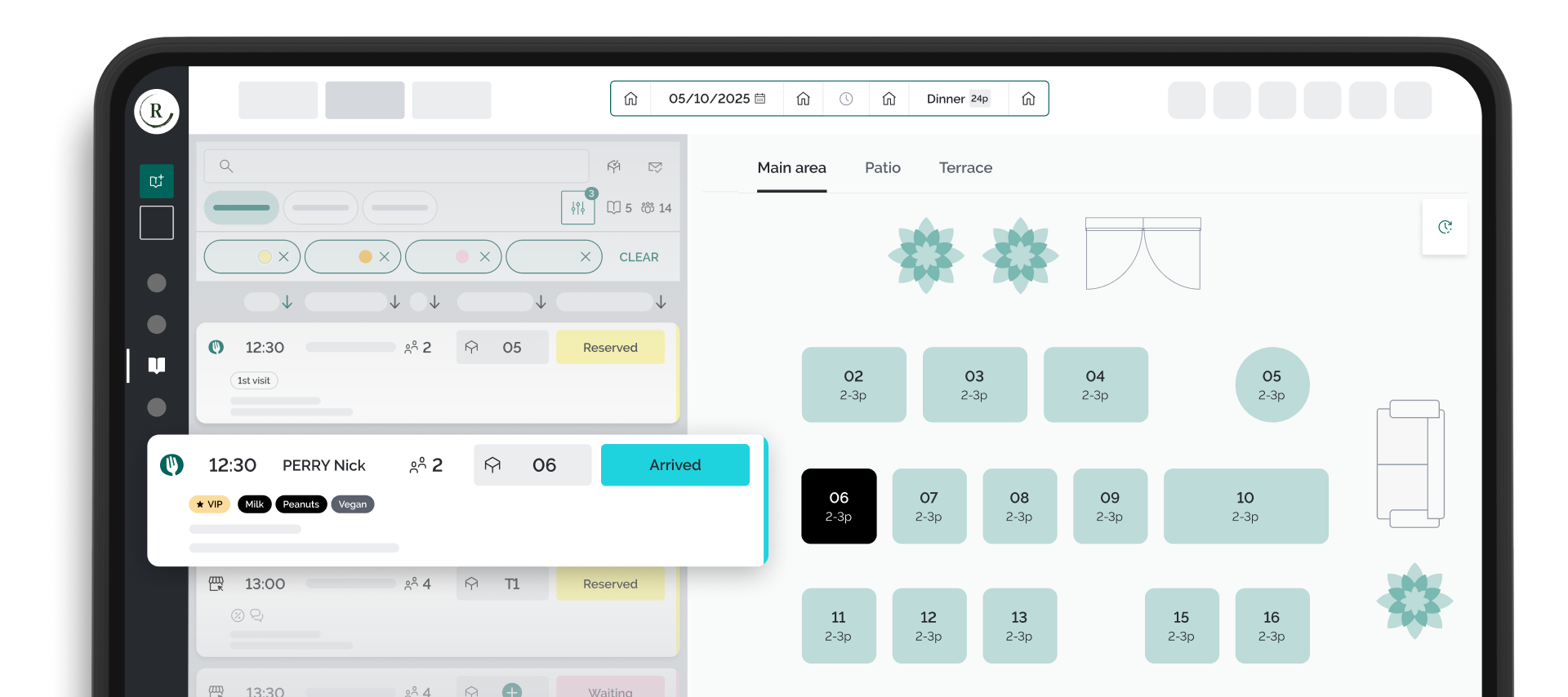
Day to day, the whole management system is built around your floor plan. Reservations, the waitlist and tonight's covers sit front and centre, with calendar, timeline and grid views if you prefer them. Shift management, staff management, rich analytics, auto-tagging and off-peak reservations are included rather than gated.
We're biased, obviously. But 3,500+ restaurants across 90+ countries, 4.7★ on G2 and 4.3★ on Capterra suggests we're not the only ones who think the model works. See the side-by-side OpenTable alternative breakdown for the detail.
Tock
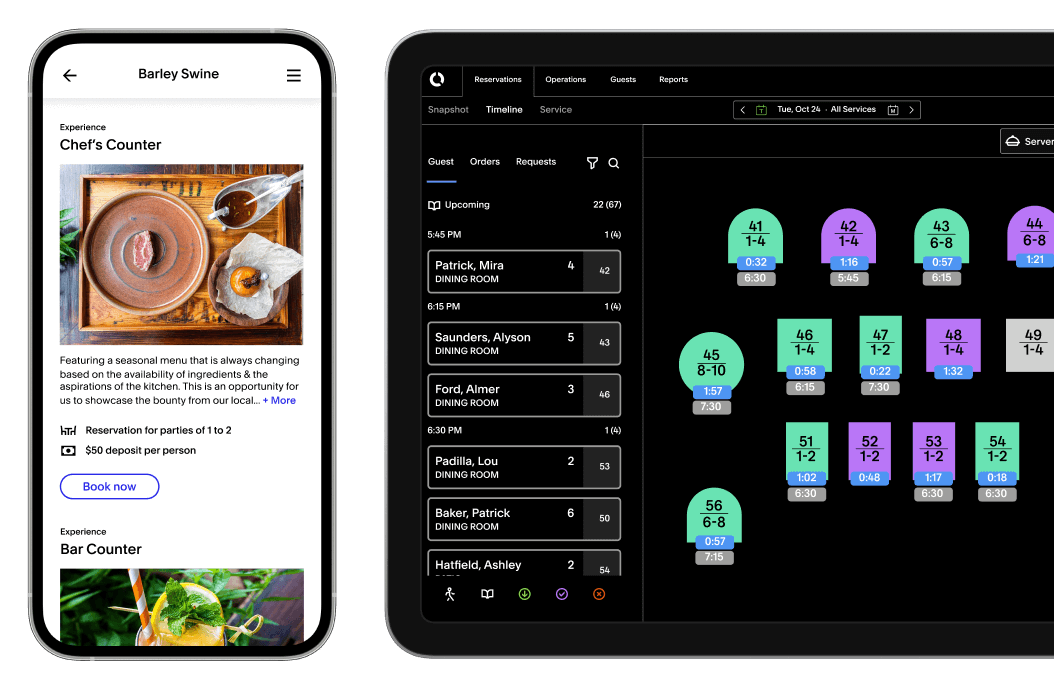
Tock built its business on selling seats rather than booking them. Deposits, prepayments and ticketed events are the core, which suits tasting menus and chef's counters where a no-show costs you a four-figure evening. Customers who prepay tend to turn up.
Cost: Tock Plus $199/month + 2% on prepaid reservations; Tock Pro $699/month + 0%
Ease of use: 4.5/5 · Functionality: 4/5 · Support: Email
Online ordering is an add-on, and Tock runs its own discovery platform — small next to OpenTable, but growing. The trade-off: front-of-house features are thinner than the price suggests, and everyday reservations get less attention than ticketed ones. Compare it on our Tock alternative page.
Resy
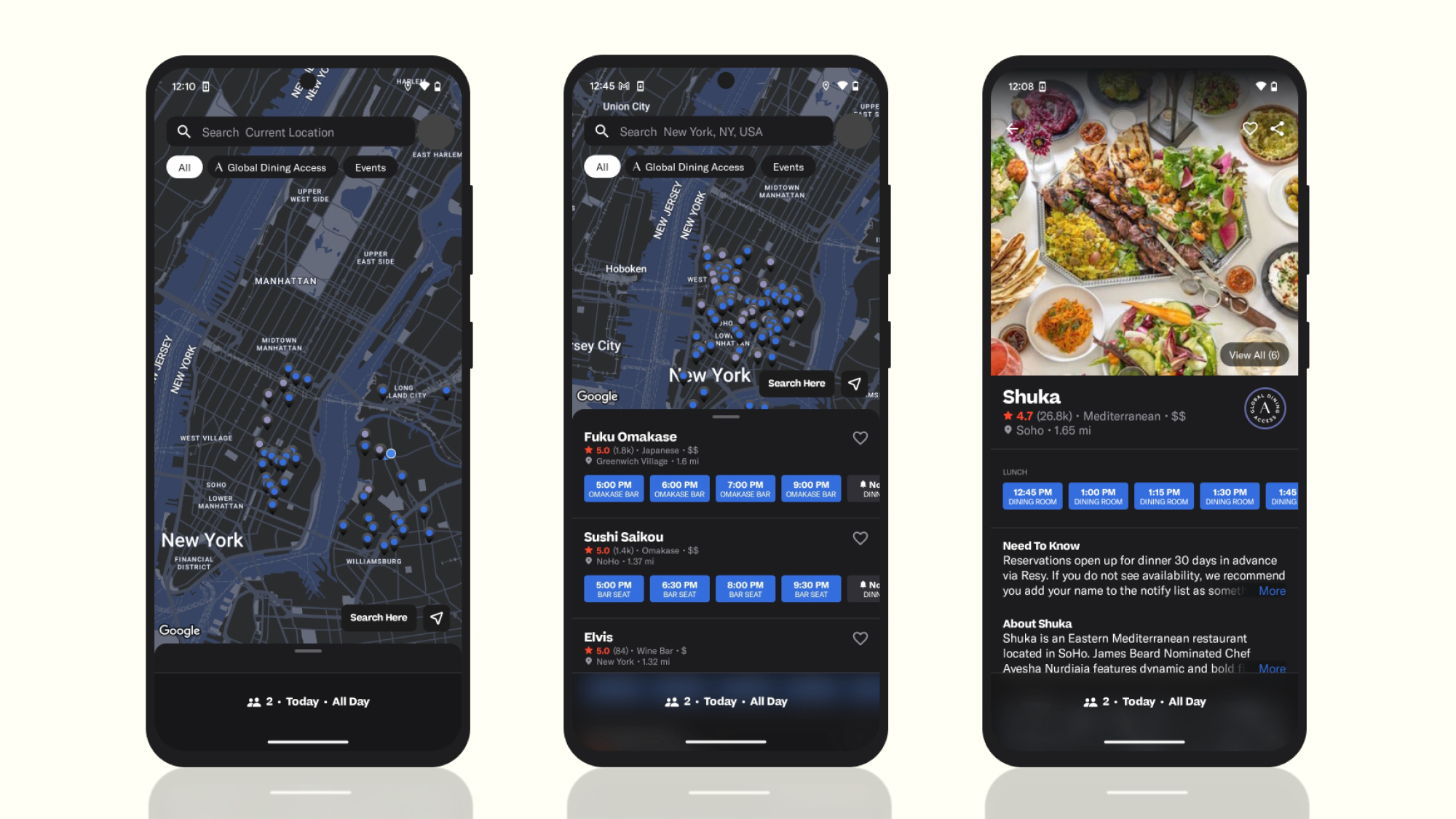
Resy covers the fundamentals well: waitlist management, floor plan design, POS integration and a booking widget fed by live availability. Diners can confirm, modify or flag that they're running late by text.
Cost: Basic $249/month; Pro $399; Enterprise $899
Ease of use: 4.5/5 · Functionality: 4/5 · Support: 24/7
Platforms: iPad and iPhone only
Timed release rules are genuinely good — useful if you drop reservations 30 days out and want the scramble managed. Now owned by American Express, which matters if you care where customer data lands.
The gap? No real CRM or marketing automation at any tier. At $399 a month that's a lot to pay for a diary with a nice interface. Our OpenTable vs Resy piece runs the numbers, and the Resy alternative page covers the switch.
Yelp Guest Manager
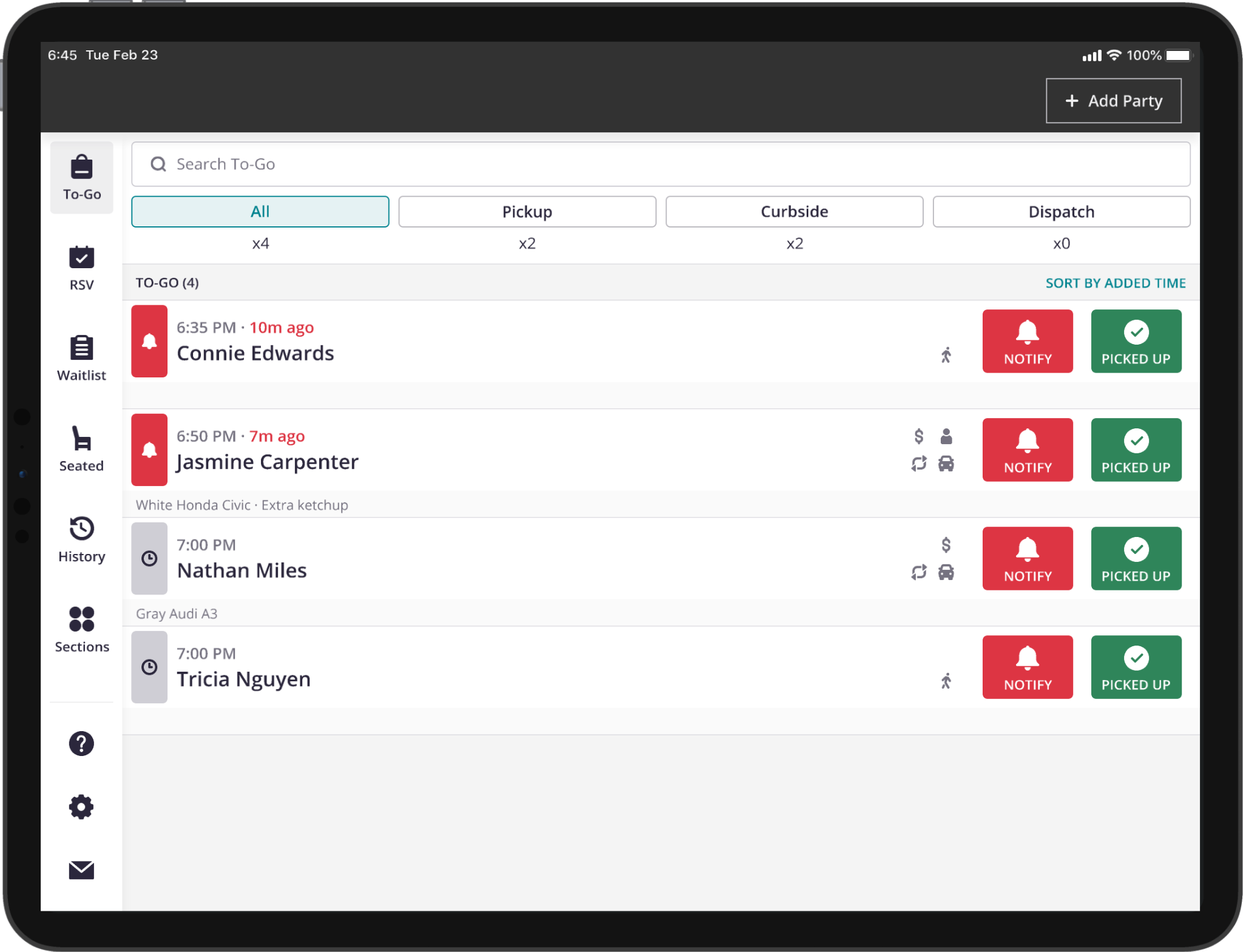
Yelp pairs a booking tool with one of the largest consumer networks in the US. If your listing already pulls traffic, converting customers already browsing for dinner into reservations is the pitch — and unlike OpenTable, there's no per-reservation charge for network access.
Cost: Basic $129/month; Plus $299; custom for 10+ restaurants
Ease of use: 4/5 · Functionality: 3.5/5 · Support: Email
Platforms: iPad
The Yelp waitlist is the strong suit, including a kiosk that lets guests check themselves in on arrival. For a high-volume dining room with heavy walk-ins, that's a real advantage. Guest data features are thin, though, and it's US-centric. More on the Yelp alternative page.
Tablein
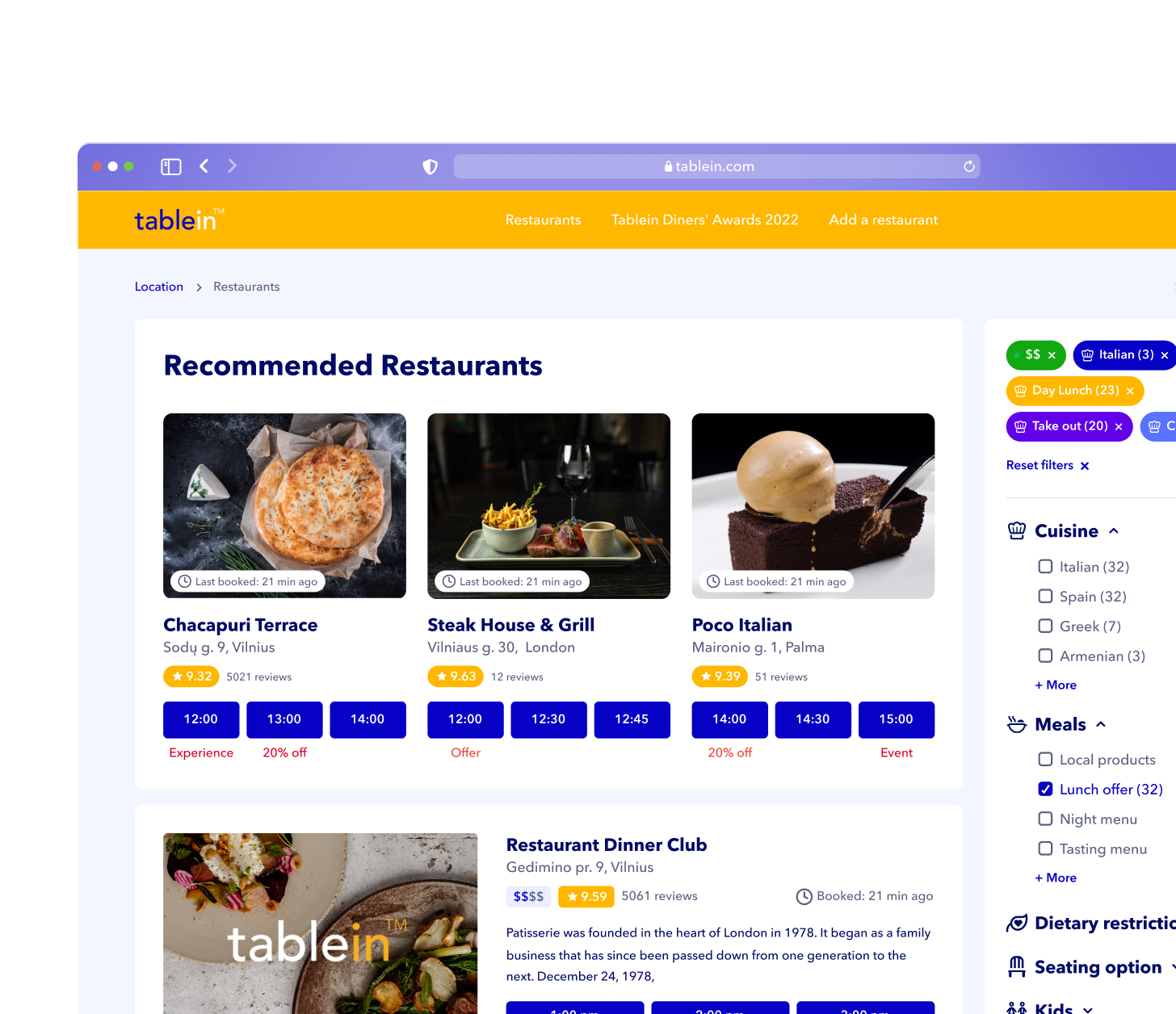
Tablein does less on purpose. Calendar-based reservations, capacity rules, automated SMS — no floor plan design, limited integrations, web only.
Cost: $57–$139/month by volume
Ease of use: 4/5 · Functionality: 3/5 · Support: Live chat
For a 40-seat neighbourhood restaurant in Europe that just needs the landline ringing less, it's honest value. For anything with a bar, a terrace and a private dining room, you'll outgrow it fast. Details on the Tablein alternative page.
Eveve
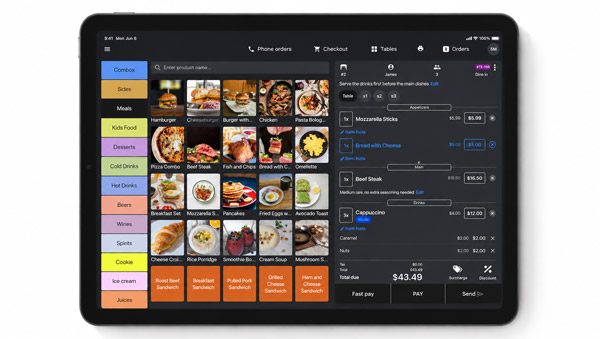
Eveve's calling card is capacity optimisation. Its "Full Availability" logic offers alternative dates instead of a dead end when you're booked out, which recovers bookings most alternatives lose at the widget.
Cost: Not published; estimates put it at $150–$300/month
Ease of use: 3/5 · Functionality: 3/5 · Support: Email
Platforms: Web only
The interface shows its age and there's no CRM to speak of. Strong at filling a room, weak at remembering who was in it.
Table Agent
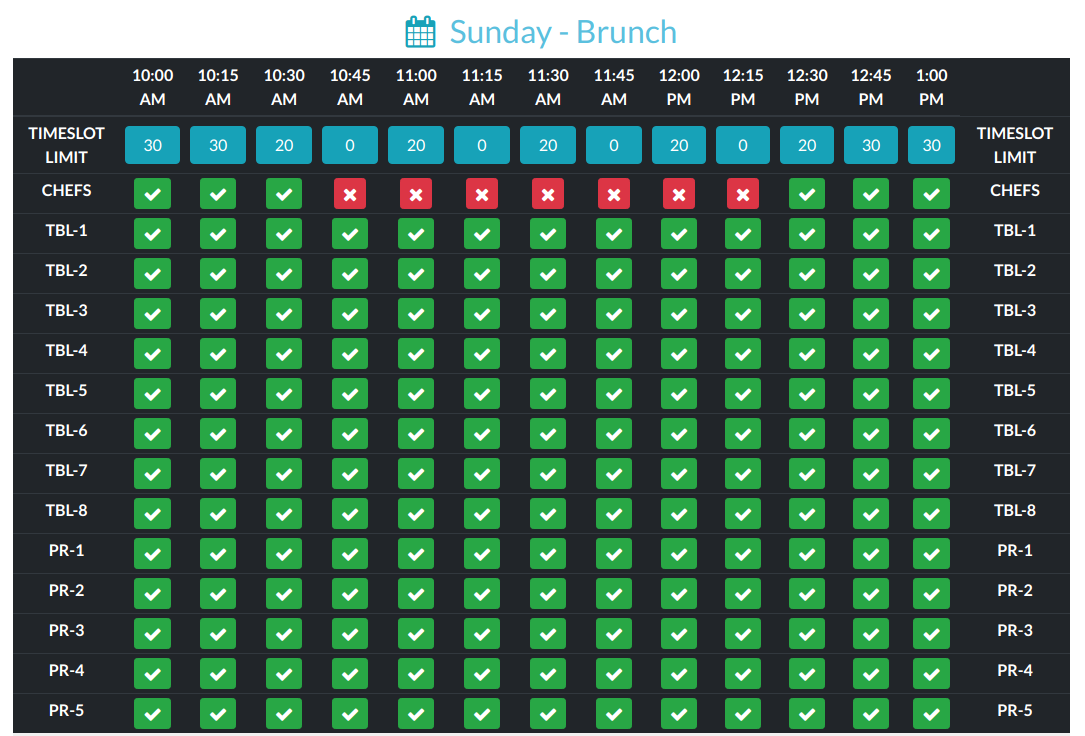
Table Agent's aim is to cost as close to nothing as possible, and it succeeds. The catch is that it operates similarly to a digital version of the paper reservation book — a list, not a floor. No table map, no CRM, no reporting.
Cost: Free; $1 per booking with payments, or $29/month unlimited
Ease of use: 3/5 · Functionality: 2/5 · Support: Email
Coming from a visual system, the adjustment is jarring. For a café taking 20 reservations a night it's fine. Most venues recover the difference within a month on something better. See the Table Agent alternative comparison.
TheFork
Owned by TripAdvisor, TheFork works much like OpenTable in Europe: a booking tool attached to a discovery marketplace, with commission on marketplace covers. The pitch to restaurants is more bookings from TripAdvisor traffic.
Cost: Free tier with commission on average spend from TheFork and Google reservations; ~$125/month removes the Google commission
Ease of use: 4/5 · Functionality: 3.5/5 · Support: Email, phone and chat
Email marketing is included, which is more than Resy manages. But the commission model recreates the problem you were escaping, and guest data stays on their side. If you're in Europe and weighing up OpenTable alternatives, the TheFork alternative page is the place to start. Worth remembering that European restaurants watched Quandoo shut down recently — marketplace dependency carries a risk beyond the fees.
Features that separate the serious alternatives from the rest
Once you've shortlisted two or three OpenTable alternatives, the specs start blurring together. These are the features that actually change how a service runs.
Floor plan accuracy. If the software solutions you're comparing can't draw your room properly — banquettes, the awkward two-top by the door, the summer-only terrace — everything downstream gets harder.
Waitlist management with SMS. Diners who get a text when their table's ready don't wander off, so the reservations you'd otherwise lose stay on the book.
A guest CRM that populates itself. Manual tagging dies within a fortnight. Auto-tagging on visit count, spend and preferences is the only version many restaurants stick with, and it means regulars get recognised without anyone having to remember.
Two-way messaging. Confirmations, reminders and reschedules in the thread the guest already reads — the most reliable way to reduce no-shows there is.
POS and tech stack integration. Without it, spend data never reaches the profile and your analytics tell half the story.
Transparent pricing. If you can't calculate next month's bill from this month's covers, that's a red flag. Our guide to restaurant reservation software problems to avoid has the other traps.
Why Eat App is the best alternative for most restaurants
Of all the OpenTable alternatives here, this is the one we'd back — not because it matches OpenTable feature for feature, but because it's built for the restaurant's side of the pass.
Flat rate pricing with no cover fees
One monthly fee. Seat 200 covers or 2,000 and the number doesn't change. That makes budgeting possible in a way percentage-based alternatives never allow, and it's why most restaurants that move stay moved.
A reservation platform that runs on your floor plan
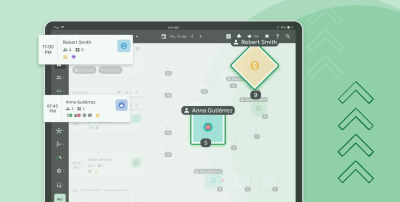
Your room, drawn accurately, with live status on every table. Add waitlist management and shift rules and a host sees the whole night at a glance instead of reconciling two screens. If you're still designing your layout, our restaurant floor plan creator guide covers the fundamentals.
Eat App vs OpenTable, head to head
|
OpenTable |
Eat App |
|
|
Commission-free online reservations |
✘ |
✔ |
|
Own your customer data |
✘ |
✔ |
|
FB, IG & Google integrations |
✔ |
✔ |
|
Reservation management |
✔ |
✔ |
|
Table management |
✔ |
✔ |
|
Pre-payments and deposits |
✘ |
✔ |
|
Guest CRM |
$499 tier |
✔ |
|
Analytics & reports |
✔ |
✔ |
|
Customizable messaging |
✔ |
✔ |
|
Marketing automation |
$499 tier |
✔ |
|
Operations automation |
$499 tier |
✔ |
|
Live chat support |
✘ |
✔ |
|
Cost/month |
$249+ fees |
$199 |
Online reservations from every channel you already have
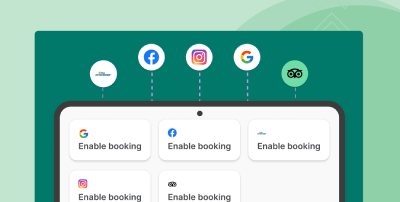
Google, Instagram, Facebook, your website, the landline. Reservations land in one place with no commission attached, whichever door they came through — which is how you bring in more diners without paying for the privilege. Direct reservations cost you nothing extra, forever. Add pay at table and deposits and the money side closes properly too.
Any reservation platform you shortlist needs the same three things: online reservations from every channel, table management that matches your room, and a bill you can predict.
Where OpenTable still wins: marketplace reach. OpenTable remains the best tool for pure discovery, so if a real share of your covers come from diners browsing the app with no restaurant in mind, keeping it as a secondary channel is defensible. Plenty of restaurants run both — direct reservations on a flat rate system, marketplace listings for overflow.
Matching a platform to your restaurant
The best alternative depends on what you actually run, and the alternatives split fairly cleanly by restaurant type.
Fine dining with prepaid tastings — Tock or Resy. Ticketing and deposit handling are their reason for existing.
Independent restaurants and neighbourhood bistros — Eat App or Tablein, the most forgiving OpenTable alternatives on price. Local restaurants rarely need enterprise tooling. They need to manage bookings without a per-head charge. Flat rate pricing matters most when reservations are unpredictable.
High-volume rooms with heavy footfall — Yelp or Eveve for queue handling; Eat App if you want the data as well.
Hotel and multi-site groups — Eat App or SevenRooms. Cross-property profiles and venue-level permissions are non-negotiable at scale, so a regular recognised at one restaurant is recognised at all of them. Our hospitality groups page covers the enterprise setup, and the SevenRooms alternative comparison is worth a look.
Cafés and casual counters — software for cafes, or Table Agent if you can live without reporting.
Bars and late-night restaurants — software for bars with event tooling, since revenue lives in door lists as much as covers.
What switching actually involves
Operators leaving OpenTable rarely do it over one missing feature. It's the cumulative bill, plus the slow realisation that the diners filling the room every week belong to somebody else's list.
Still, the fear is always the same: we'll lose the database and the team will hate it.
Export your data first. Most alternatives will hand over a CSV of diner records and upcoming reservations, and any credible system will import it. A platform that makes exporting hard is telling you how it views your guests. Migrate in a quiet week, run both sets of reservations in parallel for a fortnight, and put your two strongest hosts on the new system first. They'll find the friction faster than any training deck.
One thing restaurants underestimate: your booking widget and Google listing need repointing the same day you cut over, or you'll spend a week fielding calls about a dead link.
Realistic timeline for a single restaurant? Two weeks from decision to live. Groups take longer, mostly POS mapping.
And keep the old system's bookings visible until the last covered date passes. Anyone who reserved in March for a May dinner won't have heard you changed platforms.
Guest experience is where the gap shows up
A reservation management system used to mean not double-booking table nine. That's the floor now, not the ceiling.
The alternatives worth paying for handle the whole arc: discovery, the reservation, the pre-arrival message, the note that table six's partner is gluten-free, the follow-up six weeks later. Automated messaging cuts the no-show rate without anyone lifting a receiver — and if that's your pain point, the restaurant no-shows playbook has thirteen tactics that work.
Support matters more than the feature list suggests. The loudest complaint about OpenTable on Trustpilot isn't pricing — it's waiting days for a reply mid-service. Live chat on every tier isn't a luxury when your Saturday night is on the line.
Think what that means on a Friday. Two hundred covers through the door, and your host sees which are first-time customers, which are regulars on their ninth visit, and which two diners booked for an anniversary. That's the gap between processing bookings and running a dining room.
Guest engagement and customer loyalty are downstream of all of it. Recognise a regular by name, remember the table they like, and first-time customers quietly become the regulars who keep your Tuesdays alive. That's not sentiment; it's the highest-margin restaurant marketing available to you.
The takeaway
Look hard at the OpenTable alternatives above and one thing becomes obvious: they deliver more features for meaningfully less money. The marketplace is real, and for some restaurants it's worth paying for. For everyone else, the per cover fees are buying something you could own outright.
Run your own numbers. Take your monthly reservations, split them by channel, and price out the top three alternatives against what you're paying now. Plenty of operators are surprised how much volume is already direct — guests who'd have made those reservations regardless.
Our pricing page and the online restaurant reservation systems roundup make the maths easier, and a demo takes twenty minutes.


.webp?width=314&height=175&name=Chit%20Printer%20Banner%20(8).webp)


.webp?width=144&height=72&name=Eat%20App%20Logo%20(3).webp "Eat App")