




























Choosing what to put on a restaurant menu sounds creative until prep time, food cost and guest expectations all have to line up. A dish can look great online and still be a poor fit if it needs a new station, uses ingredients nowhere else on the menu or takes too long to plate during a Friday rush.
The strongest restaurant menu ideas start with two questions: will people want it, and can your kitchen serve it consistently? The National Restaurant Association 2026 culinary forecast, based on input from nearly 300 chefs and operators, points to comfort food, value, local sourcing, clear menu labeling and global flavors as major trends across the restaurant world. Use those as inspiration, then validate each idea with your own numbers and feedback. For a wider view, Eat App’s guide to restaurant industry trends covers the operational shifts around these menu changes.
Below are concrete food and drinks ideas, followed by a practical plan for choosing what deserves a test. Eat App reports, guest profiles and post-dining feedback can also help you understand what diners order and what they ask for before you commit to a full menu change.

35 restaurant menu ideas worth testing in 2026
You do not need to copy a trend exactly. Borrow the underlying idea and adapt it to your concept, price point, kitchen and brand. These restaurant menu ideas cover comfort food, lighter meals, small plates, drinks, desserts and formats you can run as specials first. If margin is the priority, review your profitable menu items before deciding what earns a test.

Comfort food with a twist
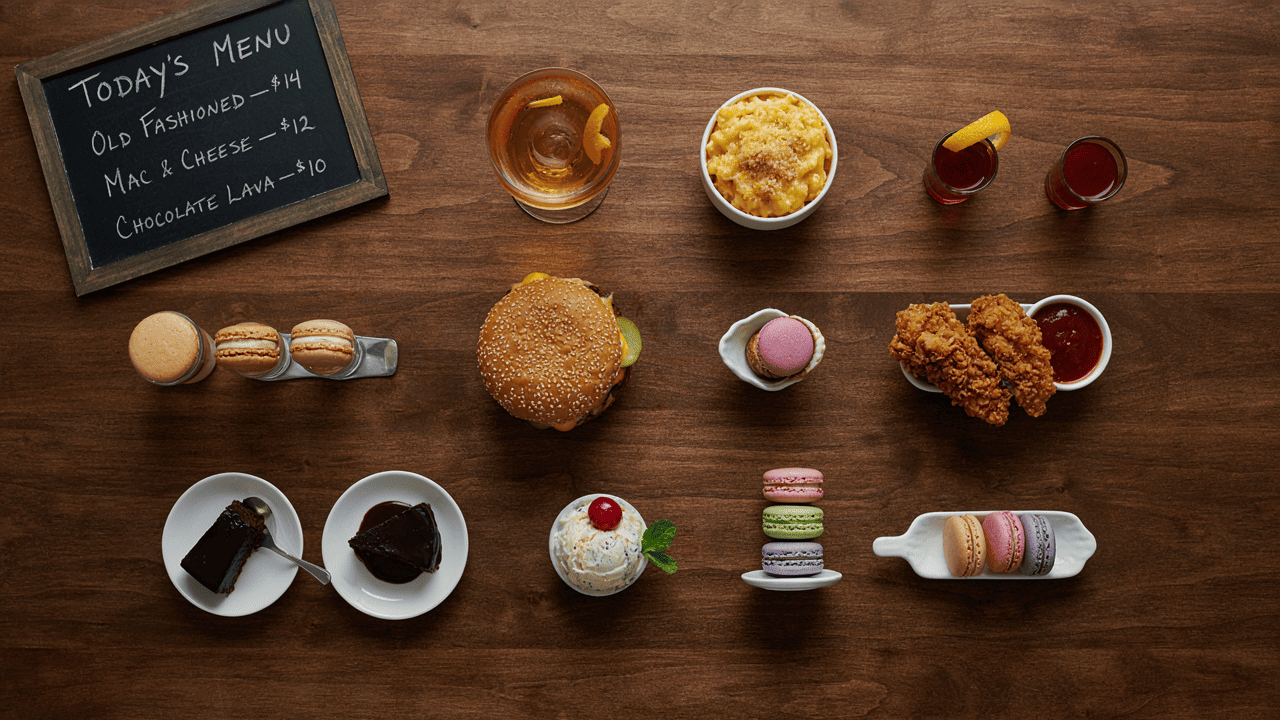
- Globally inspired smashed burgers. Give familiar burgers one specific twist: gochujang mayo and kimchi, jerk seasoning with pineapple slaw or harissa with feta cheese. Strong recipes keep the burger recognizable while adding one clear flavor idea.
- Loaded fries for sharing. Add ingredients from other dishes, such as pulled chicken, smoked cheese or pickled peppers. You get a new item without a completely new prep list.
- Brown butter mac and cheese. Brown butter adds a nutty taste without losing the comfort-food appeal. Let diners customize it with mushrooms, crispy chicken or a spicy topping.
- Elevated noodles. Build ramen-style bowls with rich broth, vegetables, edamame, soft egg or miso-glazed protein. Choose recipes that reuse ingredients already in your kitchen. Save a few backup recipes for ingredients that change with the season.
- Chicken tenders with rotating sauces. Keep one core recipe and change the flavors: hot honey, lemon pepper, barbecue or a refreshing herb dip.
- A signature grilled cheese. Pair two types of cheese with one memorable ingredient, such as roasted tomato or onion jam. Serve a full sandwich with soups or a smaller slice as a starter.
- A burger flight. Serve three mini burgers with different sauces or cheese combinations. This can be fun for groups at breweries and casual restaurants serving beers or cocktails.
Fresh, colorful and flexible meals
- Protein-forward salads. Build salads around grains, vegetables, flavorful dressings and clear add-ons such as chicken, shrimp or tofu.
- Seasonal grain bowls. One base recipe can support different meals as produce changes. This gives the kitchen variety without learning entirely different recipes, and it makes seasonal recipes easier to test.
- Smoothie bowls. Use colorful fruit, granola and optional protein add-ons. Smoothie bowls fit breakfast, brunch and cafe menus, and they are easy to adapt.
- Soup and half-salad combinations. Pair two smaller dishes at a set price. Rotate one soup while keeping a few salads stable.
- Vegetable-first mains. A roasted cauliflower steak, stuffed squash or charred cabbage dish can feel substantial when texture and sauce do real work.
- Build-your-own bowls. Let diners choose a base, protein and sauce from a controlled set of options. Limit choice so service stays quick and food cost stays manageable.
- A local special. Choose one ingredient that is abundant nearby and create a short-run dish around it. Local sourcing can also connect the restaurant with its community.
Shareable restaurant menu ideas
- A dip trio. Try whipped feta cheese, smoky eggplant and a bright herb dip with bread or vegetables. Three contrasting flavors make the plate feel varied without three complex recipes, and a sharp garnish can add another layer of flavors.
- Crispy chickpeas. A simple, flavorful snack can sit beside beers or cocktails and adds a lighter option to a shareable section.
- Mini flatbreads. Use one dough and rotate toppings. A mushroom and cheese version can sit beside spicy chicken or roasted vegetables.
- A focused cheese board. Two cheeses, one fruit, pickles and bread can look rich and appealing without a long list of one-off ingredients.
- Crispy vegetable bites. Zucchini fries, cauliflower bites or green beans with a sharp dip add contrast to menus heavy on burgers and fried chicken.
- A house sharing plate. Combine proven dishes in one group-friendly format. The idea is packaging, not inventing more food.
Cocktails, beers, wine and other drinks
- A two-cocktail signature list. Create one bright, refreshing drink and one deeper option that suits the food. Short cocktail menus are easier to execute than a long list of complicated recipes. Beverage strategy deserves attention: in 2026,87% of full-service operators surveyed by the National Restaurant Association said beverages can be an important driver of restaurant traffic.
- Low- and no-alcohol cocktails. Keep real cocktail structure: acidity, bitterness, aroma and texture. A good alcohol-free option should feel intentional.
- A local beers section. Rotate two or three beers and explain each style in one line so guests can compare quickly.
- A simple wine flight. Offer three small pours around a theme, such as one grape from different regions. It gives diners a low-pressure way to explore wine.
- House sodas and smoothies. Use fruit, herbs or tea for more distinctive non-alcoholic drinks. This can work particularly well at breakfast and lunch.
Desserts and sweet ideas
- One warm and one cold dessert. Pair a brown butter cookie skillet with ice cream and a chilled cheesecake or panna cotta. A short dessert menu can still feel complete.
- A rotating cheesecake. Keep the base recipe and change the topping. Berries, citrus, apple or chocolate can refresh the dessert without rebuilding the pastry program.
- Mini dessert flights. Serve three small portions instead of one large slice. This works well for groups and a special occasion.
- A yogurt parfait. Layer yogurt, fruit, granola and house compote. Good texture and presentation make a simple breakfast item more appealing.
Restaurant menu formats for different occasions
- A prix fixe lunch. Bundle a starter and main, or a main and dessert, at a fixed price. This gives diners a clear value option and helps the kitchen plan prep.
- A family-style dinner. Offer a larger main with salads, sides and dessert for the group. It can work for celebrations and catering.
- A kids menu with real choices. Keep familiar meals, but add one or two fresher options. A small burger, grilled chicken, pasta, fruit and vegetables cover different tastes without creating a second kitchen.
- A limited-time menu. Test four or five dishes for a few weeks. A short run gives you real data before you rewrite the permanent restaurant menu.
- A catering version of your strongest dishes. Build around food that travels well, portions cleanly and scales without causing kitchen chaos.
- An eco friendly takeaway menu. Design the food and packaging together. Choose items that travel well and packaging that fits local recycling or composting options. EPA guidance recommends tracking food and packaging waste and reviewing menus when items are frequently wasted.
How to choose restaurant menu ideas your kitchen can execute
The original process behind this article focused on inspiration, staff feedback, a menu formula and testing. Keep that logic, but add cost and operational fit before a new dish becomes permanent.
Use this five-step filter:
- Check concept fit. Would a regular understand why the dish belongs here? If it clashes with the theme, brand or atmosphere, it will be harder to sell
- Check ingredient overlap. Favor recipes that reuse sauces, produce, cheese or proteins you already buy
- Check the station. Ask who makes it during the busiest service, how long it takes and what equipment it occupies
- Cost the full recipe. Calculate food cost and contribution margin before setting the price. Eat App guides to food cost percentage, recipe costing and restaurant metrics can help
- Test before you print. Run the dish as a special, track orders and ask for feedback. A busy first weekend is a good sign; repeat orders are a stronger sign
A simple scorecard can speed up decisions. Rate each idea from one to five on concept fit, food cost, prep complexity and likely demand. You are not trying to achieve mathematical perfection. You are stopping excitement from skipping the boring questions that decide whether an idea survives real restaurant life.
Where to find restaurant menu inspiration fast
Pinterest, Google Images, social media and nearby restaurants are still useful. Search with a question instead of scrolling aimlessly.
For example, search for:
- “winter brunch recipes with squash”
- “modern burger menu examples”
- “low alcohol cocktails for seafood”
- “kids meals using the same chicken as main menu”
- “restaurant menu ideas for a small kitchen”
Save references in one folder, then note what you liked. Was it the food itself, the menu design, the wording or the use of familiar ingredients with a twist? That note keeps inspiration from becoming imitation.
Then get offline. Visit restaurants with a similar price point and service style. Explore how they group items, but do not copy their recipes or branding. Notice what diners order and what servers recommend. Read Google reviews for repeated comments about portion size or missing options. A public Google search gives one view; your own front-of-house team hears questions in real time.
Keep a running list in your phone. A notebook works too. A useful idea from a supplier conversation or a customer request can disappear by the end of a busy shift if nobody writes it down.
Gather feedback before changing the restaurant menu
Managers do not hear every question asked at the dining table or from every table. Servers and bartenders do, and customers often tell them exactly what they wish the menu had. Ask which items need long explanations, what people request repeatedly and which dishes create confusion.
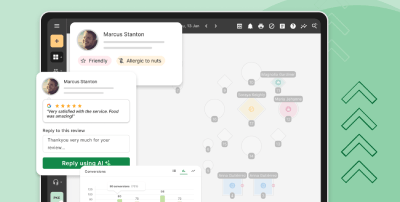
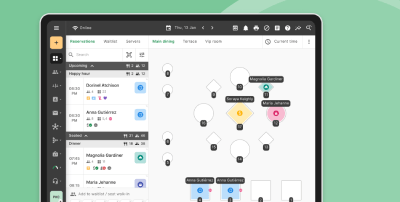
Eat App restaurant CRM can keep reservation history, guest notes, tags, survey results and POS-linked spend data together. Post-dining surveys can add a direct question about what diners would like to see next. Eat App’s guide to restaurant survey questions is useful when you need a short survey that people will actually finish. Eat App
Use feedback from customers as evidence, not a vote. Three requests for a vegan burger are a sign to explore the idea, not proof it will sell 40 portions a night.
Ask:
- What dishes do people mention by name in reviews?
- Which meals come back unfinished?
- Which items do servers struggle to explain?
- What dietary requests appear repeatedly?
- Which drinks or desserts do people ask for that you do not offer?
Build a restaurant menu formula before you add dishes
A menu formula is a plan for how many items belong in each section and what job each section needs to do. It creates boundaries before every appealing recipe gets added, which makes creating a balanced menu much easier.
There is no universal formula, so treat this as an example for a casual full-service restaurant.
|
Menu section |
Example range |
What to check |
|
Appetizers |
4 to 6 |
Shareability, speed, ingredient overlap |
|
Soups and salads |
3 to 5 |
Lighter meals, add-on proteins |
|
Burgers and sandwiches |
4 to 6 |
Clear differences, side choices |
|
Mains |
8 to 12 |
Kitchen stations, price spread |
|
Kids meals |
3 to 5 |
Familiar food, simple prep |
|
Desserts |
3 to 5 |
Make-ahead potential, occasion appeal |
|
Drinks |
6 to 12 |
Cocktails, wine, beers, alcohol-free choice |
Place the dishes you know belong first. Then fill empty spots deliberately. If the restaurant menu already has five cheese-heavy mains, the missing item may be fresh rather than another variation.
Ingredient reuse matters too. For example, a roasted pepper can appear in a salad, burger sauce and grain bowl. A herb mix can season fries and finish grain bowls. That overlap can simplify prep and reduce waste.
EPA guidance recommends measuring food waste and modifying menus when items are regularly left uneaten or discarded. Waste data is useful menu research, not just a sustainability report.
Use menu engineering before a new dish earns a permanent spot
Menu engineering compares popularity with profitability. Eat App’s guide walks through food cost, contribution margin and the four-quadrant matrix used to evaluate menu items.
Track four things:
- Units sold. Is the item ordered often enough within its section?
- Contribution margin. After food cost, how much gross profit does each order contribute?
- Operational impact. Does the recipe slow a station or create waste?
- Guest response. Do diners reorder it, mention it positively or recommend it?
A high-volume dish with weak margin needs a different response from a profitable dish nobody notices. One may need a recipe or price change. The other may need a better description, stronger placement or a server recommendation. For example, moving a profitable but overlooked dish into a clearer section can highlight it without discounting it.
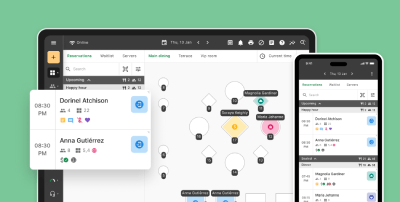
Eat App supports POS-linked guest data and reporting, which can give you more context than one week of anecdotal feedback. Testing a new menu? Explore Eat App features to see how reports, guest data and feedback can support the test.
Menu design ideas that save time for guests and staff
Cornell menu design and engineering material notes that customers may spend only one or two minutes reviewing a restaurant menu. The first glance therefore has a lot of work to do.
Good menu design makes decisions easier, and the menu design should reflect how guests actually order. You do not need advanced design skills or visual tricks everywhere. You need clear hierarchy, readable fonts and enough white space for the food to make sense.
Practical menu design rules:
- Use clear section headings and consistent fonts
- Keep descriptions specific: cooking method, key ingredients and one taste cue
- Highlight only a few items so the highlight still means something
- Keep prices easy to find without letting a price column dominate
- Use quality photos only when they fit the restaurant vibe and the quality is consistent with the rest of the brand
- Make dietary cues easy to scan and verify the rules that apply in your market
If you operate a U.S. chain with 20 or more locations under the conditions covered by the FDA menu-labeling rule, calorie and nutrition disclosure requirements may apply to standard items. Requirements differ by business and location, so check the rules that apply to you.
A modern menu does not have to look cold or overly serious. A little fun can fit the vibe of a casual concept. A colorful cafe can use playful fonts, while a fine-dining restaurant may want restraint and sophistication. The sign outside, the room and the menu should tell the same brand story. That consistency can help attract the people the concept is meant for.
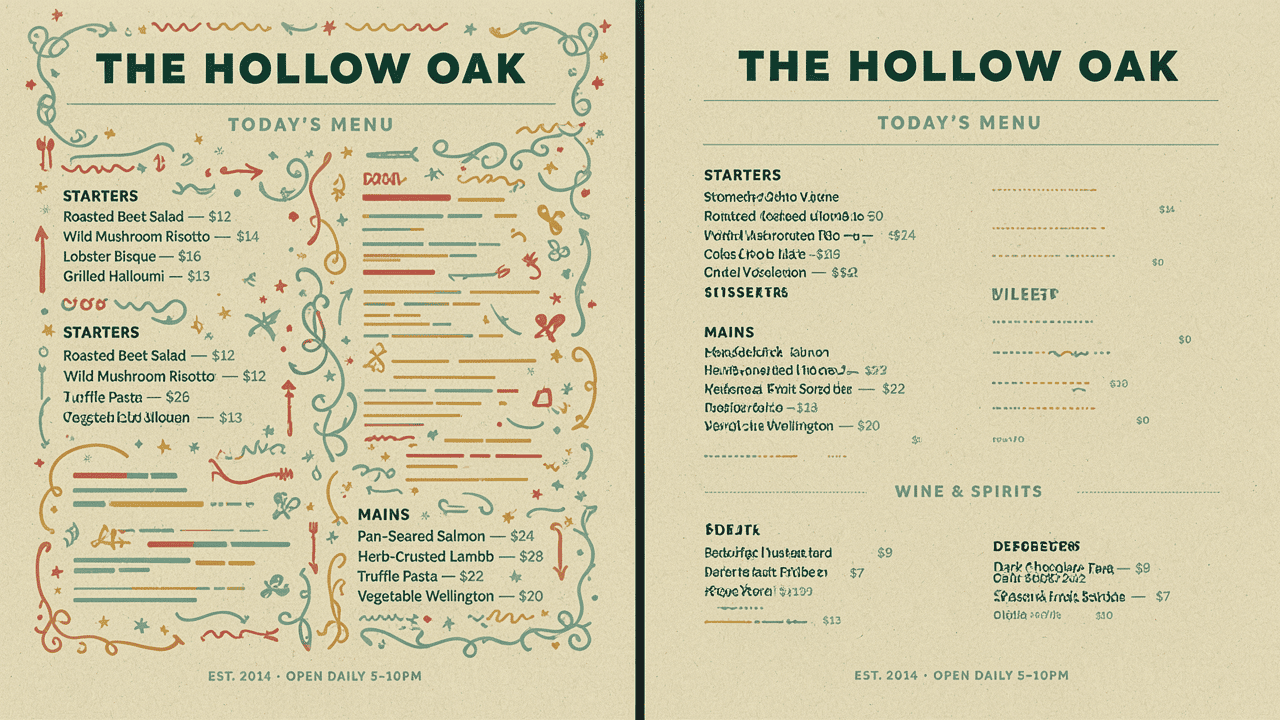
Menu templates: when to use them and when to customize
Menu templates can save time when you need a clean structure and do not have in-house design skills. They are practical for pop-ups and small teams that update prices often. A restaurant menu maker can also help when you need a faster DIY option.
The risk is sameness. If you drop text into templates without changing fonts, spacing or hierarchy, the menu can feel disconnected from the atmosphere.
Use templates as a starting point, then customize:
- Match the brand fonts and logo treatment
- Adjust section order around how people order
- Remove decoration that competes with descriptions
- Test the menu in the real lighting
- Create a digital version that is easy to update
Print one copy before ordering hundreds. Read it from the distance a guest will use. If the first glance lands on decoration instead of food, revise the menu design.
Launch the new restaurant menu, then study what happens
Update every place where an old version might appear: your website, Google Business Profile, social media, delivery platforms and reservation pages. Customers should see the same current menu wherever they find you.
Then measure. Review food orders, recipe cost, feedback and kitchen issues after the first week and again later. Look for a good sign: repeat orders, fewer questions or stronger attachment of starters and desserts.
Use this post-launch check:
- Compare performance by section, not only total sales
- Ask servers which dishes still need explanation
- Review waste, returns and prep bottlenecks
- Read recent Google reviews and survey comments
- Decide what to keep, change or remove before the next print run
Eat App restaurant reservation system, CRM and feedback tools can keep guest history, notes and responses connected while you test changes. If the new restaurant menu is part of a marketing plan, guest segments can also support targeted email, SMS or WhatsApp messages.
Restaurant marketing campaigns can introduce a seasonal menu, while tactics for increasing restaurant bookings can help convert that interest into covers. The same launch can support restaurant foot traffic if the offer gives nearby diners a clear reason to visit.
Ready to connect reservations, feedback and restaurant reports? See how Eat App works and test it alongside your next menu update.
Your next restaurant menu begins with one test
The fastest way to find better restaurant menu ideas is not to brainstorm harder. Collect better evidence. Explore current food trends, search for recipes, talk to the people working the floor and watch what diners already order. Then cost the strongest ideas and test them before redesigning the whole menu.
A strong restaurant menu should feel coherent, fit the kitchen behind it and offer enough choice without making every meal a decision marathon. Your next best seller may be a burger, salad, cocktail or dessert you already make in a smarter format. Keep the process practical and a little bit curious. Passion helps with creating ideas, but evidence is what gives them a chance of success.
If you want reservation, guest and feedback data in one place while you test ,try Eat App free.
Get started with Eat App's free trial.