If you've been researching restaurant CRM and guest management platforms in 2026, you've probably noticed something: the industry is consolidating fast. DoorDash completed its $1.2 billion acquisition of SevenRooms in June 2025. American Express merged Tock into Resy.And restaurant operators are left asking a question that matters more than ever who actually owns your guest data, and what happens when your software provider answers to a delivery company instead of you?
SevenRooms has long been the go-to guest experience platform for enterprise hospitality groups, hotel chains and upscale multi-location operators. Its CRM, marketing automation and revenue management tools are genuinely strong arguably the most comprehensive in the restaurant tech market.
But "comprehensive" comes with trade-offs. The pricing starts at $499/month.There's no free plan or free trial. Onboarding is designed for organisations with dedicated IT and marketing teams. And now that it's part of DoorDash's commerce platform, operators are understandably cautious about long-term data independence.
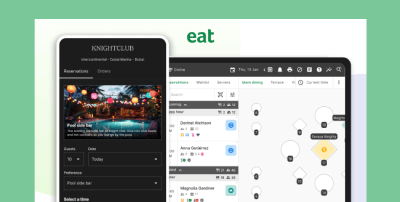
Eat App offers a different path: a standalone, all-in-one reservation and guest management platform with transparent pricing starting at $0/month, deep CRM and marketing automation and global coverage across 90+ countries without tying your restaurant's data to a delivery company's ecosystem.
This guide breaks down everything operators need to know to choose the right platform.
What Changed in 2025–2026: The DoorDash Acquisition
DoorDash announced its acquisition of SevenRooms in May 2025 and completed the deal in June 2025. The $1.2 billion transaction brought SevenRooms along with its 13,000+ venue customer base including Union Square Hospitality Group, Nobu, and Marriott International under DoorDash's umbrella.
SevenRooms is now part of DoorDash's Commerce Platform, which also includes online ordering, DoorDash Storefront, and the recently acquired ad tech company Symbiosys. DoorDash's stated goal is to help restaurants "grow across all channels" delivery, pickup, reservations and in-person hospitality.
For operators, there are legitimate positives here. DoorDash brings scale, resources, and a massive consumer network. Over time, SevenRooms restaurants may benefit from deeper integration with DoorDash's delivery infrastructure and marketing tools.
But there are also legitimate concerns. SevenRooms historically differentiated itself by championing operator-owned guest data and avoiding third-party marketplace dependencies. Under DoorDash ownership, industry observers have questioned whether that independence can be maintained. As one industry analysis noted, "independent operators who currently use SevenRooms may be cautious about how the acquisition will affect their ability to control guest interactions and communications."
The parallel to Resy's AmEx acquisition is hard to ignore: when a platform built on restaurant independence gets absorbed by a larger consumer-facing company, the incentives eventually shift.
SevenRooms vs Eat App at a Glance
| Feature | SevenRooms (by DoorDash) | |
| Starting price | ~$499/mo per venue | $0/mo (permanent free plan) |
| Free plan | No | Yes, reservations, floor plan, table management |
| Free trial | No | Yes, permanent free tier, no credit card |
| Per-cover fees | None | None |
| G2 rating | 4.7/5 (53 reviews) | 4.5/5 (45+ reviews) |
| Capterra rating | 4.6/5 (24 reviews) | 4.5/5 (20+ reviews) |
| Guest CRM | Enterprise-grade CDP with profiles, tags, segmentation and sentiment analysis | Advanced CRM with profiles, tags, segmentation, spend tracking and campaign tools |
| Marketing automation | Email, SMS, automated campaigns with ROI tracking | Email, SMS and WhatsApp automation with behaviour-based triggers |
| POS integrations | Toast, Square, Oracle, NCR Aloha, Lightspeed and others | 30+ POS systems including Toast, Square, Lightspeed, Foodics, Oracle and more |
| Countries served | Global (strongest in US, UK, Australia) | 90+ countries, Middle East, Europe, APAC, North America |
| Target market | Enterprise, hotels, upscale multi-location groups | Independent to enterprise — hotels, chains, fine dining, casual |
| Parent company | DoorDash (NASDAQ: DASH) | Independent (VC-backed, $16M raised) |
| Contract requirements | Annual contracts typical; custom pricing | Month-to-month; no lock-in |
Pricing Comparison: What Restaurants actually pay
SevenRooms doesn't publish detailed pricing on its website, operators must contact sales for a custom quote. However, third-party sources consistently report a starting price of approximately $499/month per venue with enterprise pricing scaling significantly higher based on features, locations and integrations.
Table 2: Pricing breakdown
| Cost Element | SevenRooms (estimated) | Eat App Free | Eat App Starter | Eat App Pro | Eat App Enterprise |
|---|---|---|---|---|---|
| Monthly subscription | ~$499+ per venue | $0 | ~$49 | ~$139 | ~$239 |
| Annual cost | ~$5,988+ | $0 | ~$588 | ~$1,668 | ~$2,868 |
| POS integration | Included (varies by plan) | N/A | Add-on ~$129/mo | Add-on ~$129/mo | Included |
| Per-cover fees | None | None | None | None | None |
| Free trial | No | Permanent free plan | 14-day trial | 14-day trial | Demo available |
| Contract | Annual typical | None | Month-to-month | Month-to-month | Flexible |
| Event ticketing fees | Varies | N/A | N/A | N/A | N/A |
What this means in real numbers
A single-location restaurant using SevenRooms with standard CRM and marketing tools will pay roughly $6,000–$8,000 per year depending on features and add-ons. A three-location group can easily reach $18,000–$25,000 annually and that's before factoring in implementation, training and any custom integrations.
With Eat App Enterprise (including POS integration), a comparable three-location group would pay approximately $8,600 per year. That's less than half the cost with month-to-month flexibility and no annual contract lock-in.
One G2 reviewer who compared Eat App against SevenRooms noted that they found Eat App "diverse in its features and competitively priced," adding that "while SevenRooms offers similar features, it comes at a much higher cost and less frequent sales engagement."
For mid-market operators the restaurants that are too big for a basic booking tool but aren't running 50+ locations, the pricing gap is difficult to justify.
Feature-by-Feature comparison
Both SevenRooms and Eat App position themselves as all-in-one guest management platforms. But the depth, accessibility and pricing of specific features differ meaningfully.
Table 3: Feature Matrix
Reservations and Table Management
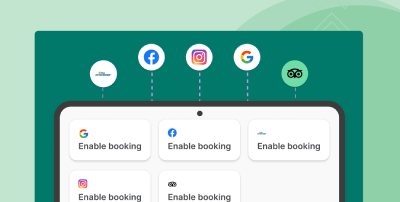
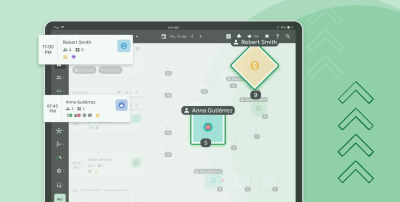
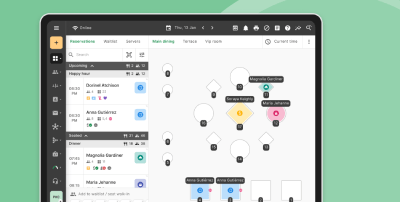
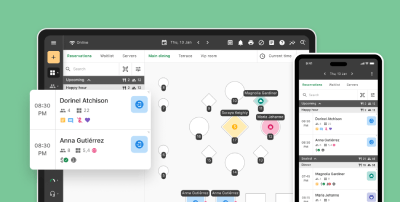
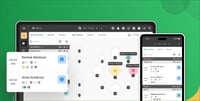
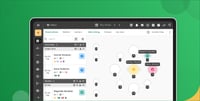
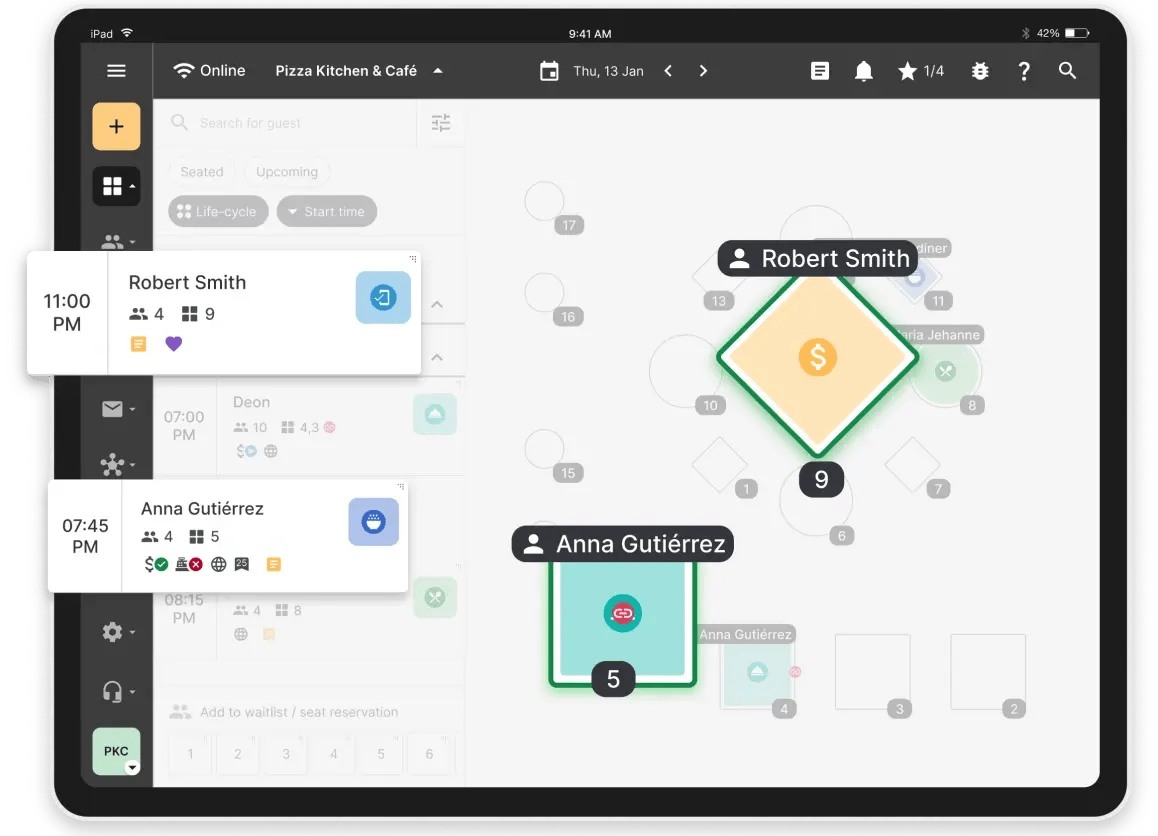
Both platforms deliver strong reservation and table management capabilities. SevenRooms offers an auto-assign algorithm that optimises seating, customisable floor plans, and multi-channel booking through Google, Instagram, Facebook and its own widget. Eat App provides the same core capabilities with the addition of AI-powered seating logic and phone system integration.
A G2 reviewer running multiple venues praised Eat App's operational depth, noting that the platform's "AI‑driven seating logic helps maximise table turns across even complex floor plans, so we fill more seats intelligently." Another reviewer highlighted how Eat App solved "overbooking and lost reservations" by keeping "all bookings in one digital system, avoiding manual errors."
SevenRooms users, meanwhile, praise the platform for being "super easy to use" with "a lot of automations that you can set up that are very helpful to run your service smoothly." One multi-property operator noted that SevenRooms is the "perfect tool for operating our client database between 7+ properties."
Edge: Tie for enterprise; Eat App for mid-market - SevenRooms excels at complex multi-property operations; Eat App's AI features and phone integration offer unique operational advantages at a more accessible price point.
Guest CRM and Data Ownership
This is the category where both platforms claim to excel — and where the differences get nuanced.
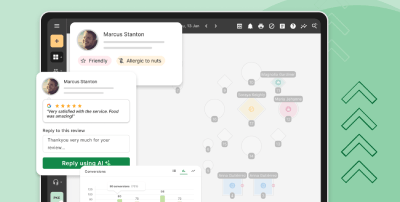
SevenRooms' CRM is genuinely enterprise-grade. It centralises guest profiles with visit history, preferences, allergies, order history, and spending data across all venues. The sentiment analysis tool aggregates reviews from multiple platforms and connects them to individual guest profiles. The segmentation capabilities are deep, and the data can be used to power highly targeted email and SMS campaigns with full ROI tracking.
SevenRooms has historically championed data ownership as a core differentiator — restaurants own their guest data, not the platform. This was a major selling point against OpenTable and Resy, both of which control guest relationships through their consumer marketplaces. However, with DoorDash now owning SevenRooms, operators are right to ask whether that data independence will remain intact as integration with DoorDash's commerce platform deepens.
Eat App's CRM offers comparable depth for most restaurant use cases: guest profiles with visit history, dining preferences, dietary notes, custom tags, staff notes, and spend data via POS integration. Where Eat App adds capabilities SevenRooms lacks is WhatsApp messaging (essential in the Middle East and much of Asia), a built-in loyalty programme, and AI-powered no-show prediction.
On G2, an Eat App reviewer managing a multi-venue F&B group described how the "layered guest CRM and tagging allow personalised hospitality — we can automate birthday messages, identify VIPs and refine promotions for different segments." The same reviewer highlighted the "reporting dashboard" that lets them "slice data by location, shift, guest spend or marketing channel."
On the SevenRooms side, a Capterra reviewer praised the platform's ability to "organise reservations and gather notes on members and frequent diners." Another noted the platform "helps us maintain our guest experience with customised features that really allow us to know our guests better."
Edge: SevenRooms for raw enterprise CRM depth and sentiment analysis; Eat App for WhatsApp, loyalty, AI features and full data independence without delivery-company ownership.
Marketing Automation
Both platforms offer marketing automation a critical differentiator from simpler reservation-only tools like Resy and OpenTable.
SevenRooms' marketing suite includes email campaign creation, SMS messaging, automated trigger campaigns (like post-visit follow-ups and lapsed-guest re-engagement), referral programmes and ROI tracking for every campaign. The platform's strength is in connecting marketing directly to CRM data so campaigns are informed by guest behaviour, spend patterns, and visit history.
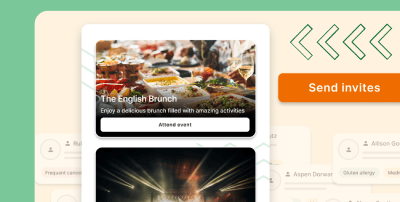
Eat App delivers comparable email and SMS automation with one major addition: WhatsApp messaging. For restaurants operating in the Middle East, Southeast Asia and parts of Europe, WhatsApp is the dominant communication channel and having it natively integrated into the CRM means you can reach guests where they actually are, not just where email and SMS can find them.
An Eat App user on G2 called the platform "a game-changer for managing multiple restaurants on autopilot," specifically praising "CRM, automation, and multi-channel bookings" as the features that deliver the most value. Another reviewer highlighted how Eat App solved "inefficient communication" by automating "SMS/email confirmations" and allowing "quick updates."
A SevenRooms reviewer on Capterra noted they "use the platform for all booking reservations, marketing events and email blasts," though one reviewer flagged that "the marketing section isn't as advanced as OpenTable as the reach that the system isn't as advanced."
Edge: SevenRooms for sophisticated campaign analytics and referral tools; Eat App for WhatsApp integration and accessibility for lean teams.
Integrations and POS Compatibility
Table 4: Integration and Platform Comparison
SevenRooms has a strong integration ecosystem, particularly for enterprise use cases its OpenTable inbound integration allows restaurants to receive OpenTable bookings while managing them within SevenRooms, and its MailChimp integration extends marketing reach. The open API enables custom integrations for large hotel groups.
Eat App integrates with 30+ POS systems and offers unique phone system (PBX) integration that connects caller ID data directly to guest profiles.It also supports Android devices natively a meaningful advantage for restaurants that don't want to be locked into Apple hardware.
A G2 reviewer running multiple locations called out Eat App's "seamless integrations, unlimited messaging, and advanced automation" as what gives operators "absolute control over a multi-venue operation."
On SevenRooms, multiple reviewers flagged integration limitations. One Capterra reviewer wished the platform "was able to integrate with our other platforms that help us run a members' club." Another noted their POS system didn't work with SevenRooms, which limited spend tracking. A third reviewer pointed out they needed to "use/pay for OpenTable on top of your monthly cost" because of limited consumer discovery.
Edge: SevenRooms for enterprise API and OpenTable inbound; Eat App for broader POS support, PBX integration and Android compatibility.
Who should choose SevenRooms
SevenRooms remains a strong choice if your operation matches this profile:
You're an enterprise hospitality group or hotel chain managing 10+ venues with dedicated IT, marketing and operations teams.You need enterprise-grade CRM with sentiment analysis and the ability to connect guest data across multiple properties at scale.You want event management, revenue management and dynamic pricing tools that go beyond standard reservation management. You're already part of (or willing to join) the DoorDash ecosystem and see value in tighter delivery-to-dine-in integration.Your budget supports $500+ per venue per month and you're comfortable with annual contracts and custom pricing.
For large hospitality groups with the resources to maximise every feature, SevenRooms delivers genuine enterprise value.
Who should choose Eat App
Eat App is the smarter choice if any of the following apply:
You want to start free with a permanent plan that includes real reservations, table management and a digital floor plan. No credit card, no demo call required. You need deep CRM and marketing automation at a fraction of SevenRooms' cost including WhatsApp messaging, built-in loyalty programmes, and AI-powered operations. You operate outside major US and UK markets in the Middle East, Southeast Asia, APAC or across multiple international regions. You run a hotel F&B group or multi-location chain and need a centralised dashboard with PMS and POS integration without paying enterprise-level pricing. You want transparent pricing with no annual contracts, no custom quotes, and no hidden implementation fees.You value data independence your guest data stays yours, not subject to the strategic priorities of a delivery company.
The core positioning difference: SevenRooms is built for the enterprise. Eat App is built for every restaurant that wants enterprise-grade tools without enterprise-grade complexity and cost.
What real users say: Review summary
SevenRooms: Loved for CRM Depth, Criticised for Price and Complexity
Operators praise SevenRooms for its comprehensive guest profiling, marketing automation with ROI tracking and multi-property data sharing. The platform scores particularly well with large hospitality groups that can invest the time and resources to maximise its capabilities.
The most common criticisms involve pricing opacity (no public pricing, custom quotes only), steep learning curve for new users, app usability issues (one Capterra reviewer called the mobile app "impossible to use"), integration gaps with certain POS and membership platforms, and concerns about the DoorDash acquisition's implications for data independence.
Eat App: Loved for value and automation, Criticised for US visibility
Operators consistently praise Eat App's CRM depth relative to its price, proactive support team, WhatsApp and multi-channel marketing, and ease of onboarding with one reviewer rating setup "10 out of 10." Multi-venue operators highlight the centralised dashboard and cross-location guest tracking.
The most common criticisms include limited brand awareness in the US market, occasional POS integration challenges during initial setup, and a desire for more granular reservation source tracking without purchasing add-ons.
Beyond enterprise: Why global operators choose Eat App
SevenRooms has a global presence it works with Marriott International, Nobu, and venues across the US, UK and Australia. But its deepest penetration and support infrastructure are concentrated in major English-speaking markets.
Eat App operates in 90+ countries with particular strength in the Middle East, Europe and Southeast Asia.It's the reservation platform trusted by The Ritz-Carlton Group, Fairmont Hotels, Four Seasons and Emaar Hospitality Group (deployed across 50+ restaurants including At.mosphere at Burj Khalifa).
For operators who need WhatsApp-first communication, regional POS integration (Foodics, for example, is essential in the GCC region) and support infrastructure that spans time zones, Eat App's global footprint is a decisive advantage.
Making the switch: How to migrate from SevenRooms to Eat App
Step 1: Export your data. SevenRooms allows guest database exports. Request a full export including guest profiles, visit history, tags, notes and marketing preferences before offboarding.
Step 2: Set up Eat App. Sign up for the free plan and configure your floor plan, shifts and booking widget. Most restaurants are live within hours.
Step 3: Import your guest data. Eat App's support team assists with importing your existing guest database during onboarding, ensuring profiles and history carry over cleanly.
Step 4: Activate marketing. Set up automated campaigns — welcome sequences, post-dining surveys, birthday offers, re-engagement messages to maintain guest communication without interruption.
Step 5: Train your team. Eat App's interface is designed for minimal training time. One G2 reviewer noted it takes "only a few days for new staff to be fully operational" and most operators report even faster onboarding.
How Eat App compares to other reservation platforms
Still weighing your options? These comparisons cover other major platforms:
- Eat App vs Resy - Discovery platform vs standalone guest management.
- Eat App vs OpenTable - Commission-based vs commission-free reservations.
- Eat App vs Resos - Feature and pricing comparison for independent restaurants.
- The 13 Best Online Restaurant Reservation Systems - The complete market overview.
- 10 Best Restaurant CRM Systems Compared - If CRM is your top priority, start here.
Frequently Ask Questions (FAQ)
Frequently Ask Questions
SevenRooms doesn't publish pricing on its website. Third-party sources report a starting price of approximately $499/month per venue, with custom enterprise pricing that can scale significantly higher based on features, locations, and integrations. There's no free plan or free trial available.
Yes. Eat App offers a permanent free plan — not a trial — that includes online reservations, table management, and a digital floor plan. No credit card is required to sign up, and there's no time limit.
DoorDash completed its $1.2 billion acquisition of SevenRooms in June 2025. SevenRooms is now part of DoorDash's Commerce Platform alongside online ordering, DoorDash Storefront, and other merchant tools.
No. SevenRooms supports email and SMS marketing but does not offer native WhatsApp messaging. Eat App includes WhatsApp as a built-in communication channel across its paid plans — a critical capability for restaurants in the Middle East, Southeast Asia, and parts of Europe.
Yes. Export your guest database from SevenRooms before transitioning. Eat App's support team assists with data import during onboarding. Most single-location migrations can be completed within a few days.
Absolutely. Eat App integrates with property management systems (PMS) and provides a centralised dashboard across all locations. It's trusted by major hotel brands including The Ritz-Carlton Group, Fairmont Hotels, and Four Seasons.
No. Like Eat App, SevenRooms does not charge per-cover or per-reservation fees. Both platforms use subscription-based pricing models.
Eat App is significantly more accessible for single-location operators. Its free plan provides full reservation and table management capabilities, while SevenRooms' pricing (starting at ~$499/month) and enterprise-oriented onboarding make it better suited for larger groups with bigger budgets.
The bottom line: SevenRooms vs Eat App
SevenRooms is one of the most powerful guest experience platforms in the restaurant tech market. For large enterprise hospitality groups with the budget, team, and technical resources to maximise every feature particularly event management, revenue management and advanced sentiment analysis it delivers genuine value.
But for the vast majority of restaurants independents, growing chains, hotel F&B groups and mid-market operators who need deep CRM and marketing automation without $500/month per venue and annual contracts Eat App delivers equal or better functionality at a fraction of the cost.
The DoorDash acquisition adds a new dimension to this decision. If your priority is data independence and platform neutrality owning your guest relationships without a delivery company in the middle Eat App's independent positioning matters.
Start Free No Cover Fees, Ever
Ready to see how Eat App compares to SevenRooms for your restaurant? Start with our free plan no credit card, no cover fees, no annual contract.


.webp?width=144&height=72&name=Eat%20App%20Logo%20(3).webp)