


.svg)
.svg)
















.svg)

.svg)


-2-1.webp?width=200&name=image5%20(6)-2-1.webp)
%20(1)-1.webp?width=200&name=Eat%20(57)%20(1)-1.webp)
-1.png?width=1812&height=1072&name=TripAdvisor%20%26%20More%20Bookings%20(1)-1.png)
-2.png?width=1812&height=1072&name=Google%20Bookings%20(1)-2.png)
%20(1)-1.webp?width=200&name=Eat%20(62)%20(1)-1.webp)

-1.png?width=200&name=TripAdvisor%20%26%20More%20Bookings%20(1)-1.png)
-2.png?width=200&name=Google%20Bookings%20(1)-2.png)
-1.png?width=200&name=Instagram%20Bookings%20(1)-1.png)
-1-png.webp?width=200&name=Facebook%20Integration%20Rectangle%20(1)-1-png.webp)


.webp?width=200&name=download%20(1).webp)
%20(1)-2.webp?width=200&name=Eat%20(34)%20(1)-2.webp)
%20(1)-2.webp?width=200&name=Eat%20(18)%20(1)-2.webp)







Running a multi-location restaurant group means dealing with guest data scattered across properties, separate reporting systems and no way to recognize your regulars when they visit a different venue. A restaurant reservation system built for single locations simply does not solve these problems. Eat App gives you centralized guest management across all your venues so your downtown regular gets VIP treatment at your airport location too.
This comparison covers what matters most for restaurant groups: cross-property guest recognition, group-level analytics, and the operational tools that keep multiple locations running in sync. You will learn how Eat App, OpenTable and SevenRooms stack up on features, data ownership and total cost of ownership for growing restaurant brands.
Key Takeaways: Eat App vs OpenTable vs SevenRooms
- Eat App offers commission-free bookings with built-in WhatsApp, SMS and email marketing across all your locations.
- OpenTable has the largest consumer network but charges per-cover fees that add up quickly for high-volume groups.
- SevenRooms focuses on enterprise CRM but comes with higher monthly costs and no consumer marketplace.
- Eat App gives you transparent, published pricing with a permanent free tier rare among multi-location platforms.
- Guest data ownership varies significantly between platforms, affecting your ability to build direct relationships.
Eat App vs OpenTable vs SevenRooms:
Quick Overview
| Feature | Eat App | OpenTable | SevenRooms |
|---|---|---|---|
| Starting price | $0/mo (permanent free plan) | $149/mo (Basic) | ~$499/mo (custom quote) |
| Per-cover fees | None | $1–$1.50/network cover | None |
| Free plan | Yes, permanent | No (30-day trial) | No |
| Multi-location dashboard | ✅ Centralised with role-based access | ✅ Separate property per marketplace listing | ✅ Enterprise cross-property |
| Cross-property guest recognition | ✅ Automatic | Limited profiles don't fully sync across venues | ✅ On enterprise plans |
| Guest data ownership | Restaurant owns 100% | OpenTable uses data for marketplace marketing | Restaurant owned (now under DoorDash) |
| Marketing automation | ✅ Email, SMS, WhatsApp included | Basic; advanced features cost extra | ✅ Email, SMS on higher tiers |
| WhatsApp messaging | ✅ Built-in | ❌ | ❌ |
| POS integrations | 30+ systems | Limited to higher-tier plans | 100+ integrations |
| Countries served | 90+ countries | Primarily US, UK, select international | Global (strongest in US, UK, Australia) |
| Consumer marketplace | Eat App diner network | ✅ Largest (millions of monthly users) | ❌ Own marketplace; DoorDash Reservations in select cities |
| Pricing transparency | ✅ Published online | Partially (per-cover fees vary) | ❌ Custom quotes only |
| Contract requirements | Month-to-month | Annual typical | Annual typical |
| Parent company | Independent (VC-backed) | Booking Holdings (NASDAQ: BKNG) | DoorDash (NASDAQ: DASH) |
What is Eat App?
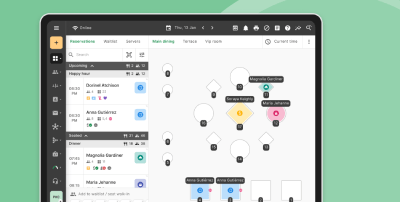
Eat App is an all-in-one restaurant reservation and guest management platform trusted by venues in over 90 countries.The platform combines online reservations, table management, guest CRM and marketing automation into a single dashboard. For multi-location groups, Eat App offers centralized venue management with role-based access control and group-level reporting.
Eat App key features
- Venue management dashboard: Manage settings, booking rules, and operating hours across all locations from one central interface.
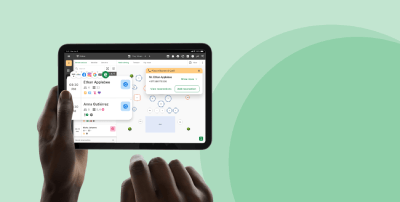
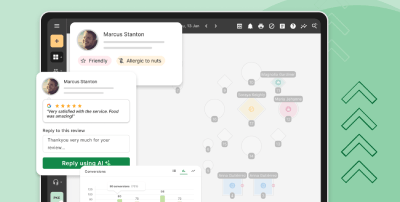
- Cross-property guest profiles: Automatically track preferences, spend history, and dining patterns across every venue in your group.
- Built-in marketing automation: Send targeted campaigns via email, SMS, and WhatsApp based on guest behavior and loyalty segments.
- AI-powered table management: Optimize seating automatically with no-show prediction and smart wait time estimation.
- 30+ POS integrations: Link your reservations directly with POS systems including Oracle, Lightspeed and Square.
Eat App pros and cons
Pros:
- Commission-free reservations from Google, Instagram and your website no per-cover fees regardless of volume.
- Full ownership of your guest data with unrestricted export capabilities and direct marketing access.
- Transparent pricing with a permanent free plan and published rates for all tiers.
Cons:
- Consumer marketplace reach is smaller than OpenTable, though direct booking channels offset discovery gaps.
- Some advanced event ticketing features require higher-tier plans, though the core functionality remains strong.
- Initial setup for complex multi-location groups may require onboarding support, which Eat App includes at no extra cost.
What is OpenTable?
OpenTable operates one of the largest consumer dining networks globally, connecting millions of diners with restaurants each month. The platform offers reservation management, table assignment tools, and basic guest profiles. For restaurant groups, OpenTable can manage multiple locations, though each property maintains a separate presence on the marketplace.
OpenTable key features
- Consumer marketplace: Access to a network of millions of monthly users searching for dining options.
- Mobile app management: Hosts can view and manage reservations from tablets or smartphones.
- Basic guest profiles: Track visit counts and notes, though preferences sync is limited across properties.
- POS integration on higher plans: Reservation data can sync with select POS systems on Core and Pro tiers.
- Automated confirmations: Guests receive booking confirmations and reminders to reduce no-shows.
OpenTable pros and cons
Pros:
- Large consumer network can drive discovery for new venues or locations in unfamiliar markets.
- 24/7 customer support available across all plan tiers.
- Integration with travel and discovery partners like Booking.com and Zagat.
Cons:
- Per-cover fees on network reservations add up, with charges ranging from $1 to $1.50 per cover on some plans.
- Guest-facing communications carry OpenTable branding with limited customization for your restaurant identity.
- Restaurants must now use OpenTable as the primary system of record, limiting flexibility with other reservation partners.
Further reading
What is SevenRooms?
SevenRooms positions itself as a guest management and CRM platform for hospitality operators, with a focus on enterprise groups and hotel F&B outlets. The platform emphasizes guest data ownership and marketing automation, along with reservation and waitlist management. SevenRooms also powers DoorDash Reservations in select markets.
SevenRooms key features
- Detailed guest profiles: Auto-tagging based on preferences, order history and visit patterns.
- Marketing automation: Triggered email and SMS campaigns based on guest segments and behaviors.
- Customizable booking widget: Booking flows can be adjusted to match your branding in multiple languages.
- PCI-compliant prepayments: Accept deposits and ticketed events through the booking flow.
- 100+ integrations: Connects with POS systems, online ordering platforms and booking channels.
SevenRooms pros and cons
Pros:
- No per-cover fees on any reservations, keeping costs predictable regardless of booking volume.
- Guest data remains fully owned by the restaurant with no third-party remarketing.
- Integration with DoorDash Reservations adds a discovery channel without marketplace fees.
Cons:
- DoorDash Reservations is currently available only in major US and Australian cities, with limited international coverage.
- Pricing requires custom quotes, making it difficult to compare costs before committing to a sales conversation.
- No consumer marketplace of its own means you rely entirely on third-party channels for discovery.
Eat App vs OpenTable vs SevenRooms: In-depth comparison
Annual cost example: 3-location group, 500 network covers/week per location
| Platform | Subscription | Cover Fees | Total Annual Cost |
| Eat App Pro | $389 × 3 × 12 = $14,004 | $0 | ~$14,004 |
| OpenTable Basic | $149 × 3 × 12 = $5,364 | $1.50 × 500 × 3 × 52 = $117,000 | ~$122,364 |
| OpenTable Core | $299 × 3 × 12 = $10,764 | $1.00 × 500 × 3 × 52 = $78,000 | ~$88,764 |
| SevenRooms | ~$499 × 3 × 12 = $17,964 | $0 | ~$17,964 |
OpenTable's per-cover fees make a dramatic difference at scale.A 3-location group on OpenTable Basic pays over $122K/year, 14× what the same group pays on Eat App.
Multi-location management
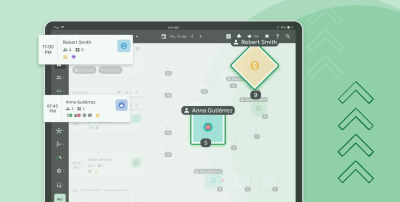
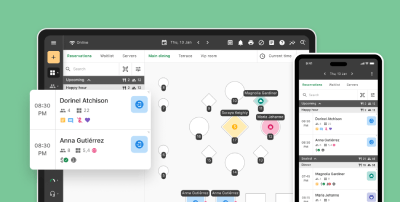
Eat App gives you a single dashboard to manage all your venues with role-based permissions, allowing your operations director to see everything while hosts access only their location. You can push setting changes across all properties or select specific venues without logging into each one separately.
OpenTable and SevenRooms both support multi-location setups. OpenTable requires each property to maintain a separate marketplace presence, while SevenRooms offers cross-property guest recognition for enterprise accounts. Eat App balances both approaches—centralized control with venue-level autonomy.
Guest CRM and data ownership
Your guest data is yours with Eat App full export capabilities, no restrictions on marketing, and profiles that track preferences automatically across all your locations. This means your loyalty program works everywhere your guests dine with you.
SevenRooms also emphasizes data ownership, though at a higher price point. OpenTable uses guest data for its own marketplace marketing, which can feel counterproductive when you are trying to build direct relationships. For groups focused on retention, Eat App and SevenRooms both outperform OpenTable on this dimension.
Marketing automation
Eat App includes built-in email, SMS, and WhatsApp automation at no additional cost. You can segment guests by venue, behavior, or spending patterns and run campaigns that feel personal even at scale. The platform tracks campaign performance so you know what drives repeat visits.
SevenRooms offers similar marketing capabilities, though typically as part of higher-tier packages. OpenTable includes basic marketing tools but charges additional fees for advanced features. If marketing automation matters to your group, Eat App delivers the most value per dollar.
POS and channel integrations
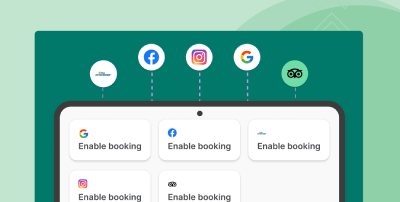
Eat App integrates with over 30 POS systems and booking channels including Google Reserve, Instagram, and Facebook. This breadth matters for groups running different POS systems across locations or franchisees with their own technology preferences.
Both OpenTable and SevenRooms offer POS integrations, though OpenTable limits this to higher-tier plans. SevenRooms has 100+ integrations but focuses heavily on enterprise-scale deployments. For mid-sized groups, Eat App offers the most flexibility without requiring enterprise pricing.
Pricing transparency
Eat App publishes its pricing online with a permanent free tier and clear upgrade paths. You know exactly what you will pay before starting a conversation with sales. This matters when budgeting for multiple locations.
OpenTable publishes starting prices but adds per-cover fees that vary by plan and booking source. SevenRooms requires custom quotes, making comparison difficult. According to industry comparisons, SevenRooms typically costs more per location than other platforms on this list.
How do you choose a reservation system for multiple locations?
Start by mapping your actual workflow. How does your operations team currently track performance across venues? What reports do your regional managers need? Which locations share regulars? The answers shape your requirements.
Next, calculate total cost over three years. Per-cover fees that seem small multiply quickly across high-volume properties. A group doing 500 covers per week per location at $1 per cover spends over $78,000 annually on fees alone—money that could fund marketing or staff.
Finally, test with your staff. The platform your hosts can learn quickly is the one that will actually get used. Eat App consistently ranks high for ease of use, which translates to faster onboarding and fewer errors during service.
What features matter most for restaurant group operations?
Cross-property guest recognition tops the list. Your regulars expect to be remembered regardless of which location they visit. A system that treats each venue as isolated defeats the purpose of being a group.
Group-level reporting comes next. Your operations director needs to compare performance across properties without downloading separate spreadsheets. Look for dashboards that benchmark venues against each other and track trends over time.
Role-based access matters as your team grows. Hosts need different permissions than marketing managers, and franchisees may need isolated views. Eat App handles this with venue-level user controls that scale with your organization.
Why Eat App is the best for multi-location restaurant groups
Eat App delivers the operational depth of enterprise platforms without the enterprise price tag. You get centralized venue management, AI-powered table optimization, and built-in marketing automation that works across SMS, email, and WhatsApp. Your guest profiles track preferences and spend across every property automatically.
The transparent pricing model means no surprises as you grow. Commission-free reservations keep your costs predictable whether you operate three locations or thirty. And with 30+ POS integrations and booking channels like Google Reserve built in, your tech stack works together instead of creating more admin work.
Ready to see how Eat App handles your specific multi-location needs? Start your free trial and experience the difference unified guest management makes for growing restaurant brands.
Who each platform Is best for
| Your Situation | Best Choice | Why |
|---|---|---|
| Multi-location group wanting transparent, commission-free pricing | Eat App | $0–$389/mo with no per-cover fees, published pricing; month-to-month flexibility |
| Single location in a major US city needing diner discovery | OpenTable | Largest consumer marketplace drives new guest acquisition |
| Enterprise hotel group with 20+ F&B outlets and dedicated IT team | SevenRooms | Deepest enterprise CRM with 100+ integrations strong hotel PMS connectivity |
| Group operating across multiple countries/regions | Eat App | 90+ countries with WhatsApp, regional POS support and centralised dashboard |
| High-volume group trying to reduce reservation costs | Eat App | Zero per-cover fees save $78K+ annually for a 3-location, 500-cover/week group vs OpenTable |
| Group needing built-in WhatsApp + SMS + email marketing | Eat App | Only platform with all three channels included natively at no extra cost |
| Restaurant prioritising guest data ownership and independence | Eat App | Fully independent (not owned by a marketplace, delivery company, or credit card company) |
| Group wanting a consumer marketplace for discovery | OpenTable | Millions of monthly users; strongest brand recognition among US diners |
| Enterprise group already in the DoorDash ecosystem | SevenRooms | DoorDash Reservations integration; shared commerce platform |
FAQs: Best Reservation System for Multi-Location Restaurants
What is the best reservation system for restaurant groups?
Eat App offers the best balance of features, pricing, and ease of use for restaurant groups. You get centralized management, cross-property guest profiles, and commission-free bookings. The platform scales from a few locations to large franchises without pricing surprises.
How much does a multi-location reservation system cost?
Costs vary widely by platform and booking model. Per-cover fees can add tens of thousands annually for high-volume groups. Eat App publishes transparent pricing with no per-cover charges, making budgeting straightforward for operations teams.
Can guests be recognized across different restaurant locations?
Yes, with the right platform. Eat App automatically syncs guest profiles across all your venues, so preferences, dietary requirements, and visit history follow your guests wherever they dine. This enables consistent VIP treatment across your entire group.
What is the difference between direct and marketplace reservations?
Direct reservations come through your website, Google, or social channels—you own the guest relationship. Marketplace reservations come through a platform's consumer network, often with per-cover fees and shared branding. Eat App focuses on direct channels to maximize your ownership.
Do multi-location systems integrate with different POS platforms?
Integration capabilities vary. Eat App connects with 30+ POS systems including Oracle, Lightspeed, and Square—useful when different locations or franchisees run different technology. Some competitors limit integrations to specific plans or charge extra for connectivity.
How do I reduce no-shows across multiple venues?
Automated reminders, deposit requirements, and clear cancellation policies work together to cut no-shows. Eat App combines all three with AI-powered no-show prediction, helping you identify high-risk reservations before they cost you revenue.


.webp?width=144&height=72&name=Eat%20App%20Logo%20(3).webp "Eat App")