


.svg)
.svg)
















.svg)

.svg)


-2-1.webp?width=200&name=image5%20(6)-2-1.webp)
%20(1)-1.webp?width=200&name=Eat%20(57)%20(1)-1.webp)
-1.png?width=1812&height=1072&name=TripAdvisor%20%26%20More%20Bookings%20(1)-1.png)
-2.png?width=1812&height=1072&name=Google%20Bookings%20(1)-2.png)
%20(1)-1.webp?width=200&name=Eat%20(62)%20(1)-1.webp)

-1.png?width=200&name=TripAdvisor%20%26%20More%20Bookings%20(1)-1.png)
-2.png?width=200&name=Google%20Bookings%20(1)-2.png)
-1.png?width=200&name=Instagram%20Bookings%20(1)-1.png)
-1-png.webp?width=200&name=Facebook%20Integration%20Rectangle%20(1)-1-png.webp)




.webp?width=200&name=download%20(1).webp)
%20(1)-2.webp?width=200&name=Eat%20(34)%20(1)-2.webp)
%20(1)-2.webp?width=200&name=Eat%20(18)%20(1)-2.webp)







Canadian reservation tech had its biggest news in years this April: OpenTable acquired Libro, the Montreal-built platform that had become the commission-free favourite of Quebec restaurants.For operators from Vancouver to Halifax, the takeaway is bigger than one deal the consolidation wave that swept the US has crossed the border and the questions it raises are now Canadian questions: what happens to your guest data when your vendor is acquired, what you're really paying once per-cover fees are converted to Canadian dollars, and in Quebec whether your booking flow can legally and practically serve guests in French.
This guide compares the reservation systems Canadian restaurants actually choose in 2026, with Canadian pricing context throughout. (Comparing platforms globally instead? Start with our guide to the best restaurant reservation systems overall.)
Canadian reservation software compared (2026)
| Tool | Price (CAD context) | Free plan | SMS / texting | Canadian presence | Best for |
|---|---|---|---|---|---|
| Eat App | Flat plans from $0; no per-cover fees (≈C$135/mo for Starter) | Yes, 100 covers/mo | Automated SMS confirmations & reminders | 24/7 live support | Independents & groups wanting flat, network-free pricing |
| OpenTable | Core US$299/mo, Pro US$499/mo + up to US$1.50/network cover | No | Yes | Strong opentable.ca, now owns Libro | High-volume rooms that depend on OpenTable's diner network |
| Libro | Commission-free model (pre-acquisition); transitioning under OpenTable | — | Yes | Montreal-built, Quebec stronghold | Quebec restaurants — but see acquisition caveats |
| TouchBistro Reservations | C$229/mo flat add-on (+POS from C$69/mo) | No | Yes | Toronto-based | Restaurants already on TouchBistro POS |
| Resy | ~US$249–399/mo flat | No | Yes | Toronto & Vancouver dining scenes | Trend-forward urban restaurants |
| resOS | Low-cost tiers from ~US$95/mo | Limited | Yes | Remote (EU-based) | Small spots wanting simple flat pricing |
| Tableo | Low-cost tiers, free entry plan | Yes | SMS & email | Remote (EU-based) | Budget-conscious single locations |
| Tock | Subscription + ~2% on prepaid bookings | No | Yes | Wineries & tasting rooms (merging into Resy) | Prepaid, ticketed & experience dining |
Pricing checked July 2026. OpenTable and Resy bill in USD budget for the exchange rate. Confirm current rates before signing.
1. Eat App
Eat App gives Canadian restaurants the thing the post-Libro market suddenly has less of: a complete, commission-free reservation platform where the guest database is contractually yours. Flat monthly plans, zero per-cover fees, and no diner marketplace with its own agenda for a Toronto room doing 1,500 covers a month, that's thousands of dollars a year not paid out in network fees.
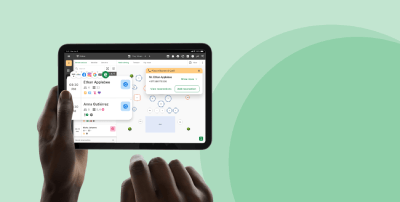
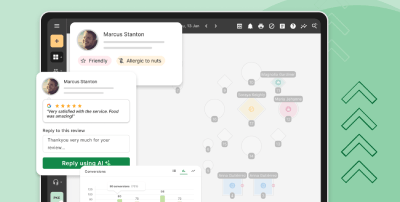
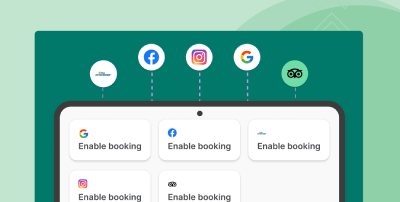
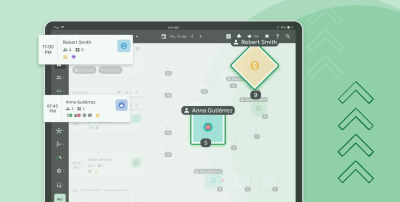
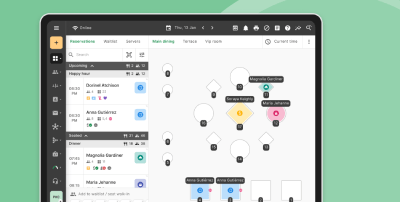
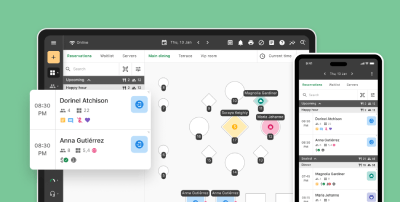
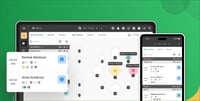
The platform is full-stack restaurant reservation software: live floor-plan and table management, a guest CRM with visit and spend history, automated SMS confirmations and reminders (the channel Canadian guests actually answer), credit-card holds and deposits for no-show protection, and direct bookings from Google, Instagram, and your website.
Canadian pricing (July 2026): the free plan handles up to 100 covers a month at $0, a real system for a small room, not a trial. Paid plans start at US$99/month (≈C$135), with unlimited-cover tiers above; annual billing brings those down further. (Editor: confirm Cat 1 tier against the June 2026 sheet.)
Honest trade-off: Eat App has no Canadian consumer diner network. If OpenTable's marketplace genuinely fills tables you couldn't fill yourself common in downtown Toronto and Vancouver tourist corridors weigh that against the fees. If your demand is direct, regularsand Google, you're paying network prices for bookings you already own.
2. OpenTable
OpenTable is the incumbent in Canada's big cities and since April 2026 the owner of Libro, giving it new depth in Quebec. The network is real: opentable.ca is where a large share of Toronto, Vancouver, and Montreal diners start. So are the costs: Core at US$299/month and Pro at US$499/month, plus network cover fees up to US$1.50 per seated guest all billed in US dollars, so the exchange rate inflates every line item by ~35%.
Do the Canadian math before signing: 1,500 network covers a month can mean US$1,500–$2,250 in cover fees alone roughly C$2,000–$3,000 on top of the subscription. Tourist-heavy rooms often justify it; neighbourhood restaurants with regulars usually don't.
3. Libro
Montreal-built Libro earned its Quebec stronghold with a commission-free model, bilingual booking flows, and local support the anti-OpenTable, in effect. That's exactly why its acquisition by OpenTable matters: existing Libro customers should ask, in writing, what happens to pricing, the commission-free promise, French-language support, and their guest data as the platforms integrate. Acquisitions like this historically end with migration to the parent platform. If you're choosing Libro fresh in 2026, you're really choosing OpenTable's roadmap evaluate it on those terms.
4. TouchBistro Reservations
Toronto's TouchBistro is Canada's homegrown restaurant-tech success story, and its reservations add-on is a flat C$229/month with unlimited bookings and no cover fees on top of the POS subscription (from C$69/month) it requires. Inside the TouchBistro ecosystem the integration is seamless: bookings, covers, and spend in one system. Outside it, the product doesn't exist it's an add-on, not a standalone and C$229/month is steep against dedicated platforms that charge less and don't require a specific POS.
5. Resy
Resy's flat US$249–399/month pricing and no-cover-fee model made it the fashionable alternative in Toronto and Vancouver dining scenes, and Amex ownership brings cardholder exposure. Canadian caveats: coverage thins quickly outside the two big metros, billing is in USD, and with Amex merging Tock into Resy this summer, ask how the transition affects Canadian accounts before committing.
6. resOS
Denmark's resOS ranks well in Canadian searches on the strength of simple, honest pricing flat tiers from roughly US$95/month, no cover fees, clean booking management. It's a lean tool rather than a platform: no Canadian presence, no bilingual polish, lighter CRM. For a small room that wants bookings handled and nothing else, it's a fair shortlist entry.
7. Tableo
Tableo's free entry plan and low-cost tiers make it the budget option Canadian searchers keep finding. It manages tables and takes bookings competently; the trade-offs are EU-hours support (evening service in Vancouver is the middle of the night in Europe), no Canadian market features, and email-first guest messaging. A starting point for a café or brunch spot most full-service rooms outgrow it.
8. Tock
Tock's prepaid, ticketed-dining model has a natural Canadian home outside the big cities: Niagara and Okanagan wineries, tasting-menu rooms, and chef's-table experiences where deposits-by-default nearly eliminate no-shows. It charges a subscription plus roughly 2% on prepaid reservations. The 2026 caveat is the same one US operators face Amex is merging Tock into Resy this summer, so new Canadian signups should confirm which platform and contract terms they'll land on after the transition.
How to choose reservation software in Canada
Price it in Canadian dollars, including the fees. US platforms bill in USD; at 2026 exchange rates that quietly adds ~35% to sticker prices. Add per-cover fees at your real volume, convert everything to CAD, and compare monthly totals the ranking of options usually changes when you do.
In Quebec, French isn't optional. Under Quebec's language rules and more importantly guest expectations, your booking page, confirmations, and reminders must work properly in French. Post-acquisition Libro was the default answer; now, make bilingual guest messaging an explicit requirement in every demo you take.
Treat the Libro acquisition as your data-ownership warning. Canadian restaurants just watched the market's commission-free champion get bought by the network it competed with. Whoever you choose, get guest-data ownership and export rights in the contract not the marketing page.
Match the system to your seasonality. Canadian dining swings hard patio season, winter dead weeks, festival spikes like TIFF or the Calgary Stampede. Systems with proper waitlists, capacity controls, and deposit rules by shift let you run July and February differently without spreadsheet gymnastics. Deposits matter most in winter: a no-show on a Saturday in January, when the room only turns once, costs far more than the same no-show on a summer patio night which is why more Canadian operators now apply card holds seasonally rather than year-round.
Don't buy your POS company's add-on by default. TouchBistro's reservations product is convenient if you're already on its POS, but convenience isn't the same as value at C$229/month. Test dedicated reservation platforms against it most integrate with major POS systems anyway.
Get started with Eat App's free trial

Try it free:100 covers a month, $0
Eat App's free plan gives Canadian restaurants a real reservation system live floor plan, guest CRM, Google and Instagram bookings, automated SMS for up to 100 covers a month, with no per-cover fees ever. Create your free account or book a demo to see it on your own floor plan.



.webp?width=314&height=175&name=e265983a-8353-4fcb-a530-cd2601c4df5d%20(1).webp)



.webp?width=144&height=72&name=Eat%20App%20Logo%20(3).webp "Eat App")