


.svg)
.svg)
















.svg)

.svg)


-2-1.webp?width=200&name=image5%20(6)-2-1.webp)
%20(1)-1.webp?width=200&name=Eat%20(57)%20(1)-1.webp)
-1.png?width=1812&height=1072&name=TripAdvisor%20%26%20More%20Bookings%20(1)-1.png)
-2.png?width=1812&height=1072&name=Google%20Bookings%20(1)-2.png)
%20(1)-1.webp?width=200&name=Eat%20(62)%20(1)-1.webp)

-1.png?width=200&name=TripAdvisor%20%26%20More%20Bookings%20(1)-1.png)
-2.png?width=200&name=Google%20Bookings%20(1)-2.png)
-1.png?width=200&name=Instagram%20Bookings%20(1)-1.png)
-1-png.webp?width=200&name=Facebook%20Integration%20Rectangle%20(1)-1-png.webp)


.webp?width=200&name=download%20(1).webp)
%20(1)-2.webp?width=200&name=Eat%20(34)%20(1)-2.webp)
%20(1)-2.webp?width=200&name=Eat%20(18)%20(1)-2.webp)







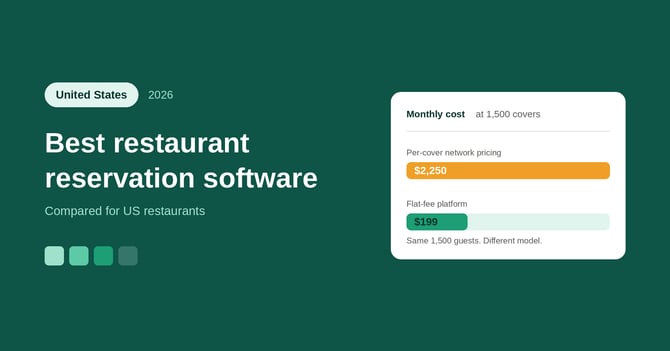
The United States is the most competitive reservation-software market in the world and the most expensive one to get wrong. OpenTable still owns the largest diner network in North America, but in 2026 its per-cover fees (up to $1.50 per seated network guest, plus a new 2% service fee on transactions) mean a busy restaurant can pay more in fees than in subscription. That's why thousands of US operators are re-running the math on flat-fee platforms like Resy, Tock and Eat App and why "what does it actually cost per cover?" is now the first question, not the last.
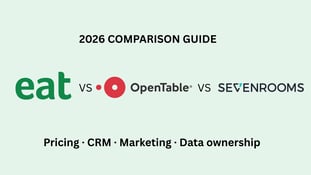
This guide compares the seven reservation platforms that actually appear when US restaurants shop in 2026 with real US pricing, cover-fee math and honest notes on who each one suits.
Comparison: US reservation software at a glance
| Tool | US price (2026) | Free plan | SMS / text messaging | US support | Best for |
|---|---|---|---|---|---|
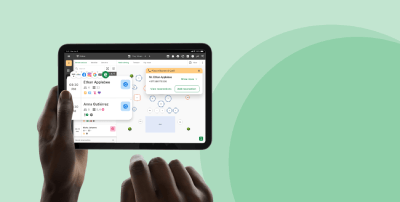
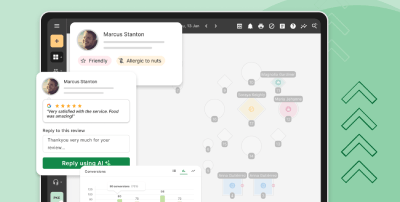
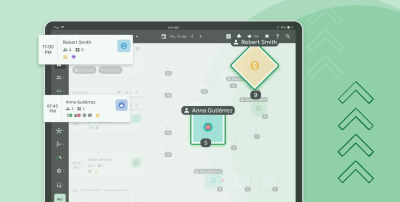
| Eat App | $0–$389/mo flat, no cover fees | Yes, 100 covers/mo | Yes, automated SMS confirmations & reminders | 24/7 chat + dedicated onboarding | Independents & groups that want CRM without per-cover fees |
| OpenTable | $149 –$499/mo + $1–$1.50 per network cover + 2% service fee on transactions | No | Yes | Phone + email, large US team | Restaurants that depend on network discovery for fills |
| Resy | $249 –$899/mo flat, no cover fees | No | Yes | US-based, strong in major metros | Upscale, brand-driven restaurants in big cities |
| Tock | $79–$769/mo + 2–3% fee on prepaid bookings (lower tiers) | No | Yes | US-based (Chicago roots) | Tasting menus, ticketed dinners, prepaid experiences |
| SevenRooms | ~$400 –$1,200+/mo, custom quote | No | Yes | US-based, enterprise account teams | Hotel F&B and multi-venue groups needing deep CRM |
| Toast Tables | $50–$199/mo, requires Toast POS | No | Yes | Via Toast support | Restaurants already running Toast POS |
| Yelp Guest Manager | $99–$299/mo | No | Yes, two-way texting | US-based | Casual spots that live on Yelp traffic and waitlists |
Pricing verified July 2026 from vendor pricing pages and published US sources. Always confirm current pricing with the vendor.
1. Eat App, best overall value for US independents
Eat App is a global reservation and table-management platform used by more than 5,000 restaurants worldwide and it has become a serious US contender for one simple reason: the pricing model doesn't punish you for being busy. Every plan is flat-fee with no per-cover charges the guest you seat on a Saturday night costs exactly the same as the one you seat on a slow Tuesday: nothing.
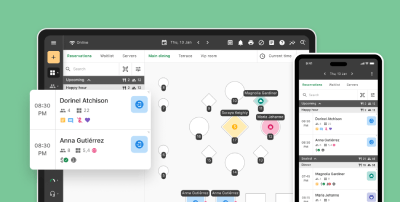
The free plan covers up to 100 covers per month with a real-time floor plan, online booking widget, and Google integration enough for a small operation to run reservations properly at $0.Paid plans go from Starter at $99/month (300 covers, ideal for neighborhood spots) to Essential at $199/month (unlimited covers, reports, guest surveys) and Pro at $389/month (advanced analytics and a full guest CRM). Annual billing cuts those to $69, $159, and $299 respectively.
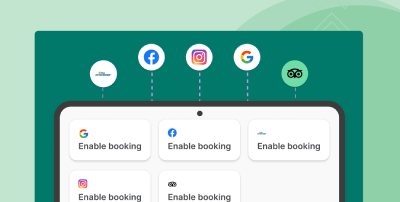
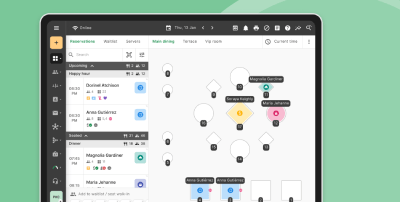
For US operators specifically, the strengths are direct-channel focused: bookings flow in from your own website, Google Search and Maps and Instagram channels you own rather than a marketplace that charges you for its audience. Automated SMS confirmations and reminders (the channel American diners actually answer) plus credit-card holds and deposits attack the no-show problem from both sides.The honest trade-off: Eat App doesn't bring a consumer discovery network the way OpenTable does. If your tables only fill because diners find you on a marketplace app, you'll want a network platform or a hybrid approach. For everyone else, it's the strongest cost-to-capability ratio on this list. See the full restaurant reservation software feature set here.
2. OpenTable: Biggest US diner network, priciest at volume
OpenTable is still the default name in American dining and its network remains genuinely valuable: tens of millions of US diners browse it to find restaurants they've never visited. In 2026 the plans run $149/month (Basic), $299/month (Core), and $499/month (Pro).Network covers cost $1.50 each on Basic and $1.00 on Core and Pro; on Basic, even bookings from your own website cost $0.25 per cover (or a $49/month flat fee). In early 2026, OpenTable also began applying a 2% service fee to transactions such as deposits, prepaid experiences and no-show penalties.
Run the math before you sign: a restaurant seating 1,000 network covers a month on Core pays $299 + $1,000 = roughly $1,299/month.If OpenTable's marketplace demonstrably fills seats you couldn't fill yourself that can be worth it especially in tourist-heavy markets.If most guests already know you, you're paying marketplace prices for direct traffic.
3. Resy: Flat-fee prestige player for big-city dining
Resy (owned by American Express) is the platform of choice for a large share of America's buzziest restaurants particularly in New York, LA and other major metros. Its 2026 plans are $249/month (Basic), $399/month (Pro), and $899/month (Enterprise) with no per-cover fees at any tier, so your bill never grows with volume.At 500+ network covers a month, Resy Basic can cost a third of what OpenTable Basic does.
The trade-offs: no free plan or trial, a diner network that skews heavily toward large coastal cities (its pull in smaller markets is limited), and Amex-ecosystem perks that matter most to a fine-dining clientele. If you're an upscale urban restaurant whose brand benefits from being "on Resy," it earns its fee. A taqueria in Tulsa will see less of that network effect.
4. Tock: prepaid bookings and ticketed dining
Tock, born out of Chicago's Alinea group built its reputation on treating reservations like tickets: guests prepay or deposit at booking, which effectively eliminates no-shows. Plans in 2026 range from $79 to $769/month, with a 2–3% transaction fee on prepaid bookings at lower tiers that shrinks as you move up.
For US tasting-menu restaurants, chef's counters, and wineries charging $150+ per head, Tock is arguably the category leader an empty prepaid seat still gets paid for.For a standard à-la-carte restaurant, the prepaid model can feel heavy-handed to guests, and the fee structure rewards exactly the high-ticket bookings most restaurants don't take.
5. SevenRooms: enterprise CRM for groups and hotels
SevenRooms is the most complete guest-data platform in the category: unified guest profiles across venues, automated marketing, loyalty segmentation and deep POS integrations. It's the system US hotel F&B programs and multi-venue hospitality groups tend to standardize on. Pricing is quote-based, typically $400–$1,200+ per month per venue depending on modules.
There's no diner network SevenRooms is a direct-booking platform by design and no self-serve tier, so implementation is a project, not a signup. If you operate one or two independent restaurants, it's more platform than you need. If you run twelve venues and want one guest database across all of them, it's on your shortlist.
6. Toast Tables: the POS-native option
Toast is the dominant restaurant POS in much of the US, and Toast Tables ($50/month basic, $199/month for Tables Plus, bundled with your Toast subscription) is its native reservation layer. The pitch is integration: reservations, orders, and payments in one system, with guest spend data flowing automatically into profiles.
The catch is obvious — it only exists inside the Toast ecosystem. If you're already a Toast house and your reservation needs are straightforward, it's the path of least resistance. If you want best-in-class reservation features, CRM depth, or the freedom to switch POS later, a dedicated platform will serve you better.
7. Yelp Guest Manager: Waitlist power for casual dining
Yelp Guest Manager ($99/month Basic, $299/month Plus) turns Yelp's massive US consumer traffic into bookings and — its real strength — walk-in waitlist management with two-way texting. Basic includes reservations via Yelp, Google, and Apple Maps with roughly 500 covers/month; Plus adds unlimited covers and Toast POS sync.
For high-volume casual restaurants where the line out the door matters more than the reservation book, it's a strong fit. Fine-dining operators will find the CRM and table-management depth thinner than Resy, SevenRooms, or Eat App.
How to choose reservation software in the United States
Start with the cover-fee math, because it dominates every other line item. Take your average monthly covers, multiply by each platform's per-cover fee, add the subscription, and compare annual totals — a "cheap" $149 plan can quietly become a $15,000+/year platform at US volumes, while flat-fee platforms cost the same in December as in February.
Then weigh how your guests actually find you. If you're in a discovery-driven market — Manhattan, Vegas, tourist corridors — a network platform (OpenTable, Resy) can genuinely fill seats and justify its fees. If most bookings come through Google, your website, or regulars, you're better served by a direct-booking platform with strong Google and Instagram integrations, where you keep the guest data and skip the marketplace tax.
Third, take no-shows seriously — they're one of the costliest leaks in US restaurant P&Ls. Look for automated SMS reminders (text is the channel American diners respond to), credit-card holds, and deposit support as standard, not add-ons. Finally, check POS fit: if you run Toast or Square, confirm the integration is native and two-way, so guest spend data actually lands in your CRM.
Ready to try it? Start with Eat App's free plan 100 covers a month, no credit card, no per-cover fees




.webp?width=314&height=175&name=e265983a-8353-4fcb-a530-cd2601c4df5d%20(1).webp)


.webp?width=144&height=72&name=Eat%20App%20Logo%20(3).webp "Eat App")