


.svg)
.svg)

















.svg)

.svg)


.png?width=200&name=image%20(16).png)
-1.png?width=1812&height=1072&name=TripAdvisor%20%26%20More%20Bookings%20(1)-1.png)
-2.png?width=1812&height=1072&name=Google%20Bookings%20(1)-2.png)
.png?width=200&name=image%20(15).png)
%20(1)-1.webp?width=200&name=Eat%20(57)%20(1)-1.webp)
-1.png?width=200&name=TripAdvisor%20%26%20More%20Bookings%20(1)-1.png)
-2.png?width=200&name=Google%20Bookings%20(1)-2.png)
-1.png?width=200&name=Instagram%20Bookings%20(1)-1.png)
-1-png.webp?width=200&name=Facebook%20Integration%20Rectangle%20(1)-1-png.webp)





.webp?width=200&name=download%20(1).webp)
%20(1)-2.webp?width=200&name=Eat%20(34)%20(1)-2.webp)
%20(1)-2.webp?width=200&name=Eat%20(18)%20(1)-2.webp)








Most operators don’t go shopping for a new booking system because something broke. They go looking because the renewal quote landed higher than last year. Or because the SMS module and the events module turned one tidy monthly line into three. Or because they asked for a clean export of their contact list and spent a week waiting for an answer.
ResDiary is a decent booking system. It’s been around since 2006, it offers commission free bookings, and it runs bookings for roughly 9,000 venues across the UK, Europe and ANZ. Nobody sensible calls it bad software.
But “not bad” and “right for your restaurant” aren’t the same thing. Below is an honest comparison of the ten systems people actually move to, what each one charges, and the three questions worth asking before you sign anything.
The short answer on ResDiary alternatives
If you’re skimming, here’s the ranking in one screen.
|
System |
Monthly price |
Per-cover fee |
Guest CRM |
Free tier |
Best for |
|
Eat App |
$0 – $389 |
None |
Yes |
Yes (100 covers) |
Best all-round replacement |
|
OpenTable |
$149 – $499 |
$1 – $1.50 + 2% on deposits |
Pro tier only |
No |
Diner discovery in the US |
|
SevenRooms |
From ~$499 |
None |
Yes |
No |
Multi-venue groups, deep customer records |
|
Resy |
$249 – $899 |
None |
Yes |
No |
Upscale US dining |
|
Tock |
$199 – $699 |
0–2% on prepaid |
Yes |
No |
Prepaid and ticketed events |
|
TheFork |
~$125+ |
Yes, in most markets |
Basic |
Limited |
European diner traffic |
|
Yelp Guest Manager |
$99 – $299 |
None |
Plus tier only |
No |
Walk-in heavy restaurants in the US |
|
Tablein |
$57 – $149 |
None |
No |
14-day trial |
Small independents in Europe |
|
resOS |
€0 – ~$34+ |
None |
Basic |
Yes (25 bookings) |
Testing before you commit |
|
Guestline |
Custom |
N/A |
Via PMS |
No |
Hotel F&B (read the catch below) |
Prices move. Check each vendor’s own pricing page before you budget anything.
What ResDiary costs once the add ons are on
This is where the conversation usually starts, so let’s be specific.
The UK tiers run from Connect at £109 a month for up to 150 bookings, Express at £139 for 450, Pro at £209 for 1,000, and Ultimate at £315 for unlimited, according to Capterra’s listing. Every tier includes the same core toolset. What changes is volume, not capability, which is a genuinely fair way to price a restaurant booking system.
The number on the pricing page isn’t the number on your invoice, though. SMS, pre-orders, event management and gift vouchers are charged separately. Switch on two or three and a £109 subscription lands somewhere north of £180 before anyone has booked anything.
Then there’s the term. The GB agreement renews annually unless you give written notice well ahead of the anniversary date. If you’ve ever tried to leave a system in March when the renewal fell in January, you know how that goes.
None of this makes the software expensive by category standards. It makes it a system where your true monthly spend is hard to work out from the website, which is exactly the thing people get tired of.
Where ResDiary Evo fits
ResDiary Evo is the newer AI layer sitting on top of the same core diary. It flags your best regulars, surfaces no-show patterns and summarises reviews through an AI assistant. The company claims venues save an average of 468 hours a year with it.
Is it real? Mostly. The auto-tagging and review summaries work, and if you’re running four sites with no marketing person, that kind of automation earns its keep.
But Evo doesn’t change the two things that push people out the door: the extras stack and the annual term. If those are your problem, a smarter interface on top of them won’t fix it.
Why operators go looking for a different booking system
The renewal is where the money goes
The first quote is always the friendly one. Year two is where restaurants notice the difference, particularly once the SMS bundle is live and volume has crept into the next tier.
Run the arithmetic on your own numbers before you renew. Take your annual subscription, add every module, add whatever your payment processing takes, and divide by covers seated. Most venues have never worked that figure out, and it’s the only one that matters when you’re comparing systems. It also tells you whether your booking system is helping you protect revenue or quietly eating into it.
Your customer data should leave with you
Ask any vendor a direct question: if we leave in eighteen months, what exactly do we get back, in what format, and how long does it take?
The answer tells you how that company thinks about who owns the customer relationship. A CRM for restaurants you can’t export cleanly isn’t your database. It’s theirs, on loan. Export your list twice a year whoever you’re with — it’s the cheapest way to protect an asset you spent years building. Data ownership is power, and most operators only discover this the week they try to leave.
It matters more every year. Three times as many customers now reserve directly on a restaurant website rather than through third-party sites, according to SevenRooms research. Direct bookings protect that relationship in a way marketplace bookings never will.
When a big group buys your vendor
In July 2023, Access Hospitality acquired both ResDiary and Guestline. The product is now sold co-branded as Access ResDiary alongside the rest of the Access Hospitality suite.
Acquisitions aren’t automatically bad — bigger balance sheets fund better software. But they change roadmaps, pricing and account management, and independents in the hospitality industry tend to feel that shift a year or two later rather than immediately.
Worth knowing before you shortlist it as your escape route.
The 10 best alternatives to ResDiary in 2026
1. Eat App — best all-round replacement
Full disclosure: this is our software. Here’s the case anyway.
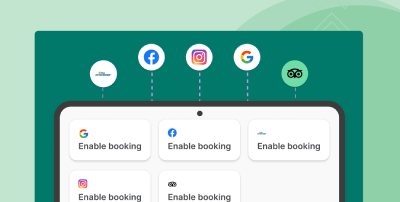
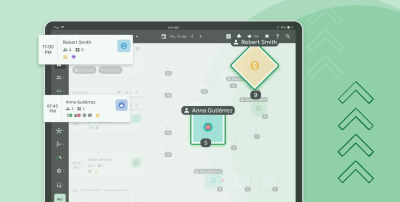
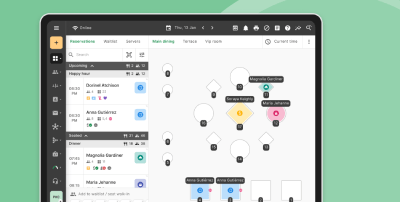
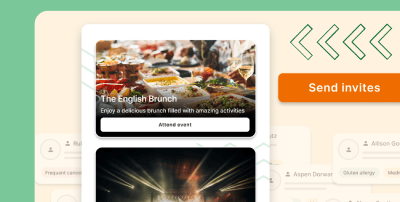
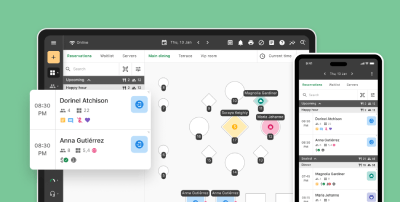
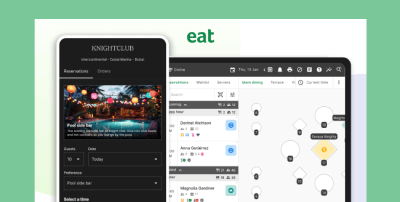
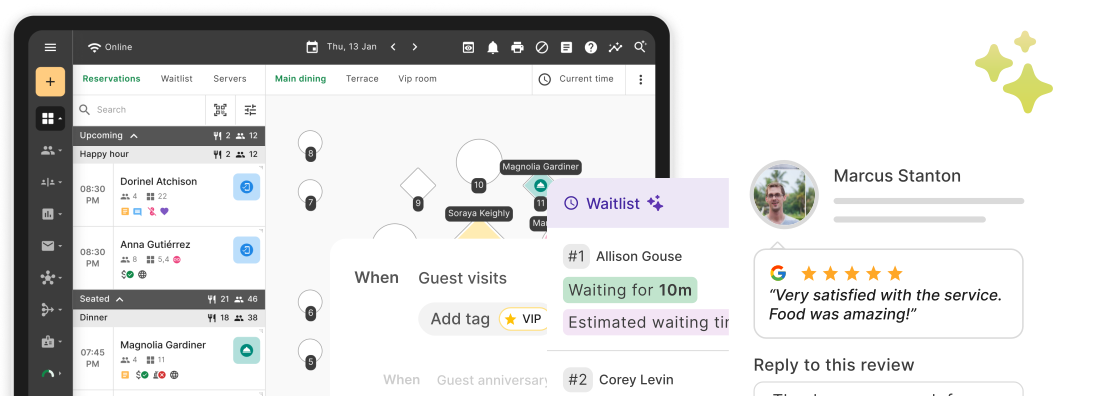
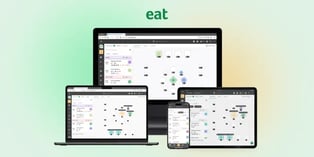
Eat App is a restaurant reservation software and guest database used by restaurants in 90+ countries. Reservations arrive from your website, Google, Instagram and Facebook through one set of booking channels, land on a live floor plan, and every booking builds a profile you own outright. Front-of-house operations, marketing and reporting run from the same screen.
Price: $0 for 100 covers a month, $99 for 300, $199 for unlimited, $389 for the full guest experience stack. Enterprise quotes on request via the pricing page.
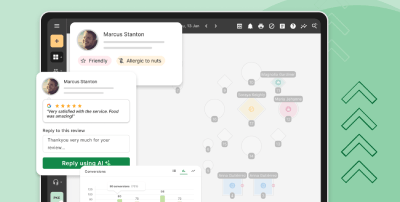
Where it beats ResDiary: everything’s included rather than bolted on. Two-way WhatsApp messaging, the loyalty suite, review management, shift management and reports and trends sit in the base product. No annual lock-in, and live chat support from inside the app rather than a ticket queue.
Where it wins: if you’re already deep in the Access ecosystem, or you need very granular yield management rules across fifteen sites, its depth is real.
Best for: independents and groups who want the whole journey in one place without a menu of extras. You can sign up free before you commit to anything.
2. OpenTable — best for diner discovery
The biggest network in the category, and the most expensive way to fill a room.
Subscriptions run $149 to $499, plus $1 to $1.50 for every cover that arrives through the network, plus a 2% charge on deposits and prepaid experiences added in early 2026. A restaurant seating 1,500 network covers a month clears $28,000 a year on the entry tier.
You’re buying pulling power, not efficiency. Plenty of diners still discover restaurants through opentable.com, and if that’s genuinely where your covers come from, the maths can work. If they’re mostly people who already knew your name, you’re handing over commission on traffic your own website and marketing already generated. Our full OpenTable alternatives breakdown goes deeper on the numbers.
3. SevenRooms — best for multi-site customer records
The most serious profiling tool in the category, and priced like it — typically from around $499 a month with custom quotes above that.
Unified profiles across every location, automated campaigns, deep POS connections. Hotel groups and multi-site operators standardise on it for good reason, because it genuinely does join up operations that would otherwise sit in four different tools. DoorDash acquired the company in 2025, so watch the roadmap. Overkill for a single 60-cover room. See the sevenrooms alternative comparison if you’re weighing it up.
4. Resy — best for upscale US dining
$249 to $899 a month, no per-cover charges, owned by American Express. Sharp, well-built booking flow and an audience that skews exactly where fine dining wants it.
The catch: the CRM side is thinner than the price suggests, and it’s very US-centric. European restaurants get little from the network. The resy alternative page has the side-by-side.
5. Tock — best for prepaid and ticketed events
Tock built its business on prepayment. Tasting menus, chef’s counters, winery experiences, supper clubs — anywhere an empty seat is £150 gone and you’d rather bank the money upfront.
$199 a month plus 2% on prepaid bookings, or $699 with the percentage removed. For à la carte dining the prepaid model can feel heavy-handed to regulars, which is the honest reason most neighbourhood restaurants skip it. More detail in our tock alternatives guide.
6. TheFork — best for European reach
TripAdvisor-owned, strongest in France, Spain and Italy. TheFork absorbed Bookatable back in 2019, which is why you’ll still find “Bookatable” on comparison lists written by people who stopped checking.
Around $125 a month, with commission on network covers in most markets. Same trade as OpenTable: real online visibility, real price per head.
7. Yelp Guest Manager — best for walk-in heavy rooms
$99 to $299 a month, no per-cover charges, and the strongest waitlist features at this price. The self-service kiosk check-in is genuinely good if you’ve got twenty people waiting inside the door on a Friday service.
Table management is basic and the CRM lives behind the top tier. Fine for a busy casual room, thin for anything trying to build a regulars programme. Compare it directly on the yelp alternative page.

8. Tablein — best budget pick for small restaurants
$57 to $149 a month. Clean calendar-style diary, decent automated reminders, popular with small European independents.
There’s no meaningful CRM, no visual layout worth the name, and integrations are limited. It does the basics and stops, which is the right call for some rooms and a ceiling for others. Our tablein alternatives post covers the upgrade path.
9. resOS — best free starting point
A free tier covering 25 bookings a month, paid tiers from roughly $34. Danish, simple, quick to set up without a sales call.
Use it to test whether a lighter system suits your team before signing a year-long contract elsewhere. Growing restaurants outgrow it. See resos alternatives for where the ceiling sits.
10. Guestline — best for hotel F&B, with a catch
It’s a hotel property management platform with F&B booking attached. If your restaurant sits inside a hotel and the PMS runs your day-to-day operations, it’s a reasonable consolidation play.
The catch: Access Hospitality bought it in the same week it bought ResDiary. Switching from one to the other doesn’t get you out of the group — it moves you down the hall.
Three names the old comparison posts still list
Half the comparison articles on page one haven’t been updated in years. If a list includes any of these, treat the rest of it carefully:
- Bookatable — bought by TheFork in 2019 and folded into that network. It isn’t a separate product you can buy.
- Wisely — acquired by Olo in 2021 for $177.7 million. Now a module inside a much larger enterprise suite, sold to chains rather than independents.
- RestoManager — appears on a lot of listicles, has almost no verified user reviews anywhere. Draw your own conclusions.
What to compare instead: the features that reduce no shows
Feature grids all look identical by the third demo, because most systems now list the same features. These five things separate systems that earn their keep from the ones you merely tolerate.
Deposits, card holds and cancellations
Roughly 28% of American diners admit to skipping a booking in the past year, per OpenTable’s own data. Toast recorded 17% of reservations cancelled in a single quarter, with 45% of tables booked same-day.
The single biggest lever you have to reduce no shows is a deposit policy people understand before they arrive. Card guarantees are there to protect you, not to interrogate anyone, and a late drop-out hurts far less when the details are already on file.
Check the flow yourself on a phone. If leaving a £10 deposit takes four taps and a signup, some walk. And make the terms plain on the booking page — people forgive a charge they saw coming.
Direct bookings from your own website
Every system will put a widget on your website. Not all of them make it worth using.
That website widget is the only route where you keep the full margin and the whole record. It should load fast, match your brand, and let people book tables in about three taps on a phone. If your website flow is slower or uglier than the marketplace listing, people will use the marketplace — and you’ll be charged for the privilege.
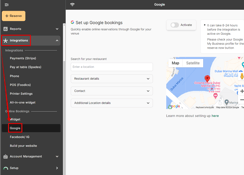
Two things worth testing before you sign: does the system handle Reserve with Google so your Business Profile converts, and can it push live availability from your website out to Instagram
and Facebook? Those routes plus your own website cover most of what an independent needs, and none of them charge per cover.
Waitlists and walk-ins
Nobody enjoys waiting, but the gap between a well-run waitlist and a clipboard is roughly a turn a night.
Toast found people waiting for a seat hang around about twenty minutes on average. Send them a text the moment something opens, manage the queue from a phone rather than a clipboard, and most of them stay. Waiting well is a service skill, and the software should back it up. A proper waitlist also captures the walk-ins your diary never sees, which is free intel you’re currently binning, and it helps you protect the covers you’ve already won. Our roundup of restaurant waitlist management systems compares the options.
SMS marketing and messaging that lands
Confirmations and reminders are the bare minimum now. The real question is whether the same system lets you run restaurant marketing off the back of booking history without exporting to a separate tool.
SMS marketing works because people read texts. WhatsApp works better across most of Europe, the Middle East and Latin America. If your software can’t reach people on the channel they actually use, your list is decoration.
Profiles and personalised experiences
A booking record says a name arrived at 8pm. A profile says it’s their fourth visit this year, they always sit at table nine, and one of them doesn’t eat shellfish.
That gap is where the personal touches come from, and where repeat customers come from. A restaurant loyalty program built on real visit history turns first-time customers into regulars far more reliably than a punch card ever did. Loyalty follows from knowing people, not from stamping cards.
Reporting that helps you save time
Most reporting modules produce beautiful charts nobody opens twice.
The useful ones answer specific questions: which shift is losing covers, which booking source no-shows most, what your quietest hour is worth. The right reporting helps you protect margin, not just fill seats. Two or three restaurant metrics reviewed weekly will do more for profitability and revenue than fifty you review never — and they’ll save time every service, because you stop guessing.
Card security, PCI and what your vendor does with your records
Nobody asks the security questions in a demo. Everybody should.
If you take card guarantees, your booking system is touching cardholder details. Almost none of them store card numbers directly — they tokenise through a processor like Stripe or Adyen and keep a reference. So ask two things. Does the vendor hold PCI DSS certification in its own right or ride on its processor’s, and can they send you the attestation rather than a reassuring line on a landing page? And do card tokens transfer? They usually don’t, which means regulars with a card on file get asked for it again the week you move.
UK and European venues have a second layer. Strong Customer Authentication means the cardholder’s bank runs its own verification step on many transactions, and software that handles it badly will show a confirmed booking while the charge quietly fails. Ask how the software verifies a card at the moment of booking, and what your host sees when that verification comes back declined.
Then GDPR. Your customer records are personal information you’re accountable for, not the vendor’s asset. You want a processing agreement, a straight answer on where records sit, and
an erasure process that works when someone invokes it. Eat App publishes its security and compliance documentation in a trust portal, and anyone on your shortlist should manage the same. Security paperwork is dull right up until a card breach makes it the only thing that matters, and it’s the clearest signal you’ll get of how a vendor will protect what you hand over.
How to switch your restaurant booking system without dropping a service
Migration anxiety keeps more restaurants on the wrong system than price does. It’s a two-week job, not a crisis.
- Export everything first. Contact list, upcoming reservations, notes, tags. Request it in writing and confirm the format before you cancel anything, so you’re not waiting on an export in week one.
- Check the notice period. Annual terms with 90-day windows are common. Diarise the date now.
- Manage both systems in parallel for a fortnight. New bookings into the new one, existing ones honoured in the old. Nobody loses a booking.
- Rebuild the seating layout properly. Don’t copy the old one by reflex — this is a free chance to fix that awkward section. A restaurant floor plan creator helps here.
- Redirect every booking link. Your website, Google Business Profile, Instagram, Facebook. Every link on your website counts, including the one on your menu page.
- Missing one is the most common way venues lose bookings mid-switch, and getting it right is how you protect your covers during the changeover.
- Integrate the POS and payment processing. Test one live transaction before service starts.
- Train on a quiet Tuesday service, not a Saturday. Two sessions of forty minutes beat one long one.
Most teams are fluent inside a week. The host stand is where it either clicks or doesn’t, so put your most sceptical host on it first — if they’ve got confidence in it by Friday, everyone will.
The customer experience question nobody asks in the demo
Every vendor will show you the manager’s view. Almost nobody shows you the one your customers see.
So do it yourself. Open the booking widget on your own website on a phone, book a table for two on a Saturday night, and count the taps. Then read the confirmation, try to change it to four people, and try to cancel.
That whole sequence is the customer experience you’re actually buying, and it happens before anyone tastes your food. A system that makes it easy wins you customers quietly, week after week. One that doesn’t leaks them just as quietly.
Run the same test on the operator side: ring the help line on a Saturday and see who picks up. Review sites are full of people waiting on hold, and poor service after the sale pushes more venues to switch than any missing feature does. It’s rarely the software that breaks. It’s the silence at 7:30 in the middle of service.
A smarter way to pick
Skip the feature grid. There’s a smarter way to do this: answer three questions honestly.
Where do your bookings actually come from? If people find you through your own website and Google, stop renting a network to introduce you. If a third of your covers come from a marketplace, that fee might be the cheapest customer acquisition you have.
What do you pay per cover, all in? Subscription plus modules plus commission, divided by covers seated. Compare that single number across your shortlist and most of the marketing noise disappears.
Who owns the customer afterwards? If the answer is anyone but you, nothing else on the list matters much.
Answer those three and the shortlist collapses to two or three names fast. For most independents and small groups leaving ResDiary, Eat App is the closest like-for-like swap: same commission-free model, more included in the base price, none of the annual paperwork. Worth a demo if you’re comparing. It won’t suit everyone — nothing does — but it fits the widest range of specific needs for the lowest total spend.





.webp?width=144&height=72&name=Eat%20App%20Logo%20(3).webp "Eat App")