


.svg)
.svg)

















.svg)

.svg)


.png?width=200&name=image%20(16).png)
.png?width=200&name=image%20(15).png)
-1.png?width=1812&height=1072&name=TripAdvisor%20%26%20More%20Bookings%20(1)-1.png)
-2.png?width=1812&height=1072&name=Google%20Bookings%20(1)-2.png)
%20(1)-1.webp?width=200&name=Eat%20(57)%20(1)-1.webp)
.png?width=200&name=image%20(14).png)
-1.png?width=200&name=TripAdvisor%20%26%20More%20Bookings%20(1)-1.png)
-2.png?width=200&name=Google%20Bookings%20(1)-2.png)
-1.png?width=200&name=Instagram%20Bookings%20(1)-1.png)
-1-png.webp?width=200&name=Facebook%20Integration%20Rectangle%20(1)-1-png.webp)






.webp?width=200&name=download%20(1).webp)
%20(1)-2.webp?width=200&name=Eat%20(34)%20(1)-2.webp)
%20(1)-2.webp?width=200&name=Eat%20(18)%20(1)-2.webp)







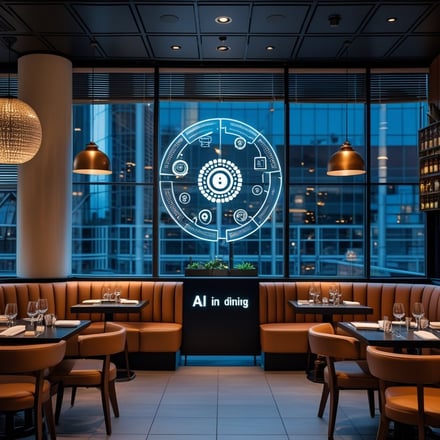
Artificial intelligence is no longer a futuristic concept for restaurants. It's the engine running front-of-house decisions, predicting restaurant no-shows, and personalizing guest experiences at scale.
And here's the part that matters: across the restaurant industry, AI in restaurants is moving from experimental to essential, and not just for the big chains anymore. According to the National Restaurant Association's State of the Restaurant Industry 2026 report, 26% of operators already use AI tools in some form, with marketing as the most common starting point. Independent fine-dining rooms, neighborhood bistros, and multi-venue hospitality groups are deploying technology that was priced out of reach only a few years ago.
This guide breaks down exactly where and how AI is being used, what the measurable benefits are, and how platforms like Eat App's are bringing enterprise-grade intelligence to restaurants of every size.
What is AI in restaurants?
AI in restaurants refers to computer systems that handle tasks that once required human intelligence: predicting demand, spotting patterns in customer data, answering customer inquiries, and making operational recommendations in real time.
Sounds abstract? Under the hood, a few core AI technologies do most of the work:
- Machine learning — algorithms that learn from historical data to predict outcomes, like which reservation is most likely to no-show on a Friday night.
- Natural language processing — the technology behind the chat and voice assistants that understand guests and reply in plain language.
- Predictive analytics — models that forecast covers, revenue, and staffing needs by analyzing historical data alongside external signals like weather and upcoming events.
- Computer vision — systems that interpret images and video. In a restaurant setting, this shows up in kitchen monitoring for food quality and consistency — and, in some markets, facial recognition for loyalty check-ins.
- Generative AI — models that create content: marketing emails, review responses, social media posts, menu descriptions.
That's the technical layer. What actually matters to restaurant owners is what it changes day to day, and that's where things get interesting.
Why full-service restaurants are the new frontier for AI
Quick service restaurants and fast food chains grabbed the early headlines: voice ordering at the drive-through, online ordering pipelines, kitchen automation. Fair enough, those deployments proved the technology works at scale. But they also created a misconception: that AI is a volume game built for speed rather than hospitality.
The more interesting shift is happening in full-service dining.
Think about it. A Michelin-starred restaurant isn't optimizing drive-through pacing. It is managing a guest who books six months in advance, has three dietary restrictions on file, and expects to be recognized on arrival. A hospitality group running five venues across two cities isn't coordinating fryer timers; it's trying to unify guest data across a reservation system for multi-location restaurants, cut no-shows across properties, and run marketing campaigns without a dedicated team at each location.
For these restaurant operators, the real value of AI sits in memory, personalization, and scale. Not raw speed.
Historically, the gap was access. Enterprise AI solutions were priced for Fortune 500 budgets, and industry leaders with multi-million dollar data infrastructure pulled far ahead of everyone else. That's changing fast. Fine dining venues and hospitality groups can now close the same gap through platforms built specifically for their context. No data team required.
10 Real AI use cases in restaurants right now
So what does this actually look like on a Tuesday? Here are ten ways restaurants operate differently once AI enters the picture, and how the right AI tools streamline operations without changing how your team works.
1. Reservation and no-show prediction
Machine learning algorithms trained on historical booking data can now predict no-show probability by time slot, party size, and even individual guest behavior. Modern online restaurant reservation systems bake this scoring straight into the booking flow, so you recover real walk-away revenue by adjusting overbooking thresholds intelligently instead of guessing.
2. Dynamic table management
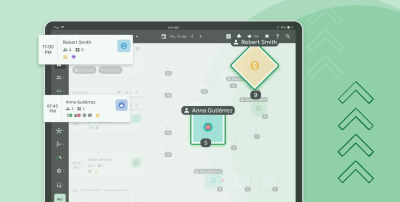
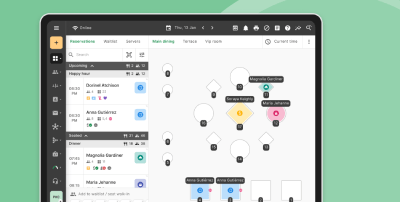
AI doesn't just track which tables are occupied; it predicts turn times based on party composition, order history, and service patterns. With smarter table management, hosts pace reservations more accurately, which cuts both idle tables and guest wait times. On a fully committed Saturday night, even shaving five minutes off the average turn estimate adds up to extra covers. And nobody feels rushed.
3. Guest intelligence and personalization
Every visit, every preference, every allergy, AI surfaces this context automatically at the point of service. A returning guest who prefers window seating and doesn't eat shellfish? Nobody has to remember that or dig through notes anymore. Modern restaurant CRM systems know, and they tell the team before the guest walks in.
This is where customer preferences stop being trivia and start driving customer loyalty. McKinsey's research on personalization found that 71% of consumers now expect personalized interactions. Guests notice when you don't deliver. Guests come back to the places that remember them. Simple as that.
4. Revenue and demand forecasting
Predictive analytics can cross-reference reservation data, historical covers, local upcoming events, and even weather forecasts to predict covers by shift. Good restaurant analytics drive smarter prep, staffing, and menu decisions before service begins, rather than scrambling to react during it.
Say there's a stadium concert two blocks away on Saturday. A forecasting model flags the demand spike on Tuesday, so you've adjusted prep, staffing, and your booking strategy days before the first walk-in shows up.
5. Automated guest communications
AI-powered virtual assistants handle routine customer inquiries, reservation confirmations, FAQ responses, waitlist updates, across WhatsApp messaging for restaurants, SMS, Instagram DMs, and email. Natural language processing has matured to the point where an AI phone agent answers calls and resolves most questions instantly. No hold music, no missed bookings.
Front desk workload drops noticeably. And the human touch doesn't disappear; it gets redirected to the guests standing in the room.
6. Marketing automation and re-engagement
AI identifies lapsed guests (say, regulars who haven't visited in 60 days), generates personalized re-engagement messages, and recommends optimal send times. Generative AI does the heavy lifting on production: content creation AI drafts the emails, the social media posts, and the offers tied to your loyalty programs. Campaigns that once required a coordinator now run through your restaurant marketing platform on their own.
There's a reason this is the most popular entry point - Toast's industry survey found automating marketing is the single most common way operators are putting AI to work.
7. Review management
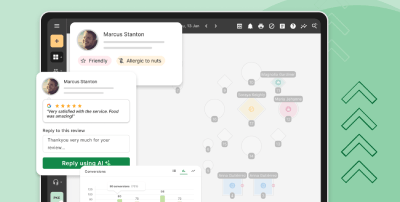
AI monitors review platforms, drafts contextual response suggestions for Google, TripAdvisor, and Yelp, and flags anything that needs a human right now. Your restaurant's reputation gets managed in minutes a day instead of hours — and no review sits unanswered for a week.
8. Menu engineering and pricing strategies
By correlating menu items with repeat-visit data and churn signals, AI can identify trends in what turns first-timers into repeat customers - and which dishes underperform despite good placement. That gives you actual data analytics to inform seasonal menu changes and pricing strategies, instead of gut feel and a shrug.
9. Inventory management and waste reduction
AI-powered demand forecasting helps kitchens optimize inventory management and reduce food waste. When you can predict covers accurately, you manage inventory against real demand: food preparation matches what will actually sell, over-ordering drops, and food quality improves because less product sits in the walk-in. The same logic extends up the supply chain, flagging unusual order quantities before they become waste.
This isn't theoretical, either. Deloitte's State of AI in Restaurants survey found inventory management is one of the two AI use cases already generating measurable economic value for the operators who've deployed it.
10. Staff scheduling and allocation
AI scheduling tools analyze predicted covers, historical service timing, and staff performance to recommend optimal shift structures — trimming overstaffing costs and closing service gaps during peak periods. Automating routine tasks like schedule-building, as most restaurant automation tools now do, frees managers for work that genuinely needs human judgment.
%20(2).webp?width=800&height=800&name=undefined-Dec-15-2025-12-39-30-1853-PM%20(1)%20(2).webp)
The benefits of AI in restaurants: by the numbers
The numerous benefits of AI get thrown around loosely in restaurant technology marketing, so let's stick to what the data actually shows:
- Adoption is mainstream, not fringe: 26% of operators already use AI in their restaurants, per the National Restaurant Association report linked above — and that figure climbs every year.
- Investment is accelerating: In Deloitte's survey of 375 restaurant executives, 8 in 10 said they'll increase AI spending in the next fiscal year. They're not doing that for fun.
- Customer experience leads: 60% of those same executives named customer experience as the area where AI benefits their business most — ahead of operations (36%) and loyalty programs (31%).
- Personalization pays: McKinsey found personalization typically drives a 10–15% revenue lift, with personalized campaigns consistently outperforming broadcast blasts on opens and conversions.
- The pressure is real: 88% of restaurant leaders say they feel the squeeze of high input costs, per Deloitte — which is exactly why tools that cut labor overspend and protect table yield are getting budget.
Behind every number sits the same mechanism: fewer decisions made on instinct, more made on customer data and historical patterns. Operational efficiency improves not because anyone works harder, but because AI systems remove human error from the places it costs the most.
There's a softer payoff too — one that never shows up on a dashboard: customer satisfaction. Guests don't see the technology. They just notice the restaurant that confirmed instantly, remembered their table preference, and never lost a booking. The customer experience improves in ways people feel but can't quite name.
%20(1).webp?width=640&height=640&name=undefined-Dec-15-2025-12-39-30-8266-PM%20(1)%20(1).webp)
What AI still can't do in a restaurant
Worth being honest here. AI won't greet a regular with genuine warmth, read the difference between a table celebrating quietly and one that wants attention, or recover a botched anniversary dinner with grace. Human behavior in a dining room is subtle, and hospitality lives in that subtlety.
The point of leveraging AI is simpler: clear routine tasks off your team's plate so they have more time to serve customers properly. That division of labor makes sense; the technology handles memory and prediction, your people handle the moments that turn a first visit into a habit. The restaurant experience guests pay for is still fundamentally human. AI just makes sure nothing operational gets in its way.
%20(1).webp?width=640&height=336&name=undefined-Dec-15-2025-12-39-31-1637-PM%20(1)%20(1).webp)
How to start using AI in your restaurant
Implementing AI doesn't require a technology overhaul or a data team. Honestly, the operators who get burned are usually the ones who buy five tools at once. Most start with one or two high-impact use cases:
- Guest intelligence — start capturing preferences automatically and surfacing them at service.
- No-show prediction — use AI scoring to make smarter overbooking decisions on peak nights.
- Automated communications — let AI handle routine WhatsApp and email inquiries.
From there, expanding into demand forecasting, marketing automation, and proactive operational alerts follows naturally as the data layer deepens. Deploying AI in phases beats a big-bang rollout every time; embracing AI works best when each tool earns its place before the next one arrives.
One more thing: pick restaurant management software that integrates with the systems you already run. AI is only as good as the data feeding it, and disconnected tools produce disconnected answers. A no-show predictor that can't see your CRM, or a marketing engine that doesn't know who actually showed up last night, will always underdeliver.
And give each tool a fair test. Set one metric per use case, no-show rate, response time, table yield, and review it weekly for the first month. If the number moves, expand. If it doesn't, you've lost very little.
Conclusion
AI in restaurants is no longer a competitive edge reserved for industry leaders; it's becoming table stakes. The restaurants pulling ahead in 2026 treat AI not as a feature they've bolted on, but as an operational layer that connects their data and surfaces intelligence continuously.
Less time chasing data. More time making decisions that grow revenue and improve the dining experience.
Ready to see how AI can work for your restaurant? Explore Eat App's AI restaurant software and request a demo to experience the difference an integrated platform makes.






.webp?width=144&height=72&name=Eat%20App%20Logo%20(3).webp "Eat App")