


.svg)
.svg)














.svg)

.svg)


-2-1.webp?width=200&name=image5%20(6)-2-1.webp)
%20(1)-1.webp?width=200&name=Eat%20(57)%20(1)-1.webp)
-1.png?width=1812&height=1072&name=TripAdvisor%20%26%20More%20Bookings%20(1)-1.png)
-2.png?width=1812&height=1072&name=Google%20Bookings%20(1)-2.png)
%20(1)-1.webp?width=200&name=Eat%20(62)%20(1)-1.webp)

-1.png?width=200&name=TripAdvisor%20%26%20More%20Bookings%20(1)-1.png)
-2.png?width=200&name=Google%20Bookings%20(1)-2.png)
-1.png?width=200&name=Instagram%20Bookings%20(1)-1.png)
-1-png.webp?width=200&name=Facebook%20Integration%20Rectangle%20(1)-1-png.webp)


.webp?width=200&name=download%20(1).webp)
%20(1)-2.webp?width=200&name=Eat%20(34)%20(1)-2.webp)
%20(1)-2.webp?width=200&name=Eat%20(18)%20(1)-2.webp)







Getting a new customer through your door costs between five and seven times more than keeping an existing customer coming back. That math should make every restaurant owner pause. Yet most restaurant owners pour their marketing budgets into chasing new faces while watching their regulars quietly slip away.
Here's what makes this even more frustrating: industry data shows that 65 to 80 percent of restaurant sales come from repeat customers. The people who already know they love your delicious food are the ones keeping your lights on. So why do so many restaurant owners treat customer retention like an afterthought?
The answer is usually that they don't have a system. They're running from one promotion to the next, posting on social media when they remember, and hoping the delicious food will do all the heavy lifting. What they need is a restaurant sales funnel—a structured approach to the customer journey that turns strangers into first-time visitors, first-time visitors into regulars, and regulars into people who can't stop telling their friends about your place.
This guide breaks down exactly how to build that restaurant funnel for your restaurant business. No crazy tech skills required. And with the right technology handling the heavy lifting, even non-techy entrepreneurs can build a sales funnel that runs on autopilot.
What a restaurant sales funnel actually is
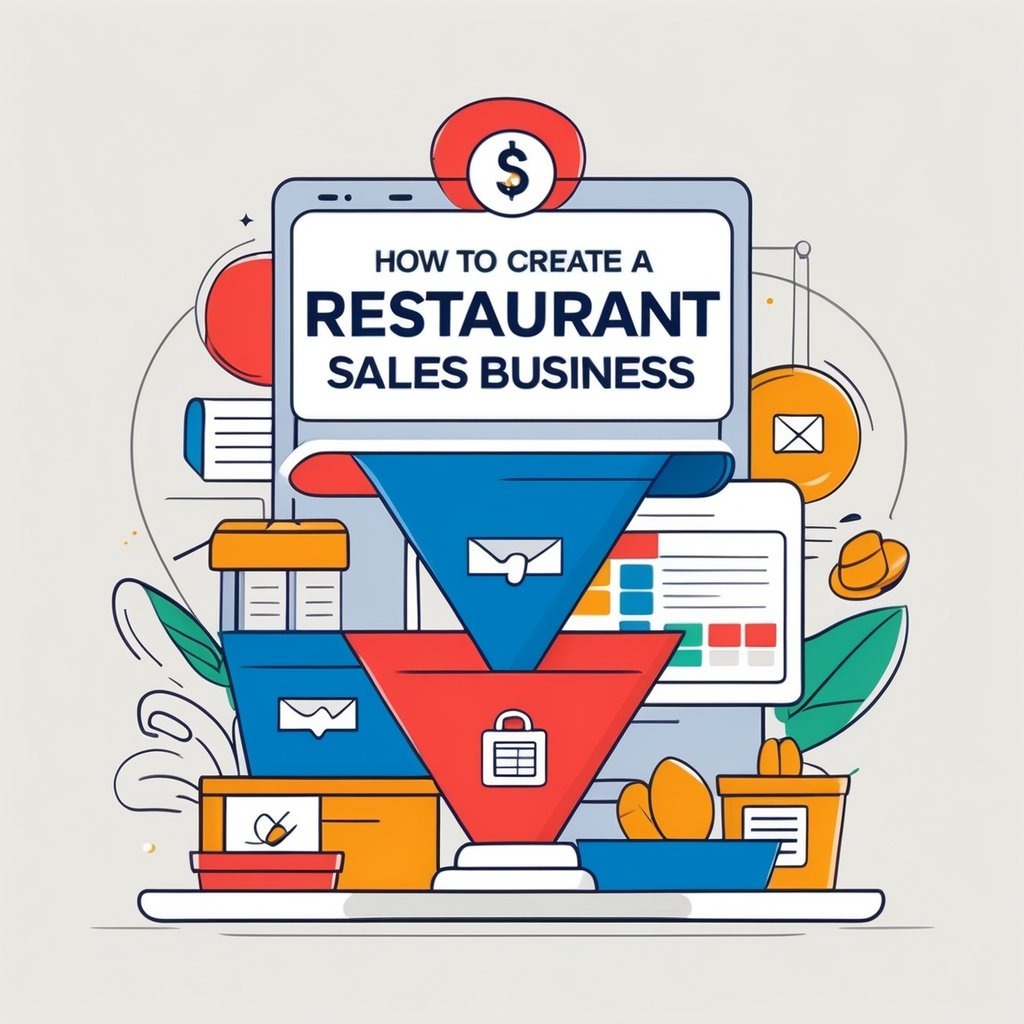
Think of a sales funnel as a map of how people move from "I've never heard of this place" to "I eat here every week and my friends are sick of me talking about it."
The funnel shape matters here. Lots of people might discover your restaurant—through social media posts, a Google search, or a friend's recommendation. Fewer of those potential customers will actually check out your menu. Even fewer will make a reservation. And only a portion of those will become loyal customers who come back again and again.
A restaurant sales funnel is different from a general marketing funnel in one big way: your product is an experience, not just a thing someone buys and takes home. The buying journey for a meal involves emotional decisions about ambiance, occasion, dietary needs, and whether your place "feels right" for a Tuesday night versus a birthday dinner. Your funnel strategy needs to account for all of that.
The goal isn't to push every single person through to the bottom of the funnel. It's to make sure that the people who are right for your restaurant—your target audience—can find you, learn enough to get interested, and have an easy path to becoming paying customers.
Why your restaurant needs a sales funnel (even if you hate marketing)
Let's talk numbers, because numbers don't lie.
Research from Frederick Reichheld, best selling author and creator of the Net Promoter Score at Bain & Company, found that increasing customer retention rates by just five percent can increase profits anywhere from 25 to 95 percent. Reichheld has spent decades proving that customer loyalty and loyalty-based management beats chasing new customers every time.
The hospitality industry averages a 55 percent retention rate, according to Statista—well below the 75 percent global average across all industries. That gap represents a massive opportunity for restaurant owners willing to build systems that keep restaurant customers coming back.
The real cost of ignoring retention
Without a funnel, you're basically running on a treadmill. You spend more money on paid ads to bring in new customers, they visit once, and then most of them vanish into the ether. Industry research suggests that around 70 percent of first-time diners never return. That's not because your food was bad—it's because nothing pulled them back.
Building a sustainable guest database changes everything. When you know who your existing customers are, what they ordered, when they last visited, and what occasions bring them in, you can create personalized follow ups that actually work. You stop wasting time on generic promotions and start speaking directly to the people most likely to walk through your door again.
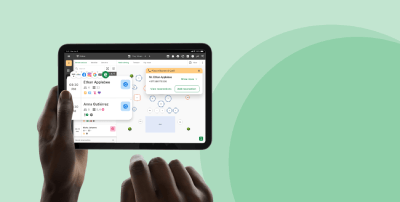
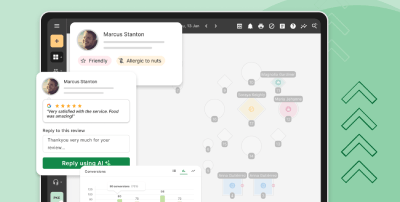
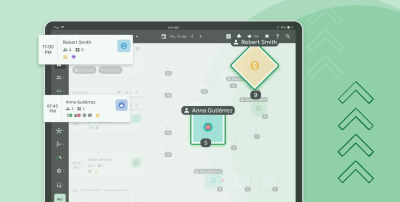
This is where technology becomes your friend. Platforms like EatApp build guest profiles automatically from every reservation, creating a CRM that captures preferences, spend history, and visit frequency without requiring extra work from your dedicated staff.
Creating predictable revenue
Restaurant owners often feel like they're at the mercy of forces outside their control—the weather, the economy, whether there's a game on. A well-built sales funnel gives you more control over your marketing efforts and, as a result, more predictable restaurant sales.
When you understand each funnel stage and what moves people through the buying process, you can identify where you're losing potential customers and fix those leaks. Maybe your awareness stage is great, but your online ordering system is so clunky that people abandon their carts. Maybe lots of people visit once, but you have no system for follow up emails that bring them back. Understanding your restaurant data and analytics helps you spot these problems before they drain your profits.
The six stages of an effective restaurant sales funnel
Every customer journey through your restaurant funnel moves through six stages. Understanding what happens at each stage—and what your restaurant business needs to provide—makes the difference between a leaky funnel and one that converts.
Stage one: Awareness (getting discovered by potential diners)
Before anyone can become a customer, they need to know you exist. The awareness stage is where potential customers first encounter your restaurant through digital marketing, word of mouth, or pure luck.
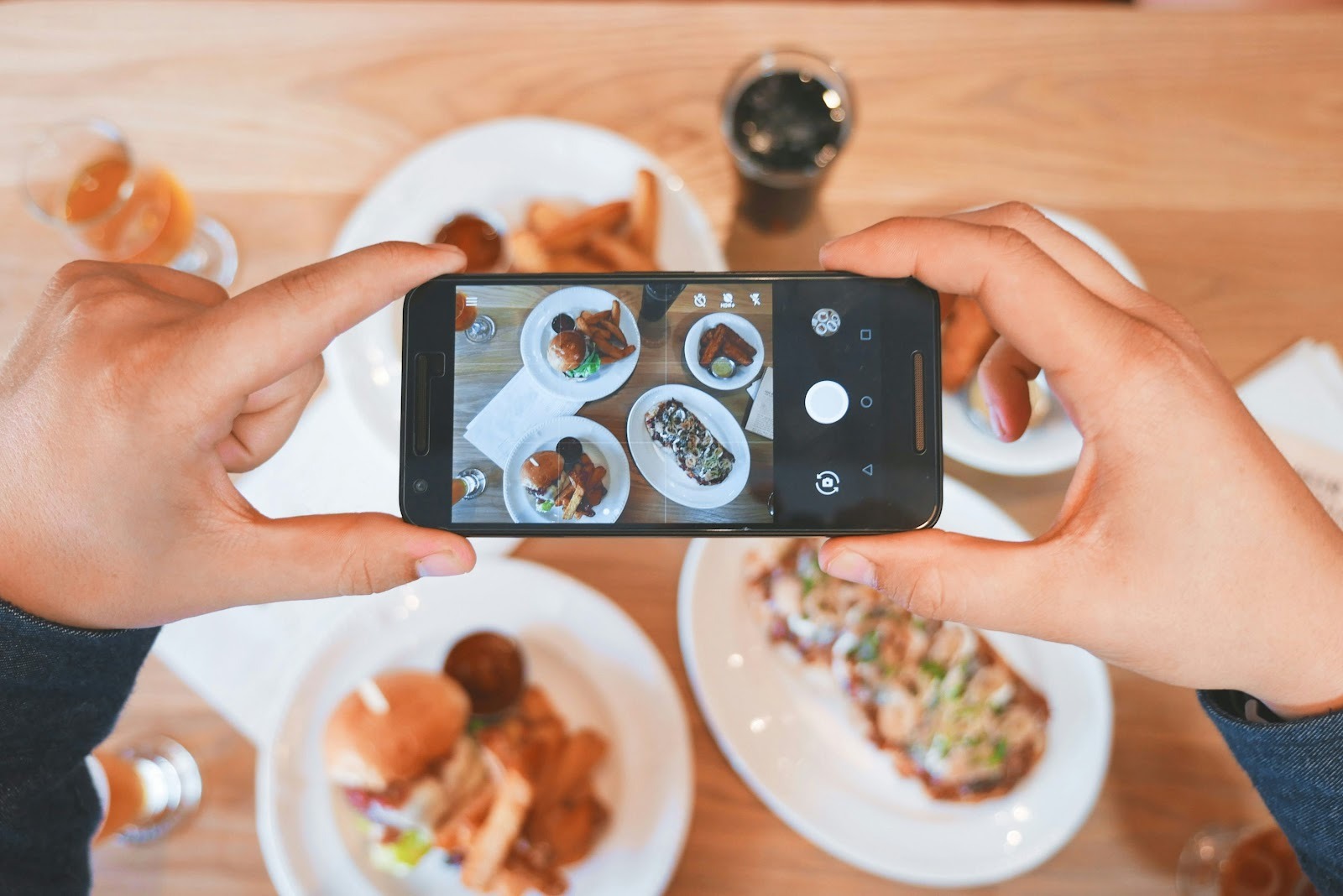
Social media marketing drives a huge chunk of awareness these days. According to Deloitte Digital, 90 percent of restaurants say social media is either very or extremely important to their overall marketing approach, and restaurants reported an average 9.9 percent increase in revenue as a direct result of their social media marketing strategies in 2024.
Practical tactics for the awareness stage:
- Optimize your Google Business Profile with current hours, photos of your food and space, and responses to reviews. When someone does a Google search for "Thai food near me," you want to show up looking good. Even better, integrate booking directly into your Google listing so potential guests can reserve a table without leaving the search results.
- Create engaging content on social media that showcases your menu items, your team, and the vibe of your restaurant. Short videos perform especially well—TikTok adoption among restaurants nearly doubled from 2023 to 2024.
- Partner with micro influencers in your area who have engaged followers interested in food. Their authentic recommendations carry more weight than traditional advertising.
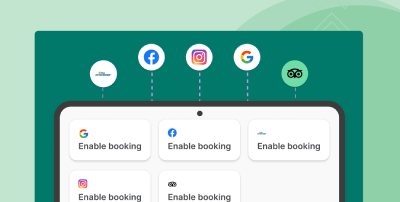
- Enable commission-free reservations from discovery channels. When someone finds you on Google or Instagram, they should be able to book immediately. EatApp's integrations with Google and social platforms let potential guests reserve without you paying booking fees to third parties.
At this stage, your job isn't to make the sale. It's to plant a seed of awareness and make a positive first impression that helps you attract customers. Learn more about effective restaurant marketing strategies to maximize your reach.
Stage two: Interest (capturing attention and building curiosity)
Someone knows your restaurant exists. Now you need to capture their attention and make them want to learn more.
This is the interest stage, where potential guests move from "I've heard of that place" to "I should check them out." Your menu items, your story, your behind-the-scenes content—all of it works toward building interest.
Danny Meyer, the restaurateur behind Shake Shack and Union Square Cafe, describes the difference between service and hospitality this way: service is the technical delivery of a product, while hospitality is how that delivery makes people feel. Even before someone walks through your door, your online presence is already making them feel something.
Effective tactics for building interest:
- Showcase your delicious food with quality photography. Research shows that 65 percent of customers say visuals heavily influence where they choose to eat. Those phone photos with weird lighting aren't doing you any favors.
- Share your story. Why did you open this restaurant? What makes your approach different? People connect with stories, not logos.
- Build your email list. Offer something valuable—a birthday discount, a free appetizer on the first visit, access to special events—in exchange for contact information. These sign ups are how you start building a guest database you actually own.
- Make your menu accessible and appealing online. Include descriptions that make people hungry, photos of signature dishes, and clear relevant information about dietary options.
- Start capturing guest data automatically. Every reservation is an opportunity to learn about a potential regular. Systems like EatApp build guest profiles on autopilot, so you're gathering valuable insights without adding tasks to your team's plate.
The goal at this stage is to convert casual awareness into active consideration. You want someone thinking, "I really need to try that place." Understanding your target audience helps you create content that resonates with the right people.
Stage three: Consideration (standing out from competitors)
Your potential customers have options. Lots of them. At the consideration stage, they're actively comparing you to other restaurants and deciding whether you're worth their time and money.
Social proof does the heavy lifting here. Customer testimonials, online reviews, and real photos from satisfied customers carry more weight than anything you could say about yourself. Research shows that 88 percent of social media users rely on online reviews to select restaurants instead of personal recommendations.
What works at the consideration stage:
- Actively manage your reviews. Respond to both positive and negative feedback. How you handle a complaint tells future restaurant customers everything about how you'll treat them.
- Encourage happy customers to share their experiences. A simple follow up email after a great meal can prompt reviews and social media engagement. Automated post-dining surveys make this easy to do at scale.
- Highlight what makes you different from corporate chains and box stores. Maybe it's your commitment to local sourcing, your kids eat free Tuesdays, or your grandmother's recipes. Whatever sets you apart, make it visible.
- Use customer photos and stories in your digital marketing. User-generated content feels more authentic than polished brand photography.
By the end of this consideration stage, your ideal customers should feel confident that choosing your restaurant is a good decision.
Stage four: Conversion (turning interest into reservations)
This is where interest becomes action. The conversion stage is about removing every possible obstacle between "I want to eat there" and "I have a table booked."
Friction kills conversions. If your online ordering system is confusing, if your phone goes to voicemail during dinner prep, if your website doesn't have an easy booking option or landing page—you're losing paying customers to restaurants that make things easier.
How to optimize conversions:
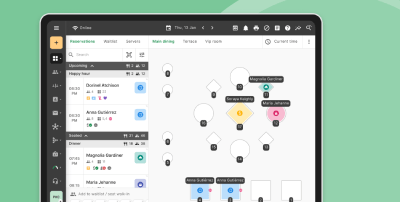
- Offer multiple booking channels. Some people want to call. Some want to book through your website. Some will use Google or social media. Meet them where they are. Multi-channel reservation systems let you accept bookings from your website, Google, Instagram, and more—all flowing into one dashboard.
- Make the buying process fast and simple. Every extra step in your reservation or ordering process is another chance for someone to change their mind. Modern online restaurant reservation systems are designed to minimize friction.
- Use deposits strategically. For high-demand times or special events, requiring a deposit reduces no-shows and secures committed customers. EatApp's deposit and payment system lets you collect pre-payments that protect your revenue without creating a clunky experience.
- Create urgency by creating irresistible offers. A special tasting menu, seasonal dishes, or holiday promotions give people a reason to book now instead of "someday."
- Track conversion rates so you know which channels and promotions actually bring people through the door. Understanding your important restaurant metrics helps you optimize over time.
The best conversion process feels effortless to the customer but captures the relevant information you need to serve them well and bring them back.
Stage five: Retention (creating loyal repeat customers)
Here's where most restaurants drop the ball—and where the biggest opportunity lives. Getting someone to visit once is expensive. Getting them to visit again is where you build a profitable restaurant business.
Customer retention starts with delivering an experience worth repeating. No amount of marketing can save mediocre food or indifferent service. But assuming you're doing the basics well, there's a lot you can do to improve customer retention.
Strategies for the retention stage:
- Capture guest preferences and visit history. When you know someone always orders the roasted chicken and prefers a quiet table, you can make them feel known and valued on their next visit. A good CRM tracks this automatically from reservation and POS data.
- Send personalized follow ups after visits. A simple thank you email, maybe with a small offer for next time, keeps you in their mind without being pushy. Marketing automation lets you set these up once and run them forever.
- Create a loyalty program that actually rewards people. Points systems work, but so do simpler approaches like a free dessert on every fifth visit. Research shows that 80 percent of adults say being part of a loyalty program influences where they choose to dine—customer loyalty pays off. EatApp's Loyalty Suite lets you build customizable rewards programs that fit your brand.
- Celebrate milestones. Birthday emails, anniversary acknowledgments, and "we miss you" messages to customers who haven't visited in a while show you're paying attention. Automated campaigns triggered by guest data make this scalable.
- Ask for feedback and actually use it. Customers who feel heard become customers who stick around.
Your goal is to turn satisfied customers into loyal customers who think of your restaurant as "their place." Dive deeper into strategies that increase restaurant sales through retention.
Stage six: Advocacy (turning customers into brand advocates)
The top of your funnel—awareness—can be expensive to fill. The advocacy stage is where you turn your best customers into a marketing engine that fills it for free.

Brand advocates are loyal patrons who actively recommend your restaurant to friends, share their experiences on social media, and defend you when someone complains about wait times. You can't buy this kind of marketing, but you can earn it.
How to create advocates:
- Make sharing easy. Create Instagram-worthy moments in your restaurant. Put your social handles where people will see them. Thank restaurant customers who tag you.
- Implement a referral program. Give your existing customers a reason to bring new customers through the door. Maybe it's a discount for both the referrer and the referred, or an invitation to an exclusive event.
- Feature your regulars. A "customer of the month" spotlight or a shoutout on social media makes people feel special and gives them content to share with their own networks.
- Collect feedback that turns into reviews. Automated review requests sent after positive dining experiences help you build social proof while the experience is still fresh.
- Host events that bring communities together. Wine tastings, cooking classes, or community fundraisers give your best customers reasons to invite friends and generate new leads.
When a friend tells someone, "You have to try this restaurant," that recommendation carries more weight than any paid ads you could buy. The advocacy stage turns your marketing efforts into a virtuous cycle where happy customers keep sending new leads your way. Understanding the restaurant customer journey helps you design experiences worth talking about.
Measuring what matters
A sales process is only useful if you know whether it's working. For each funnel stage, identify one or two key metrics you can track:
- Awareness: Website traffic, social media reach and social media engagement, Google Business Profile views
- Interest: Email sign ups, menu page views, time spent on website
- Consideration: Review scores, social mentions, saved posts or bookmarks
- Conversion: Reservation conversion rate, online ordering completion rate, no-show percentage
- Retention: Repeat visit rate, customer lifetime value, loyalty program participation
- Advocacy: Referral rate, social shares, positive review volume
You don't need to track everything. Start with the metrics that reveal your biggest problems or opportunities, then expand from there. Platforms with built-in analytics dashboards make this easier by showing you actionable insights without requiring spreadsheet wizardry.
How technology automates your restaurant funnel
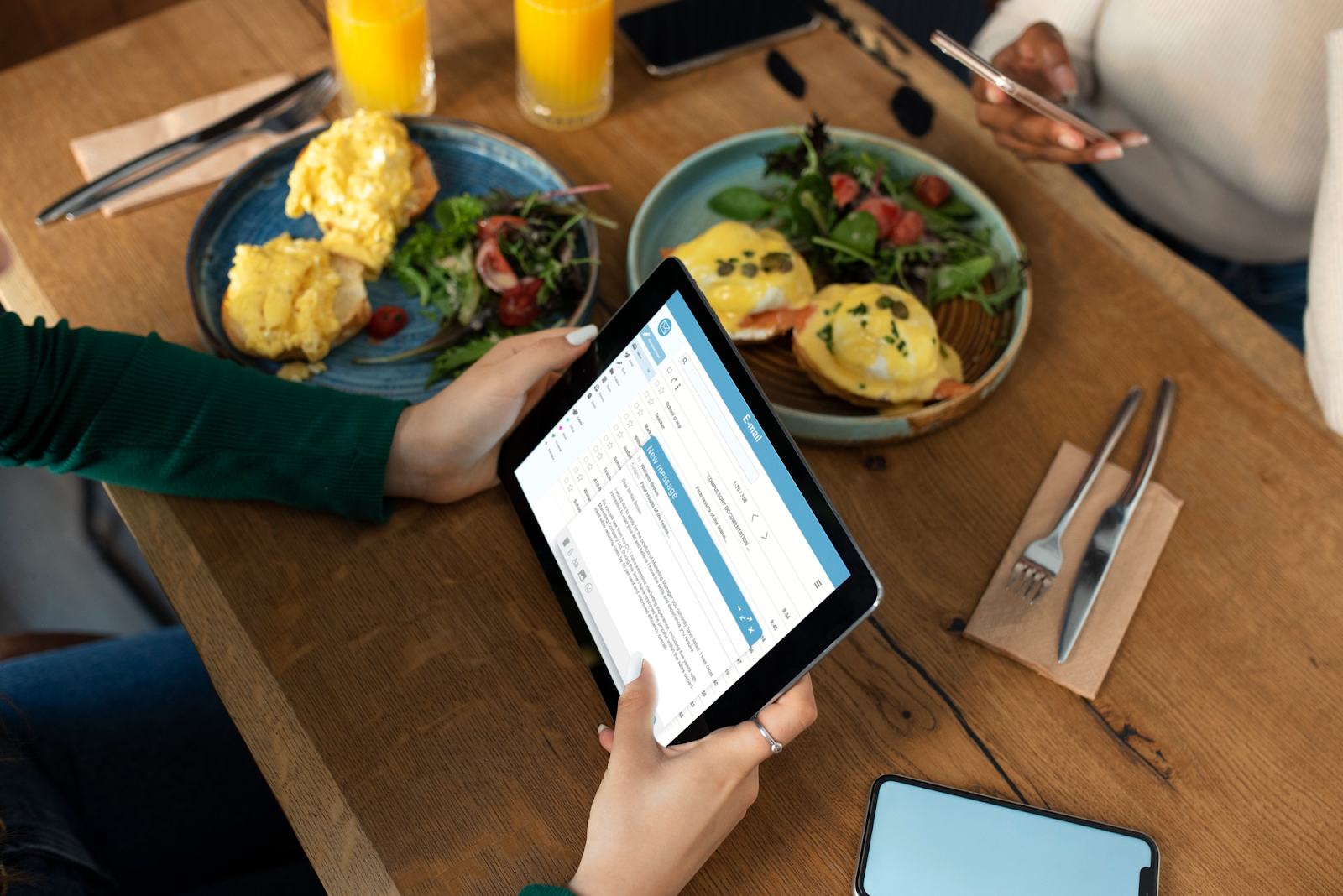
Running a restaurant business is already a full-time job (and then some). The good news is that modern restaurant technology can automate most of your restaurant funnel without requiring constant attention.
Here's what automation looks like at each stage:
- Awareness: Booking widgets on Google and social media capture reservations 24/7, even when you're closed or slammed.
- Interest: Guest profiles build automatically from every reservation, creating a database that grows without manual data entry.
- Consideration: Post-dining surveys go out automatically, collecting feedback and prompting reviews.
- Conversion: Multi-channel reservations flow into one system, with automated confirmations and reminders that reduce no-shows.
- Retention: Birthday emails, re-engagement campaigns, and personalized follow ups trigger based on guest data.
- Advocacy: Review requests go to satisfied customers at the right moment, building your online reputation.
This is what platforms like EatApp are built to do—handle the repetitive marketing tasks so you can focus on what you do best: running a great restaurant. Explore how restaurant revenue drivers connect to your technology stack.
Putting it together
Building a restaurant sales funnel isn't about adding more complexity to your already hectic days. It's about being intentional with the marketing you're already doing and creating systems that work while you're focused on running your restaurant.
Start by identifying where your funnel is weakest. Are potential guests not finding you? That's an awareness problem. Are they finding you but not converting into reservations? Look at your consideration stage and conversion stages. Are first-time visitors not coming back? Your retention game needs work.
Then pick one or two things to improve. Maybe you spend the next month optimizing your Google Business Profile and asking every happy customer for a review. Maybe you finally set up that email list and create a simple welcome sequence. Maybe you implement a basic loyalty program to build customer loyalty.
Small businesses and single restaurant operations don't need to compete with corporate chains or big businesses on budget. They need to compete on connection—on making every customer feel like they matter. A good funnel strategy just helps you do that more consistently.
The restaurants that thrive over the long term understand that the customer journey doesn't end when someone pays the bill. It's a cycle: attract customers, convert them to diners, delight them so they return, and turn them into brand advocates who bring more money and more new customers through the door.
That cycle, systematized and measured, is your restaurant sales funnel. Build it right, and you'll spend less time chasing new faces and more time growing a community of people who genuinely love what you do.
Frequently asked questions
What is a restaurant sales funnel?
A restaurant sales funnel is a marketing model that maps the customer journey from discovering your restaurant to becoming a loyal patron. It typically includes stages like awareness, interest, consideration, conversion, retention, and advocacy. Each funnel stage represents a step in turning strangers into regular restaurant customers who recommend your restaurant to others.
What are the stages of a restaurant marketing funnel?
The six stages are: awareness stage (being discovered by potential diners), interest stage (capturing attention and curiosity), consideration stage (standing out from competitors), conversion (securing reservations or orders), retention (encouraging repeat visits), and advocacy (turning customers into promoters who bring in new leads and guests).
Why do restaurants need a sales funnel?
A sales funnel helps restaurant owners systematically attract customers and engage potential customers while retaining existing customers. Research shows acquiring a new customer costs five to seven times more than retaining one, and increasing customer retention by just five percent can increase profits by 25 to 95 percent. Without a funnel, most marketing efforts are scattered and hard to measure.
What tools are needed to
Meta Title: Restaurant Sales Funnel: Convert More Diners Into Loyal Customers
Meta Description: Build a high-converting restaurant sales funnel that attracts new guests, increases repeat visits, and maximizes your revenue. Free strategies inside.
How to Create a Restaurant Sales Funnel That Drives Repeat Business
Getting a new customer through your door costs between five and seven times more than keeping an existing customer coming back. That math should make every restaurant owner pause. Yet most restaurant owners pour their marketing budgets into chasing new faces while watching their regulars quietly slip away.
Here's what makes this even more frustrating: industry data shows that 65 to 80 percent of restaurant sales come from repeat customers. The people who already know they love your delicious food are the ones keeping your lights on. So why do so many restaurant owners treat customer retention like an afterthought?
The answer is usually that they don't have a system. They're running from one promotion to the next, posting on social media when they remember, and hoping the delicious food will do all the heavy lifting. What they need is a restaurant sales funnel—a structured approach to the customer journey that turns strangers into first-time visitors, first-time visitors into regulars, and regulars into people who can't stop telling their friends about your place.
This guide breaks down exactly how to build that restaurant funnel for your restaurant business. No crazy tech skills required. And with the right technology handling the heavy lifting, even non techy entrepreneurs can build a sales funnel that runs on autopilot.
What a restaurant sales funnel actually is
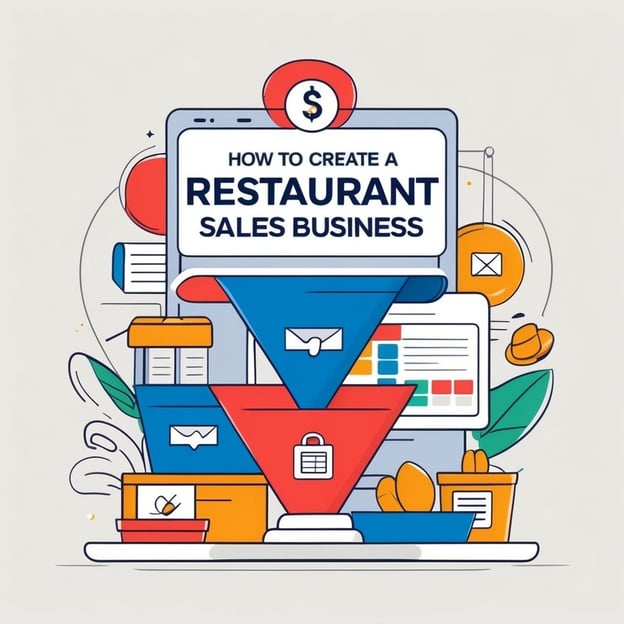
Think of a sales funnel as a map of how people move from "I've never heard of this place" to "I eat here every week and my friends are sick of me talking about it."
The funnel shape matters here. Lots of people might discover your restaurant—through social media posts, a Google search, or a friend's recommendation. Fewer of those potential customers will actually check out your menu. Even fewer will make a reservation. And only a portion of those will become loyal customers who come back again and again.
A restaurant sales funnel is different from a general marketing funnel in one big way: your product is an experience, not just a thing someone buys and takes home. The buying journey for a meal involves emotional decisions about ambiance, occasion, dietary needs, and whether your place "feels right" for a Tuesday night versus a birthday dinner. Your funnel strategy needs to account for all of that.
The goal isn't to push every single person through to the bottom of the funnel. It's to make sure that the people who are right for your restaurant—your target audience—can find you, learn enough to get interested, and have an easy path to becoming paying customers.
Why your restaurant needs a sales funnel (even if you hate marketing)
Let's talk numbers, because numbers don't lie.
Research from Frederick Reichheld, best selling author and creator of the Net Promoter Score at Bain & Company, found that increasing customer retention rates by just five percent can increase profits anywhere from 25 to 95 percent. Reichheld has spent decades proving that customer loyalty and loyalty-based management beats chasing new customers every time.
The hospitality industry averages a 55 percent retention rate, according to Statista—well below the 75 percent global average across all industries. That gap represents a massive opportunity for restaurant owners willing to build systems that keep restaurant customers coming back.
The real cost of ignoring retention
Without a funnel, you're basically running on a treadmill. You spend more money on paid ads to bring in new customers, they visit once, and then most of them vanish into the ether. Industry research suggests that around 70 percent of first-time diners never return. That's not because your food was bad—it's because nothing pulled them back.
Building a sustainable guest database changes everything. When you know who your existing customers are, what they ordered, when they last visited, and what occasions bring them in, you can create personalized follow ups that actually work. You stop wasting time on generic promotions and start speaking directly to the people most likely to walk through your door again.
This is where technology becomes your friend. Platforms like EatApp build guest profiles automatically from every reservation, creating a CRM that captures preferences, spend history, and visit frequency without requiring extra work from your dedicated staff.
Creating predictable revenue
Restaurant owners often feel like they're at the mercy of forces outside their control—the weather, the economy, whether there's a game on. A well-built sales funnel gives you more control over your marketing efforts and, as a result, more predictable restaurant sales.
When you understand each funnel stage and what moves people through the buying process, you can identify where you're losing potential customers and fix those leaks. Maybe your awareness stage is great, but your online ordering system is so clunky that people abandon their carts. Maybe lots of people visit once, but you have no system for follow up emails that bring them back. Understanding your restaurant data and analytics helps you spot these problems before they drain your profits.
The six stages of an effective restaurant sales funnel
Every customer journey through your restaurant funnel moves through six stages. Understanding what happens at each stage—and what your restaurant business needs to provide—makes the difference between a leaky funnel and one that converts.
Stage one: Awareness (getting discovered by potential diners)
Before anyone can become a customer, they need to know you exist. The awareness stage is where potential customers first encounter your restaurant through digital marketing, word of mouth, or pure luck.
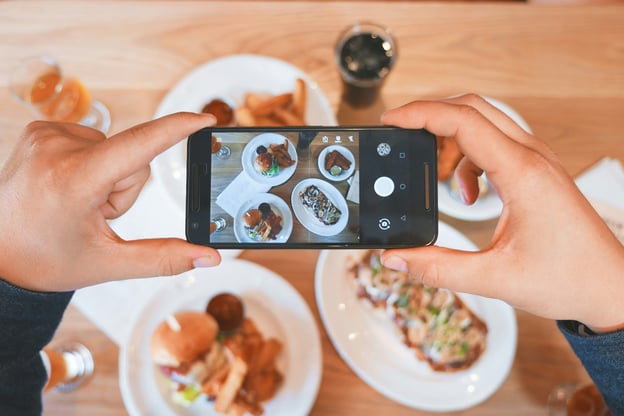
Social media marketing drives a huge chunk of awareness these days. According to Deloitte Digital, 90 percent of restaurants say social media is either very or extremely important to their overall marketing approach, and restaurants reported an average 9.9 percent increase in revenue as a direct result of their social media marketing strategies in 2024.
Practical tactics for the awareness stage:
- Optimize your Google Business Profile with current hours, photos of your food and space, and responses to reviews. When someone does a Google search for "Thai food near me," you want to show up looking good. Even better, integrate booking directly into your Google listing so potential guests can reserve a table without leaving the search results.
- Create engaging content on social media that showcases your menu items, your team, and the vibe of your restaurant. Short videos perform especially well—TikTok adoption among restaurants nearly doubled from 2023 to 2024.
- Partner with micro influencers in your area who have engaged followers interested in food. Their authentic recommendations carry more weight than traditional advertising.
- Enable commission-free reservations from discovery channels. When someone finds you on Google or Instagram, they should be able to book immediately. EatApp's integrations with Google and social platforms let potential guests reserve without you paying booking fees to third parties.
At this stage, your job isn't to make the sale. It's to plant a seed of awareness and make a positive first impression that helps you attract customers. Learn more about effective restaurant marketing strategies to maximize your reach.
Stage two: Interest (capturing attention and building curiosity)
Someone knows your restaurant exists. Now you need to capture their attention and make them want to learn more.
This is the interest stage, where potential guests move from "I've heard of that place" to "I should check them out." Your menu items, your story, your behind-the-scenes content—all of it works toward building interest.
Danny Meyer, the restaurateur behind Shake Shack and Union Square Cafe, describes the difference between service and hospitality this way: service is the technical delivery of a product, while hospitality is how that delivery makes people feel. Even before someone walks through your door, your online presence is already making them feel something.
Effective tactics for building interest:
- Showcase your delicious food with quality photography. Research shows that 65 percent of customers say visuals heavily influence where they choose to eat. Those phone photos with weird lighting aren't doing you any favors.
- Share your story. Why did you open this restaurant? What makes your approach different? People connect with stories, not logos.
- Build your email list. Offer something valuable—a birthday discount, a free appetizer on the first visit, access to special events—in exchange for contact information. These sign ups are how you start building a guest database you actually own.
- Make your menu accessible and appealing online. Include descriptions that make people hungry, photos of signature dishes, and clear relevant information about dietary options.
- Start capturing guest data automatically. Every reservation is an opportunity to learn about a potential regular. Systems like EatApp build guest profiles on autopilot, so you're gathering valuable insights without adding tasks to your team's plate.
The goal at this stage is to convert casual awareness into active consideration. You want someone thinking, "I really need to try that place." Understanding your target audience helps you create content that resonates with the right people.
Stage three: Consideration (standing out from competitors)
Your potential customers have options. Lots of them. At the consideration stage, they're actively comparing you to other restaurants and deciding whether you're worth their time and money.
Social proof does the heavy lifting here. Customer testimonials, online reviews, and real photos from satisfied customers carry more weight than anything you could say about yourself. Research shows that 88 percent of social media users rely on online reviews to select restaurants instead of personal recommendations.
What works at the consideration stage:
- Actively manage your reviews. Respond to both positive and negative feedback. How you handle a complaint tells future restaurant customers everything about how you'll treat them.
- Encourage happy customers to share their experiences. A simple follow up email after a great meal can prompt reviews and social media engagement. Automated post-dining surveys make this easy to do at scale.
- Highlight what makes you different from corporate chains and box stores. Maybe it's your commitment to local sourcing, your kids eat free Tuesdays, or your grandmother's recipes. Whatever sets you apart, make it visible.
- Use customer photos and stories in your digital marketing. User-generated content feels more authentic than polished brand photography.
By the end of this consideration stage, your ideal customers should feel confident that choosing your restaurant is a good decision.
Stage four: Conversion (turning interest into reservations)
This is where interest becomes action. The conversion stage is about removing every possible obstacle between "I want to eat there" and "I have a table booked."
Friction kills conversions. If your online ordering system is confusing, if your phone goes to voicemail during dinner prep, if your website doesn't have an easy booking option or landing page—you're losing paying customers to restaurants that make things easier.
How to optimize conversions:
- Offer multiple booking channels. Some people want to call. Some want to book through your website. Some will use Google or social media. Meet them where they are. Multi-channel reservation systems let you accept bookings from your website, Google, Instagram, and more—all flowing into one dashboard.
- Make the buying process fast and simple. Every extra step in your reservation or ordering process is another chance for someone to change their mind. Modern online restaurant reservation systems are designed to minimize friction.
- Use deposits strategically. For high-demand times or special events, requiring a deposit reduces no-shows and secures committed customers. EatApp's deposit and payment system lets you collect pre-payments that protect your revenue without creating a clunky experience.
- Create urgency by creating irresistible offers. A special tasting menu, seasonal dishes, or holiday promotions give people a reason to book now instead of "someday."
- Track conversion rates so you know which channels and promotions actually bring people through the door. Understanding your important restaurant metrics helps you optimize over time.
The best conversion process feels effortless to the customer but captures the relevant information you need to serve them well and bring them back.
Stage five: Retention (creating loyal repeat customers)
Here's where most restaurants drop the ball—and where the biggest opportunity lives. Getting someone to visit once is expensive. Getting them to visit again is where you build a profitable restaurant business.
Customer retention starts with delivering an experience worth repeating. No amount of marketing can save mediocre food or indifferent service. But assuming you're doing the basics well, there's a lot you can do to improve customer retention.
Strategies for the retention stage:
- Capture guest preferences and visit history. When you know someone always orders the roasted chicken and prefers a quiet table, you can make them feel known and valued on their next visit. A good CRM tracks this automatically from reservation and POS data.
- Send personalized follow ups after visits. A simple thank you email, maybe with a small offer for next time, keeps you in their mind without being pushy. Marketing automation lets you set these up once and run them forever.
- Create a loyalty program that actually rewards people. Points systems work, but so do simpler approaches like a free dessert on every fifth visit. Research shows that 80 percent of adults say being part of a loyalty program influences where they choose to dine—customer loyalty pays off. EatApp's Loyalty Suite lets you build customizable rewards programs that fit your brand.
- Celebrate milestones. Birthday emails, anniversary acknowledgments, and "we miss you" messages to customers who haven't visited in a while show you're paying attention. Automated campaigns triggered by guest data make this scalable.
- Ask for feedback and actually use it. Customers who feel heard become customers who stick around.
Your goal is to turn satisfied customers into loyal customers who think of your restaurant as "their place." Dive deeper into strategies that increase restaurant sales through retention.
Stage six: Advocacy (turning customers into brand advocates)
The top of your funnel—awareness—can be expensive to fill. The advocacy stage is where you turn your best customers into a marketing engine that fills it for free.

Brand advocates are loyal patrons who actively recommend your restaurant to friends, share their experiences on social media, and defend you when someone complains about wait times. You can't buy this kind of marketing, but you can earn it.
How to create advocates:
- Make sharing easy. Create Instagram-worthy moments in your restaurant. Put your social handles where people will see them. Thank restaurant customers who tag you.
- Implement a referral program. Give your existing customers a reason to bring new customers through the door. Maybe it's a discount for both the referrer and the referred, or an invitation to an exclusive event.
- Feature your regulars. A "customer of the month" spotlight or a shoutout on social media makes people feel special and gives them content to share with their own networks.
- Collect feedback that turns into reviews. Automated review requests sent after positive dining experiences help you build social proof while the experience is still fresh.
- Host events that bring communities together. Wine tastings, cooking classes, or community fundraisers give your best customers reasons to invite friends and generate new leads.
When a friend tells someone, "You have to try this restaurant," that recommendation carries more weight than any paid ads you could buy. The advocacy stage turns your marketing efforts into a virtuous cycle where happy customers keep sending new leads your way. Understanding the restaurant customer journey helps you design experiences worth talking about.
Measuring what matters
A sales process is only useful if you know whether it's working. For each funnel stage, identify one or two key metrics you can track:
- Awareness: Website traffic, social media reach and social media engagement, Google Business Profile views
- Interest: Email sign ups, menu page views, time spent on website
- Consideration: Review scores, social mentions, saved posts or bookmarks
- Conversion: Reservation conversion rate, online ordering completion rate, no-show percentage
- Retention: Repeat visit rate, customer lifetime value, loyalty program participation
- Advocacy: Referral rate, social shares, positive review volume
You don't need to track everything. Start with the metrics that reveal your biggest problems or opportunities, then expand from there. Platforms with built-in analytics dashboards make this easier by showing you actionable insights without requiring spreadsheet wizardry.
How technology automates your restaurant funnel
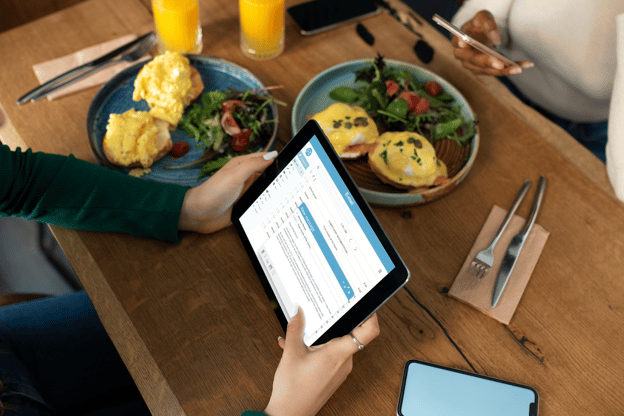
Running a restaurant business is already a full-time job (and then some). The good news is that modern restaurant technology can automate most of your restaurant funnel without requiring constant attention.
Here's what automation looks like at each stage:
- Awareness: Booking widgets on Google and social media capture reservations 24/7, even when you're closed or slammed.
- Interest: Guest profiles build automatically from every reservation, creating a database that grows without manual data entry.
- Consideration: Post-dining surveys go out automatically, collecting feedback and prompting reviews.
- Conversion: Multi-channel reservations flow into one system, with automated confirmations and reminders that reduce no-shows.
- Retention: Birthday emails, re-engagement campaigns, and personalized follow ups trigger based on guest data.
- Advocacy: Review requests go to satisfied customers at the right moment, building your online reputation.
This is what platforms like EatApp are built to do—handle the repetitive marketing tasks so you can focus on what you do best: running a great restaurant. Explore how restaurant revenue drivers connect to your technology stack.
Putting it together
Building a restaurant sales funnel isn't about adding more complexity to your already hectic days. It's about being intentional with the marketing you're already doing and creating systems that work while you're focused on running your restaurant.
Start by identifying where your funnel is weakest. Are potential guests not finding you? That's an awareness problem. Are they finding you but not converting into reservations? Look at your consideration stage and conversion stages. Are first-time visitors not coming back? Your retention game needs work.
Then pick one or two things to improve. Maybe you spend the next month optimizing your Google Business Profile and asking every happy customer for a review. Maybe you finally set up that email list and create a simple welcome sequence. Maybe you implement a basic loyalty program to build customer loyalty.
Small businesses and single restaurant operations don't need to compete with corporate chains or big businesses on budget. They need to compete on connection—on making every customer feel like they matter. A good funnel strategy just helps you do that more consistently.
The restaurants that thrive over the long term understand that the customer journey doesn't end when someone pays the bill. It's a cycle: attract customers, convert them to diners, delight them so they return, and turn them into brand advocates who bring more money and more new customers through the door.
That cycle, systematized and measured, is your restaurant sales funnel. Build it right, and you'll spend less time chasing new faces and more time growing a community of people who genuinely love what you do.
Frequently asked questions
What is a restaurant sales funnel?
A restaurant sales funnel is a marketing model that maps the customer journey from discovering your restaurant to becoming a loyal patron. It typically includes stages like awareness, interest, consideration, conversion, retention, and advocacy. Each funnel stage represents a step in turning strangers into regular restaurant customers who recommend your restaurant to others.
What are the stages of a restaurant marketing funnel?
The six stages are: awareness stage (being discovered by potential diners), interest stage (capturing attention and curiosity), consideration stage (standing out from competitors), conversion (securing reservations or orders), retention (encouraging repeat visits), and advocacy (turning customers into promoters who bring in new leads and guests).
Why do restaurants need a sales funnel?
A sales funnel helps restaurant owners systematically attract customers and engage potential customers while retaining existing customers. Research shows acquiring a new customer costs five to seven times more than retaining one, and increasing customer retention by just five percent can increase profits by 25 to 95 percent. Without a funnel, most marketing efforts are scattered and hard to measure.
What tools are needed to build a restaurant sales funnel?
You need a reservation management system, customer relationship management (CRM) software, email marketing capabilities, social media presence, and analytics to track conversion rates and performance. All-in-one platforms like EatApp combine these functionalities, making it easier to manage your entire restaurant funnel from one dashboard without needing crazy tech skills.
build a restaurant sales funnel?
You need a reservation management system, customer relationship management (CRM) software, email marketing capabilities, social media presence, and analytics to track conversion rates and performance. All-in-one platforms like EatApp combine these functionalities, making it easier to manage your entire restaurant funnel from one dashboard without needing crazy tech skills.



.webp?width=314&height=175&name=e265983a-8353-4fcb-a530-cd2601c4df5d%20(1).webp)


.webp?width=144&height=72&name=Eat%20App%20Logo%20(3).webp "Eat App")